mirror of
https://github.com/dbt-labs/dbt-core
synced 2025-12-19 18:01:26 +00:00
Compare commits
5 Commits
regression
...
leahwicz-p
| Author | SHA1 | Date | |
|---|---|---|---|

|
fc49828618 | ||
|
|
611465b20c | ||
|
|
8f4777db5a | ||
|
|
06d87c0fe4 | ||
|
|
00c0780b56 |
@@ -1,27 +1,23 @@
|
||||
[bumpversion]
|
||||
current_version = 0.21.0b2
|
||||
current_version = 0.20.0rc1
|
||||
parse = (?P<major>\d+)
|
||||
\.(?P<minor>\d+)
|
||||
\.(?P<patch>\d+)
|
||||
((?P<prekind>a|b|rc)
|
||||
(?P<pre>\d+) # pre-release version num
|
||||
)?
|
||||
((?P<prerelease>[a-z]+)(?P<num>\d+))?
|
||||
serialize =
|
||||
{major}.{minor}.{patch}{prekind}{pre}
|
||||
{major}.{minor}.{patch}{prerelease}{num}
|
||||
{major}.{minor}.{patch}
|
||||
commit = False
|
||||
tag = False
|
||||
|
||||
[bumpversion:part:prekind]
|
||||
[bumpversion:part:prerelease]
|
||||
first_value = a
|
||||
optional_value = final
|
||||
values =
|
||||
a
|
||||
b
|
||||
rc
|
||||
final
|
||||
|
||||
[bumpversion:part:pre]
|
||||
[bumpversion:part:num]
|
||||
first_value = 1
|
||||
|
||||
[bumpversion:file:setup.py]
|
||||
@@ -30,8 +26,6 @@ first_value = 1
|
||||
|
||||
[bumpversion:file:core/dbt/version.py]
|
||||
|
||||
[bumpversion:file:core/scripts/create_adapter_plugins.py]
|
||||
|
||||
[bumpversion:file:plugins/postgres/setup.py]
|
||||
|
||||
[bumpversion:file:plugins/redshift/setup.py]
|
||||
|
||||
123
.circleci/config.yml
Normal file
123
.circleci/config.yml
Normal file
@@ -0,0 +1,123 @@
|
||||
version: 2.1
|
||||
jobs:
|
||||
unit:
|
||||
docker: &test_only
|
||||
- image: fishtownanalytics/test-container:12
|
||||
environment:
|
||||
DBT_INVOCATION_ENV: circle
|
||||
DOCKER_TEST_DATABASE_HOST: "database"
|
||||
TOX_PARALLEL_NO_SPINNER: 1
|
||||
steps:
|
||||
- checkout
|
||||
- run: tox -p -e py36,py37,py38
|
||||
lint:
|
||||
docker: *test_only
|
||||
steps:
|
||||
- checkout
|
||||
- run: tox -e mypy,flake8 -- -v
|
||||
build-wheels:
|
||||
docker: *test_only
|
||||
steps:
|
||||
- checkout
|
||||
- run:
|
||||
name: Build wheels
|
||||
command: |
|
||||
python3.8 -m venv "${PYTHON_ENV}"
|
||||
export PYTHON_BIN="${PYTHON_ENV}/bin/python"
|
||||
$PYTHON_BIN -m pip install -U pip setuptools
|
||||
$PYTHON_BIN -m pip install -r requirements.txt
|
||||
$PYTHON_BIN -m pip install -r dev-requirements.txt
|
||||
/bin/bash ./scripts/build-wheels.sh
|
||||
$PYTHON_BIN ./scripts/collect-dbt-contexts.py > ./dist/context_metadata.json
|
||||
$PYTHON_BIN ./scripts/collect-artifact-schema.py > ./dist/artifact_schemas.json
|
||||
environment:
|
||||
PYTHON_ENV: /home/tox/build_venv/
|
||||
- store_artifacts:
|
||||
path: ./dist
|
||||
destination: dist
|
||||
integration-postgres:
|
||||
docker:
|
||||
- image: fishtownanalytics/test-container:12
|
||||
environment:
|
||||
DBT_INVOCATION_ENV: circle
|
||||
DOCKER_TEST_DATABASE_HOST: "database"
|
||||
TOX_PARALLEL_NO_SPINNER: 1
|
||||
- image: postgres
|
||||
name: database
|
||||
environment:
|
||||
POSTGRES_USER: "root"
|
||||
POSTGRES_PASSWORD: "password"
|
||||
POSTGRES_DB: "dbt"
|
||||
steps:
|
||||
- checkout
|
||||
- run:
|
||||
name: Setup postgres
|
||||
command: bash test/setup_db.sh
|
||||
environment:
|
||||
PGHOST: database
|
||||
PGUSER: root
|
||||
PGPASSWORD: password
|
||||
PGDATABASE: postgres
|
||||
- run:
|
||||
name: Postgres integration tests
|
||||
command: tox -p -e py36-postgres,py38-postgres -- -v -n4
|
||||
no_output_timeout: 30m
|
||||
- store_artifacts:
|
||||
path: ./logs
|
||||
integration-snowflake:
|
||||
docker: *test_only
|
||||
steps:
|
||||
- checkout
|
||||
- run:
|
||||
name: Snowflake integration tests
|
||||
command: tox -p -e py36-snowflake,py38-snowflake -- -v -n4
|
||||
no_output_timeout: 30m
|
||||
- store_artifacts:
|
||||
path: ./logs
|
||||
integration-redshift:
|
||||
docker: *test_only
|
||||
steps:
|
||||
- checkout
|
||||
- run:
|
||||
name: Redshift integration tests
|
||||
command: tox -p -e py36-redshift,py38-redshift -- -v -n4
|
||||
no_output_timeout: 30m
|
||||
- store_artifacts:
|
||||
path: ./logs
|
||||
integration-bigquery:
|
||||
docker: *test_only
|
||||
steps:
|
||||
- checkout
|
||||
- run:
|
||||
name: Bigquery integration test
|
||||
command: tox -p -e py36-bigquery,py38-bigquery -- -v -n4
|
||||
no_output_timeout: 30m
|
||||
- store_artifacts:
|
||||
path: ./logs
|
||||
|
||||
workflows:
|
||||
version: 2
|
||||
test-everything:
|
||||
jobs:
|
||||
- lint
|
||||
- unit
|
||||
- integration-postgres:
|
||||
requires:
|
||||
- unit
|
||||
- integration-redshift:
|
||||
requires:
|
||||
- unit
|
||||
- integration-bigquery:
|
||||
requires:
|
||||
- unit
|
||||
- integration-snowflake:
|
||||
requires:
|
||||
- unit
|
||||
- build-wheels:
|
||||
requires:
|
||||
- lint
|
||||
- unit
|
||||
- integration-postgres
|
||||
- integration-redshift
|
||||
- integration-bigquery
|
||||
- integration-snowflake
|
||||
@@ -1,27 +0,0 @@
|
||||
---
|
||||
name: Beta minor version release
|
||||
about: Creates a tracking checklist of items for a Beta minor version release
|
||||
title: "[Tracking] v#.##.#B# release "
|
||||
labels: 'release'
|
||||
assignees: ''
|
||||
|
||||
---
|
||||
|
||||
### Release Core
|
||||
- [ ] [Engineering] Follow [dbt-release workflow](https://www.notion.so/dbtlabs/Releasing-b97c5ea9a02949e79e81db3566bbc8ef#03ff37da697d4d8ba63d24fae1bfa817)
|
||||
- [ ] [Engineering] Verify new release branch is created in the repo
|
||||
- [ ] [Product] Finalize migration guide (next.docs.getdbt.com)
|
||||
|
||||
### Release Cloud
|
||||
- [ ] [Engineering] Create a platform issue to update dbt Cloud and verify it is completed. [Example issue](https://github.com/dbt-labs/dbt-cloud/issues/3481)
|
||||
- [ ] [Engineering] Determine if schemas have changed. If so, generate new schemas and push to schemas.getdbt.com
|
||||
|
||||
### Announce
|
||||
- [ ] [Product] Announce in dbt Slack
|
||||
|
||||
### Post-release
|
||||
- [ ] [Engineering] [Bump plugin versions](https://www.notion.so/dbtlabs/Releasing-b97c5ea9a02949e79e81db3566bbc8ef#f01854e8da3641179fbcbe505bdf515c) (dbt-spark + dbt-presto), add compatibility as needed
|
||||
- [ ] [Spark](https://github.com/dbt-labs/dbt-spark)
|
||||
- [ ] [Presto](https://github.com/dbt-labs/dbt-presto)
|
||||
- [ ] [Engineering] Create a platform issue to update dbt-spark versions to dbt Cloud. [Example issue](https://github.com/dbt-labs/dbt-cloud/issues/3481)
|
||||
- [ ] [Engineering] Create an epic for the RC release
|
||||
@@ -1,28 +0,0 @@
|
||||
---
|
||||
name: Final minor version release
|
||||
about: Creates a tracking checklist of items for a final minor version release
|
||||
title: "[Tracking] v#.##.# final release "
|
||||
labels: 'release'
|
||||
assignees: ''
|
||||
|
||||
---
|
||||
|
||||
### Release Core
|
||||
- [ ] [Engineering] Verify all necessary changes exist on the release branch
|
||||
- [ ] [Engineering] Follow [dbt-release workflow](https://www.notion.so/dbtlabs/Releasing-b97c5ea9a02949e79e81db3566bbc8ef#03ff37da697d4d8ba63d24fae1bfa817)
|
||||
- [ ] [Product] Merge `next` into `current` for docs.getdbt.com
|
||||
|
||||
### Release Cloud
|
||||
- [ ] [Engineering] Create a platform issue to update dbt Cloud and verify it is completed. [Example issue](https://github.com/dbt-labs/dbt-cloud/issues/3481)
|
||||
- [ ] [Engineering] Determine if schemas have changed. If so, generate new schemas and push to schemas.getdbt.com
|
||||
|
||||
### Announce
|
||||
- [ ] [Product] Update discourse
|
||||
- [ ] [Product] Announce in dbt Slack
|
||||
|
||||
### Post-release
|
||||
- [ ] [Engineering] [Bump plugin versions](https://www.notion.so/dbtlabs/Releasing-b97c5ea9a02949e79e81db3566bbc8ef#f01854e8da3641179fbcbe505bdf515c) (dbt-spark + dbt-presto), add compatibility as needed
|
||||
- [ ] [Spark](https://github.com/dbt-labs/dbt-spark)
|
||||
- [ ] [Presto](https://github.com/dbt-labs/dbt-presto)
|
||||
- [ ] [Engineering] Create a platform issue to update dbt-spark versions to dbt Cloud. [Example issue](https://github.com/dbt-labs/dbt-cloud/issues/3481)
|
||||
- [ ] [Product] Release new version of dbt-utils with new dbt version compatibility. If there are breaking changes requiring a minor version, plan upgrades of other packages that depend on dbt-utils.
|
||||
@@ -1,29 +0,0 @@
|
||||
---
|
||||
name: RC minor version release
|
||||
about: Creates a tracking checklist of items for a RC minor version release
|
||||
title: "[Tracking] v#.##.#RC# release "
|
||||
labels: 'release'
|
||||
assignees: ''
|
||||
|
||||
---
|
||||
|
||||
### Release Core
|
||||
- [ ] [Engineering] Verify all necessary changes exist on the release branch
|
||||
- [ ] [Engineering] Follow [dbt-release workflow](https://www.notion.so/dbtlabs/Releasing-b97c5ea9a02949e79e81db3566bbc8ef#03ff37da697d4d8ba63d24fae1bfa817)
|
||||
- [ ] [Product] Update migration guide (next.docs.getdbt.com)
|
||||
|
||||
### Release Cloud
|
||||
- [ ] [Engineering] Create a platform issue to update dbt Cloud and verify it is completed. [Example issue](https://github.com/dbt-labs/dbt-cloud/issues/3481)
|
||||
- [ ] [Engineering] Determine if schemas have changed. If so, generate new schemas and push to schemas.getdbt.com
|
||||
|
||||
### Announce
|
||||
- [ ] [Product] Publish discourse
|
||||
- [ ] [Product] Announce in dbt Slack
|
||||
|
||||
### Post-release
|
||||
- [ ] [Engineering] [Bump plugin versions](https://www.notion.so/dbtlabs/Releasing-b97c5ea9a02949e79e81db3566bbc8ef#f01854e8da3641179fbcbe505bdf515c) (dbt-spark + dbt-presto), add compatibility as needed
|
||||
- [ ] [Spark](https://github.com/dbt-labs/dbt-spark)
|
||||
- [ ] [Presto](https://github.com/dbt-labs/dbt-presto)
|
||||
- [ ] [Engineering] Create a platform issue to update dbt-spark versions to dbt Cloud. [Example issue](https://github.com/dbt-labs/dbt-cloud/issues/3481)
|
||||
- [ ] [Product] Release new version of dbt-utils with new dbt version compatibility. If there are breaking changes requiring a minor version, plan upgrades of other packages that depend on dbt-utils.
|
||||
- [ ] [Engineering] Create an epic for the final release
|
||||
10
.github/actions/setup-postgres-linux/action.yml
vendored
10
.github/actions/setup-postgres-linux/action.yml
vendored
@@ -1,10 +0,0 @@
|
||||
name: "Set up postgres (linux)"
|
||||
description: "Set up postgres service on linux vm for dbt integration tests"
|
||||
runs:
|
||||
using: "composite"
|
||||
steps:
|
||||
- shell: bash
|
||||
run: |
|
||||
sudo systemctl start postgresql.service
|
||||
pg_isready
|
||||
sudo -u postgres bash ${{ github.action_path }}/setup_db.sh
|
||||
@@ -1 +0,0 @@
|
||||
../../../test/setup_db.sh
|
||||
24
.github/actions/setup-postgres-macos/action.yml
vendored
24
.github/actions/setup-postgres-macos/action.yml
vendored
@@ -1,24 +0,0 @@
|
||||
name: "Set up postgres (macos)"
|
||||
description: "Set up postgres service on macos vm for dbt integration tests"
|
||||
runs:
|
||||
using: "composite"
|
||||
steps:
|
||||
- shell: bash
|
||||
run: |
|
||||
brew services start postgresql
|
||||
echo "Check PostgreSQL service is running"
|
||||
i=10
|
||||
COMMAND='pg_isready'
|
||||
while [ $i -gt -1 ]; do
|
||||
if [ $i == 0 ]; then
|
||||
echo "PostgreSQL service not ready, all attempts exhausted"
|
||||
exit 1
|
||||
fi
|
||||
echo "Check PostgreSQL service status"
|
||||
eval $COMMAND && break
|
||||
echo "PostgreSQL service not ready, wait 10 more sec, attempts left: $i"
|
||||
sleep 10
|
||||
((i--))
|
||||
done
|
||||
createuser -s postgres
|
||||
bash ${{ github.action_path }}/setup_db.sh
|
||||
@@ -1 +0,0 @@
|
||||
../../../test/setup_db.sh
|
||||
@@ -1,12 +0,0 @@
|
||||
name: "Set up postgres (windows)"
|
||||
description: "Set up postgres service on windows vm for dbt integration tests"
|
||||
runs:
|
||||
using: "composite"
|
||||
steps:
|
||||
- shell: pwsh
|
||||
run: |
|
||||
$pgService = Get-Service -Name postgresql*
|
||||
Set-Service -InputObject $pgService -Status running -StartupType automatic
|
||||
Start-Process -FilePath "$env:PGBIN\pg_isready" -Wait -PassThru
|
||||
$env:Path += ";$env:PGBIN"
|
||||
bash ${{ github.action_path }}/setup_db.sh
|
||||
@@ -1 +0,0 @@
|
||||
../../../test/setup_db.sh
|
||||
11
.github/pull_request_template.md
vendored
11
.github/pull_request_template.md
vendored
@@ -9,13 +9,14 @@ resolves #
|
||||
resolves #1234
|
||||
-->
|
||||
|
||||
|
||||
### Description
|
||||
|
||||
<!--- Describe the Pull Request here -->
|
||||
|
||||
### Checklist
|
||||
|
||||
- [ ] I have signed the [CLA](https://docs.getdbt.com/docs/contributor-license-agreements)
|
||||
- [ ] I have run this code in development and it appears to resolve the stated issue
|
||||
- [ ] This PR includes tests, or tests are not required/relevant for this PR
|
||||
- [ ] I have updated the `CHANGELOG.md` and added information about my change to the "dbt next" section.
|
||||
### Checklist
|
||||
- [ ] I have signed the [CLA](https://docs.getdbt.com/docs/contributor-license-agreements)
|
||||
- [ ] I have run this code in development and it appears to resolve the stated issue
|
||||
- [ ] This PR includes tests, or tests are not required/relevant for this PR
|
||||
- [ ] I have updated the `CHANGELOG.md` and added information about my change to the "dbt next" section.
|
||||
|
||||
95
.github/scripts/integration-test-matrix.js
vendored
95
.github/scripts/integration-test-matrix.js
vendored
@@ -1,95 +0,0 @@
|
||||
module.exports = ({ context }) => {
|
||||
const defaultPythonVersion = "3.8";
|
||||
const supportedPythonVersions = ["3.6", "3.7", "3.8", "3.9"];
|
||||
const supportedAdapters = ["snowflake", "postgres", "bigquery", "redshift"];
|
||||
|
||||
// if PR, generate matrix based on files changed and PR labels
|
||||
if (context.eventName.includes("pull_request")) {
|
||||
// `changes` is a list of adapter names that have related
|
||||
// file changes in the PR
|
||||
// ex: ['postgres', 'snowflake']
|
||||
const changes = JSON.parse(process.env.CHANGES);
|
||||
const labels = context.payload.pull_request.labels.map(({ name }) => name);
|
||||
console.log("labels", labels);
|
||||
console.log("changes", changes);
|
||||
const testAllLabel = labels.includes("test all");
|
||||
const include = [];
|
||||
|
||||
for (const adapter of supportedAdapters) {
|
||||
if (
|
||||
changes.includes(adapter) ||
|
||||
testAllLabel ||
|
||||
labels.includes(`test ${adapter}`)
|
||||
) {
|
||||
for (const pythonVersion of supportedPythonVersions) {
|
||||
if (
|
||||
pythonVersion === defaultPythonVersion ||
|
||||
labels.includes(`test python${pythonVersion}`) ||
|
||||
testAllLabel
|
||||
) {
|
||||
// always run tests on ubuntu by default
|
||||
include.push({
|
||||
os: "ubuntu-latest",
|
||||
adapter,
|
||||
"python-version": pythonVersion,
|
||||
});
|
||||
|
||||
if (labels.includes("test windows") || testAllLabel) {
|
||||
include.push({
|
||||
os: "windows-latest",
|
||||
adapter,
|
||||
"python-version": pythonVersion,
|
||||
});
|
||||
}
|
||||
|
||||
if (labels.includes("test macos") || testAllLabel) {
|
||||
include.push({
|
||||
os: "macos-latest",
|
||||
adapter,
|
||||
"python-version": pythonVersion,
|
||||
});
|
||||
}
|
||||
}
|
||||
}
|
||||
}
|
||||
}
|
||||
|
||||
console.log("matrix", { include });
|
||||
|
||||
return {
|
||||
include,
|
||||
};
|
||||
}
|
||||
// if not PR, generate matrix of python version, adapter, and operating
|
||||
// system to run integration tests on
|
||||
|
||||
const include = [];
|
||||
// run for all adapters and python versions on ubuntu
|
||||
for (const adapter of supportedAdapters) {
|
||||
for (const pythonVersion of supportedPythonVersions) {
|
||||
include.push({
|
||||
os: 'ubuntu-latest',
|
||||
adapter: adapter,
|
||||
"python-version": pythonVersion,
|
||||
});
|
||||
}
|
||||
}
|
||||
|
||||
// additionally include runs for all adapters, on macos and windows,
|
||||
// but only for the default python version
|
||||
for (const adapter of supportedAdapters) {
|
||||
for (const operatingSystem of ["windows-latest", "macos-latest"]) {
|
||||
include.push({
|
||||
os: operatingSystem,
|
||||
adapter: adapter,
|
||||
"python-version": defaultPythonVersion,
|
||||
});
|
||||
}
|
||||
}
|
||||
|
||||
console.log("matrix", { include });
|
||||
|
||||
return {
|
||||
include,
|
||||
};
|
||||
};
|
||||
266
.github/workflows/integration.yml
vendored
266
.github/workflows/integration.yml
vendored
@@ -1,266 +0,0 @@
|
||||
# **what?**
|
||||
# This workflow runs all integration tests for supported OS
|
||||
# and python versions and core adapters. If triggered by PR,
|
||||
# the workflow will only run tests for adapters related
|
||||
# to code changes. Use the `test all` and `test ${adapter}`
|
||||
# label to run all or additional tests. Use `ok to test`
|
||||
# label to mark PRs from forked repositories that are safe
|
||||
# to run integration tests for. Requires secrets to run
|
||||
# against different warehouses.
|
||||
|
||||
# **why?**
|
||||
# This checks the functionality of dbt from a user's perspective
|
||||
# and attempts to catch functional regressions.
|
||||
|
||||
# **when?**
|
||||
# This workflow will run on every push to a protected branch
|
||||
# and when manually triggered. It will also run for all PRs, including
|
||||
# PRs from forks. The workflow will be skipped until there is a label
|
||||
# to mark the PR as safe to run.
|
||||
|
||||
name: Adapter Integration Tests
|
||||
|
||||
on:
|
||||
# pushes to release branches
|
||||
push:
|
||||
branches:
|
||||
- "main"
|
||||
- "develop"
|
||||
- "*.latest"
|
||||
- "releases/*"
|
||||
# all PRs, important to note that `pull_request_target` workflows
|
||||
# will run in the context of the target branch of a PR
|
||||
pull_request_target:
|
||||
# manual tigger
|
||||
workflow_dispatch:
|
||||
|
||||
# explicitly turn off permissions for `GITHUB_TOKEN`
|
||||
permissions: read-all
|
||||
|
||||
# will cancel previous workflows triggered by the same event and for the same ref for PRs or same SHA otherwise
|
||||
concurrency:
|
||||
group: ${{ github.workflow }}-${{ github.event_name }}-${{ contains(github.event_name, 'pull_request') && github.event.pull_request.head.ref || github.sha }}
|
||||
cancel-in-progress: true
|
||||
|
||||
# sets default shell to bash, for all operating systems
|
||||
defaults:
|
||||
run:
|
||||
shell: bash
|
||||
|
||||
jobs:
|
||||
# generate test metadata about what files changed and the testing matrix to use
|
||||
test-metadata:
|
||||
# run if not a PR from a forked repository or has a label to mark as safe to test
|
||||
if: >-
|
||||
github.event_name != 'pull_request_target' ||
|
||||
github.event.pull_request.head.repo.full_name == github.repository ||
|
||||
contains(github.event.pull_request.labels.*.name, 'ok to test')
|
||||
|
||||
runs-on: ubuntu-latest
|
||||
|
||||
outputs:
|
||||
matrix: ${{ steps.generate-matrix.outputs.result }}
|
||||
|
||||
steps:
|
||||
- name: Check out the repository (non-PR)
|
||||
if: github.event_name != 'pull_request_target'
|
||||
uses: actions/checkout@v2
|
||||
with:
|
||||
persist-credentials: false
|
||||
|
||||
- name: Check out the repository (PR)
|
||||
if: github.event_name == 'pull_request_target'
|
||||
uses: actions/checkout@v2
|
||||
with:
|
||||
persist-credentials: false
|
||||
ref: ${{ github.event.pull_request.head.sha }}
|
||||
|
||||
- name: Check if relevant files changed
|
||||
# https://github.com/marketplace/actions/paths-changes-filter
|
||||
# For each filter, it sets output variable named by the filter to the text:
|
||||
# 'true' - if any of changed files matches any of filter rules
|
||||
# 'false' - if none of changed files matches any of filter rules
|
||||
# also, returns:
|
||||
# `changes` - JSON array with names of all filters matching any of the changed files
|
||||
uses: dorny/paths-filter@v2
|
||||
id: get-changes
|
||||
with:
|
||||
token: ${{ secrets.GITHUB_TOKEN }}
|
||||
filters: |
|
||||
postgres:
|
||||
- 'core/**'
|
||||
- 'plugins/postgres/**'
|
||||
- 'dev-requirements.txt'
|
||||
snowflake:
|
||||
- 'core/**'
|
||||
- 'plugins/snowflake/**'
|
||||
bigquery:
|
||||
- 'core/**'
|
||||
- 'plugins/bigquery/**'
|
||||
redshift:
|
||||
- 'core/**'
|
||||
- 'plugins/redshift/**'
|
||||
- 'plugins/postgres/**'
|
||||
|
||||
- name: Generate integration test matrix
|
||||
id: generate-matrix
|
||||
uses: actions/github-script@v4
|
||||
env:
|
||||
CHANGES: ${{ steps.get-changes.outputs.changes }}
|
||||
with:
|
||||
script: |
|
||||
const script = require('./.github/scripts/integration-test-matrix.js')
|
||||
const matrix = script({ context })
|
||||
console.log(matrix)
|
||||
return matrix
|
||||
|
||||
test:
|
||||
name: ${{ matrix.adapter }} / python ${{ matrix.python-version }} / ${{ matrix.os }}
|
||||
|
||||
# run if not a PR from a forked repository or has a label to mark as safe to test
|
||||
# also checks that the matrix generated is not empty
|
||||
if: >-
|
||||
needs.test-metadata.outputs.matrix &&
|
||||
fromJSON( needs.test-metadata.outputs.matrix ).include[0] &&
|
||||
(
|
||||
github.event_name != 'pull_request_target' ||
|
||||
github.event.pull_request.head.repo.full_name == github.repository ||
|
||||
contains(github.event.pull_request.labels.*.name, 'ok to test')
|
||||
)
|
||||
|
||||
runs-on: ${{ matrix.os }}
|
||||
|
||||
needs: test-metadata
|
||||
|
||||
strategy:
|
||||
fail-fast: false
|
||||
matrix: ${{ fromJSON(needs.test-metadata.outputs.matrix) }}
|
||||
|
||||
env:
|
||||
TOXENV: integration-${{ matrix.adapter }}
|
||||
PYTEST_ADDOPTS: "-v --color=yes -n4 --csv integration_results.csv"
|
||||
DBT_INVOCATION_ENV: github-actions
|
||||
|
||||
steps:
|
||||
- name: Check out the repository
|
||||
if: github.event_name != 'pull_request_target'
|
||||
uses: actions/checkout@v2
|
||||
with:
|
||||
persist-credentials: false
|
||||
|
||||
# explicity checkout the branch for the PR,
|
||||
# this is necessary for the `pull_request_target` event
|
||||
- name: Check out the repository (PR)
|
||||
if: github.event_name == 'pull_request_target'
|
||||
uses: actions/checkout@v2
|
||||
with:
|
||||
persist-credentials: false
|
||||
ref: ${{ github.event.pull_request.head.sha }}
|
||||
|
||||
- name: Set up Python ${{ matrix.python-version }}
|
||||
uses: actions/setup-python@v2
|
||||
with:
|
||||
python-version: ${{ matrix.python-version }}
|
||||
|
||||
- name: Set up postgres (linux)
|
||||
if: |
|
||||
matrix.adapter == 'postgres' &&
|
||||
runner.os == 'Linux'
|
||||
uses: ./.github/actions/setup-postgres-linux
|
||||
|
||||
- name: Set up postgres (macos)
|
||||
if: |
|
||||
matrix.adapter == 'postgres' &&
|
||||
runner.os == 'macOS'
|
||||
uses: ./.github/actions/setup-postgres-macos
|
||||
|
||||
- name: Set up postgres (windows)
|
||||
if: |
|
||||
matrix.adapter == 'postgres' &&
|
||||
runner.os == 'Windows'
|
||||
uses: ./.github/actions/setup-postgres-windows
|
||||
|
||||
- name: Install python dependencies
|
||||
run: |
|
||||
pip install --upgrade pip
|
||||
pip install tox
|
||||
pip --version
|
||||
tox --version
|
||||
|
||||
- name: Run tox (postgres)
|
||||
if: matrix.adapter == 'postgres'
|
||||
run: tox
|
||||
|
||||
- name: Run tox (redshift)
|
||||
if: matrix.adapter == 'redshift'
|
||||
env:
|
||||
REDSHIFT_TEST_DBNAME: ${{ secrets.REDSHIFT_TEST_DBNAME }}
|
||||
REDSHIFT_TEST_PASS: ${{ secrets.REDSHIFT_TEST_PASS }}
|
||||
REDSHIFT_TEST_USER: ${{ secrets.REDSHIFT_TEST_USER }}
|
||||
REDSHIFT_TEST_PORT: ${{ secrets.REDSHIFT_TEST_PORT }}
|
||||
REDSHIFT_TEST_HOST: ${{ secrets.REDSHIFT_TEST_HOST }}
|
||||
run: tox
|
||||
|
||||
- name: Run tox (snowflake)
|
||||
if: matrix.adapter == 'snowflake'
|
||||
env:
|
||||
SNOWFLAKE_TEST_ACCOUNT: ${{ secrets.SNOWFLAKE_TEST_ACCOUNT }}
|
||||
SNOWFLAKE_TEST_PASSWORD: ${{ secrets.SNOWFLAKE_TEST_PASSWORD }}
|
||||
SNOWFLAKE_TEST_USER: ${{ secrets.SNOWFLAKE_TEST_USER }}
|
||||
SNOWFLAKE_TEST_WAREHOUSE: ${{ secrets.SNOWFLAKE_TEST_WAREHOUSE }}
|
||||
SNOWFLAKE_TEST_OAUTH_REFRESH_TOKEN: ${{ secrets.SNOWFLAKE_TEST_OAUTH_REFRESH_TOKEN }}
|
||||
SNOWFLAKE_TEST_OAUTH_CLIENT_ID: ${{ secrets.SNOWFLAKE_TEST_OAUTH_CLIENT_ID }}
|
||||
SNOWFLAKE_TEST_OAUTH_CLIENT_SECRET: ${{ secrets.SNOWFLAKE_TEST_OAUTH_CLIENT_SECRET }}
|
||||
SNOWFLAKE_TEST_ALT_DATABASE: ${{ secrets.SNOWFLAKE_TEST_ALT_DATABASE }}
|
||||
SNOWFLAKE_TEST_ALT_WAREHOUSE: ${{ secrets.SNOWFLAKE_TEST_ALT_WAREHOUSE }}
|
||||
SNOWFLAKE_TEST_DATABASE: ${{ secrets.SNOWFLAKE_TEST_DATABASE }}
|
||||
SNOWFLAKE_TEST_QUOTED_DATABASE: ${{ secrets.SNOWFLAKE_TEST_QUOTED_DATABASE }}
|
||||
SNOWFLAKE_TEST_ROLE: ${{ secrets.SNOWFLAKE_TEST_ROLE }}
|
||||
run: tox
|
||||
|
||||
- name: Run tox (bigquery)
|
||||
if: matrix.adapter == 'bigquery'
|
||||
env:
|
||||
BIGQUERY_TEST_SERVICE_ACCOUNT_JSON: ${{ secrets.BIGQUERY_TEST_SERVICE_ACCOUNT_JSON }}
|
||||
BIGQUERY_TEST_ALT_DATABASE: ${{ secrets.BIGQUERY_TEST_ALT_DATABASE }}
|
||||
run: tox
|
||||
|
||||
- uses: actions/upload-artifact@v2
|
||||
if: always()
|
||||
with:
|
||||
name: logs
|
||||
path: ./logs
|
||||
|
||||
- name: Get current date
|
||||
if: always()
|
||||
id: date
|
||||
run: echo "::set-output name=date::$(date +'%Y-%m-%dT%H_%M_%S')" #no colons allowed for artifacts
|
||||
|
||||
- uses: actions/upload-artifact@v2
|
||||
if: always()
|
||||
with:
|
||||
name: integration_results_${{ matrix.python-version }}_${{ matrix.os }}_${{ matrix.adapter }}-${{ steps.date.outputs.date }}.csv
|
||||
path: integration_results.csv
|
||||
|
||||
require-label-comment:
|
||||
runs-on: ubuntu-latest
|
||||
|
||||
needs: test
|
||||
|
||||
permissions:
|
||||
pull-requests: write
|
||||
|
||||
steps:
|
||||
- name: Needs permission PR comment
|
||||
if: >-
|
||||
needs.test.result == 'skipped' &&
|
||||
github.event_name == 'pull_request_target' &&
|
||||
github.event.pull_request.head.repo.full_name != github.repository
|
||||
uses: unsplash/comment-on-pr@master
|
||||
env:
|
||||
GITHUB_TOKEN: ${{ secrets.GITHUB_TOKEN }}
|
||||
with:
|
||||
msg: |
|
||||
"You do not have permissions to run integration tests, @dbt-labs/core "\
|
||||
"needs to label this PR with `ok to test` in order to run integration tests!"
|
||||
check_for_duplicate_msg: true
|
||||
206
.github/workflows/main.yml
vendored
206
.github/workflows/main.yml
vendored
@@ -1,206 +0,0 @@
|
||||
# **what?**
|
||||
# Runs code quality checks, unit tests, and verifies python build on
|
||||
# all code commited to the repository. This workflow should not
|
||||
# require any secrets since it runs for PRs from forked repos.
|
||||
# By default, secrets are not passed to workflows running from
|
||||
# a forked repo.
|
||||
|
||||
# **why?**
|
||||
# Ensure code for dbt meets a certain quality standard.
|
||||
|
||||
# **when?**
|
||||
# This will run for all PRs, when code is pushed to a release
|
||||
# branch, and when manually triggered.
|
||||
|
||||
name: Tests and Code Checks
|
||||
|
||||
on:
|
||||
push:
|
||||
branches:
|
||||
- "main"
|
||||
- "develop"
|
||||
- "*.latest"
|
||||
- "releases/*"
|
||||
pull_request:
|
||||
workflow_dispatch:
|
||||
|
||||
permissions: read-all
|
||||
|
||||
# will cancel previous workflows triggered by the same event and for the same ref for PRs or same SHA otherwise
|
||||
concurrency:
|
||||
group: ${{ github.workflow }}-${{ github.event_name }}-${{ contains(github.event_name, 'pull_request') && github.event.pull_request.head.ref || github.sha }}
|
||||
cancel-in-progress: true
|
||||
|
||||
defaults:
|
||||
run:
|
||||
shell: bash
|
||||
|
||||
jobs:
|
||||
code-quality:
|
||||
name: ${{ matrix.toxenv }}
|
||||
|
||||
runs-on: ubuntu-latest
|
||||
|
||||
strategy:
|
||||
fail-fast: false
|
||||
matrix:
|
||||
toxenv: [flake8, mypy]
|
||||
|
||||
env:
|
||||
TOXENV: ${{ matrix.toxenv }}
|
||||
PYTEST_ADDOPTS: "-v --color=yes"
|
||||
|
||||
steps:
|
||||
- name: Check out the repository
|
||||
uses: actions/checkout@v2
|
||||
with:
|
||||
persist-credentials: false
|
||||
|
||||
- name: Set up Python
|
||||
uses: actions/setup-python@v2
|
||||
|
||||
- name: Install python dependencies
|
||||
run: |
|
||||
pip install --upgrade pip
|
||||
pip install tox
|
||||
pip --version
|
||||
tox --version
|
||||
|
||||
- name: Run tox
|
||||
run: tox
|
||||
|
||||
unit:
|
||||
name: unit test / python ${{ matrix.python-version }}
|
||||
|
||||
runs-on: ubuntu-latest
|
||||
|
||||
strategy:
|
||||
fail-fast: false
|
||||
matrix:
|
||||
python-version: [3.6, 3.7, 3.8] # TODO: support unit testing for python 3.9 (https://github.com/dbt-labs/dbt/issues/3689)
|
||||
|
||||
env:
|
||||
TOXENV: "unit"
|
||||
PYTEST_ADDOPTS: "-v --color=yes --csv unit_results.csv"
|
||||
|
||||
steps:
|
||||
- name: Check out the repository
|
||||
uses: actions/checkout@v2
|
||||
with:
|
||||
persist-credentials: false
|
||||
|
||||
- name: Set up Python ${{ matrix.python-version }}
|
||||
uses: actions/setup-python@v2
|
||||
with:
|
||||
python-version: ${{ matrix.python-version }}
|
||||
|
||||
- name: Install python dependencies
|
||||
run: |
|
||||
pip install --upgrade pip
|
||||
pip install tox
|
||||
pip --version
|
||||
tox --version
|
||||
|
||||
- name: Run tox
|
||||
run: tox
|
||||
|
||||
- name: Get current date
|
||||
if: always()
|
||||
id: date
|
||||
run: echo "::set-output name=date::$(date +'%Y-%m-%dT%H_%M_%S')" #no colons allowed for artifacts
|
||||
|
||||
- uses: actions/upload-artifact@v2
|
||||
if: always()
|
||||
with:
|
||||
name: unit_results_${{ matrix.python-version }}-${{ steps.date.outputs.date }}.csv
|
||||
path: unit_results.csv
|
||||
|
||||
build:
|
||||
name: build packages
|
||||
|
||||
runs-on: ubuntu-latest
|
||||
|
||||
steps:
|
||||
- name: Check out the repository
|
||||
uses: actions/checkout@v2
|
||||
with:
|
||||
persist-credentials: false
|
||||
|
||||
- name: Set up Python
|
||||
uses: actions/setup-python@v2
|
||||
with:
|
||||
python-version: 3.8
|
||||
|
||||
- name: Install python dependencies
|
||||
run: |
|
||||
pip install --upgrade pip
|
||||
pip install --upgrade setuptools wheel twine check-wheel-contents
|
||||
pip --version
|
||||
|
||||
- name: Build distributions
|
||||
run: ./scripts/build-dist.sh
|
||||
|
||||
- name: Show distributions
|
||||
run: ls -lh dist/
|
||||
|
||||
- name: Check distribution descriptions
|
||||
run: |
|
||||
twine check dist/*
|
||||
|
||||
- name: Check wheel contents
|
||||
run: |
|
||||
check-wheel-contents dist/*.whl --ignore W007,W008
|
||||
|
||||
- uses: actions/upload-artifact@v2
|
||||
with:
|
||||
name: dist
|
||||
path: dist/
|
||||
|
||||
test-build:
|
||||
name: verify packages / python ${{ matrix.python-version }} / ${{ matrix.os }}
|
||||
|
||||
needs: build
|
||||
|
||||
runs-on: ${{ matrix.os }}
|
||||
|
||||
strategy:
|
||||
fail-fast: false
|
||||
matrix:
|
||||
os: [ubuntu-latest, macos-latest, windows-latest]
|
||||
python-version: [3.6, 3.7, 3.8, 3.9]
|
||||
|
||||
steps:
|
||||
- name: Set up Python ${{ matrix.python-version }}
|
||||
uses: actions/setup-python@v2
|
||||
with:
|
||||
python-version: ${{ matrix.python-version }}
|
||||
|
||||
- name: Install python dependencies
|
||||
run: |
|
||||
pip install --upgrade pip
|
||||
pip install --upgrade wheel
|
||||
pip --version
|
||||
|
||||
- uses: actions/download-artifact@v2
|
||||
with:
|
||||
name: dist
|
||||
path: dist/
|
||||
|
||||
- name: Show distributions
|
||||
run: ls -lh dist/
|
||||
|
||||
- name: Install wheel distributions
|
||||
run: |
|
||||
find ./dist/*.whl -maxdepth 1 -type f | xargs pip install --force-reinstall --find-links=dist/
|
||||
|
||||
- name: Check wheel distributions
|
||||
run: |
|
||||
dbt --version
|
||||
|
||||
- name: Install source distributions
|
||||
run: |
|
||||
find ./dist/*.gz -maxdepth 1 -type f | xargs pip install --force-reinstall --find-links=dist/
|
||||
|
||||
- name: Check source distributions
|
||||
run: |
|
||||
dbt --version
|
||||
176
.github/workflows/performance.yml
vendored
176
.github/workflows/performance.yml
vendored
@@ -1,176 +0,0 @@
|
||||
name: Performance Regression Tests
|
||||
# Schedule triggers
|
||||
on:
|
||||
# runs twice a day at 10:05am and 10:05pm
|
||||
schedule:
|
||||
- cron: "5 10,22 * * *"
|
||||
# Allows you to run this workflow manually from the Actions tab
|
||||
workflow_dispatch:
|
||||
|
||||
jobs:
|
||||
# checks fmt of runner code
|
||||
# purposefully not a dependency of any other job
|
||||
# will block merging, but not prevent developing
|
||||
fmt:
|
||||
name: Cargo fmt
|
||||
runs-on: ubuntu-latest
|
||||
steps:
|
||||
- uses: actions/checkout@v2
|
||||
- uses: actions-rs/toolchain@v1
|
||||
with:
|
||||
profile: minimal
|
||||
toolchain: stable
|
||||
override: true
|
||||
- run: rustup component add rustfmt
|
||||
- uses: actions-rs/cargo@v1
|
||||
with:
|
||||
command: fmt
|
||||
args: --manifest-path performance/runner/Cargo.toml --all -- --check
|
||||
|
||||
# runs any tests associated with the runner
|
||||
# these tests make sure the runner logic is correct
|
||||
test-runner:
|
||||
name: Test Runner
|
||||
runs-on: ubuntu-latest
|
||||
env:
|
||||
# turns errors into warnings
|
||||
RUSTFLAGS: "-D warnings"
|
||||
steps:
|
||||
- uses: actions/checkout@v2
|
||||
- uses: actions-rs/toolchain@v1
|
||||
with:
|
||||
profile: minimal
|
||||
toolchain: stable
|
||||
override: true
|
||||
- uses: actions-rs/cargo@v1
|
||||
with:
|
||||
command: test
|
||||
args: --manifest-path performance/runner/Cargo.toml
|
||||
|
||||
# build an optimized binary to be used as the runner in later steps
|
||||
build-runner:
|
||||
needs: [test-runner]
|
||||
name: Build Runner
|
||||
runs-on: ubuntu-latest
|
||||
env:
|
||||
RUSTFLAGS: "-D warnings"
|
||||
steps:
|
||||
- uses: actions/checkout@v2
|
||||
- uses: actions-rs/toolchain@v1
|
||||
with:
|
||||
profile: minimal
|
||||
toolchain: stable
|
||||
override: true
|
||||
- uses: actions-rs/cargo@v1
|
||||
with:
|
||||
command: build
|
||||
args: --release --manifest-path performance/runner/Cargo.toml
|
||||
- uses: actions/upload-artifact@v2
|
||||
with:
|
||||
name: runner
|
||||
path: performance/runner/target/release/runner
|
||||
|
||||
# run the performance measurements on the current or default branch
|
||||
measure-dev:
|
||||
needs: [build-runner]
|
||||
name: Measure Dev Branch
|
||||
runs-on: ubuntu-latest
|
||||
steps:
|
||||
- name: checkout dev
|
||||
uses: actions/checkout@v2
|
||||
- name: Setup Python
|
||||
uses: actions/setup-python@v2.2.2
|
||||
with:
|
||||
python-version: "3.8"
|
||||
- name: install dbt
|
||||
run: pip install -r dev-requirements.txt -r editable-requirements.txt
|
||||
- name: install hyperfine
|
||||
run: wget https://github.com/sharkdp/hyperfine/releases/download/v1.11.0/hyperfine_1.11.0_amd64.deb && sudo dpkg -i hyperfine_1.11.0_amd64.deb
|
||||
- uses: actions/download-artifact@v2
|
||||
with:
|
||||
name: runner
|
||||
- name: change permissions
|
||||
run: chmod +x ./runner
|
||||
- name: run
|
||||
run: ./runner measure -b dev -p ${{ github.workspace }}/performance/projects/
|
||||
- uses: actions/upload-artifact@v2
|
||||
with:
|
||||
name: dev-results
|
||||
path: performance/results/
|
||||
|
||||
# run the performance measurements on the release branch which we use
|
||||
# as a performance baseline. This part takes by far the longest, so
|
||||
# we do everything we can first so the job fails fast.
|
||||
# -----
|
||||
# we need to checkout dbt twice in this job: once for the baseline dbt
|
||||
# version, and once to get the latest regression testing projects,
|
||||
# metrics, and runner code from the develop or current branch so that
|
||||
# the calculations match for both versions of dbt we are comparing.
|
||||
measure-baseline:
|
||||
needs: [build-runner]
|
||||
name: Measure Baseline Branch
|
||||
runs-on: ubuntu-latest
|
||||
steps:
|
||||
- name: checkout latest
|
||||
uses: actions/checkout@v2
|
||||
with:
|
||||
ref: "0.20.latest"
|
||||
- name: Setup Python
|
||||
uses: actions/setup-python@v2.2.2
|
||||
with:
|
||||
python-version: "3.8"
|
||||
- name: move repo up a level
|
||||
run: mkdir ${{ github.workspace }}/../baseline/ && cp -r ${{ github.workspace }} ${{ github.workspace }}/../baseline
|
||||
- name: "[debug] ls new dbt location"
|
||||
run: ls ${{ github.workspace }}/../baseline/dbt/
|
||||
# installation creates egg-links so we have to preserve source
|
||||
- name: install dbt from new location
|
||||
run: cd ${{ github.workspace }}/../baseline/dbt/ && pip install -r dev-requirements.txt -r editable-requirements.txt
|
||||
# checkout the current branch to get all the target projects
|
||||
# this deletes the old checked out code which is why we had to copy before
|
||||
- name: checkout dev
|
||||
uses: actions/checkout@v2
|
||||
- name: install hyperfine
|
||||
run: wget https://github.com/sharkdp/hyperfine/releases/download/v1.11.0/hyperfine_1.11.0_amd64.deb && sudo dpkg -i hyperfine_1.11.0_amd64.deb
|
||||
- uses: actions/download-artifact@v2
|
||||
with:
|
||||
name: runner
|
||||
- name: change permissions
|
||||
run: chmod +x ./runner
|
||||
- name: run runner
|
||||
run: ./runner measure -b baseline -p ${{ github.workspace }}/performance/projects/
|
||||
- uses: actions/upload-artifact@v2
|
||||
with:
|
||||
name: baseline-results
|
||||
path: performance/results/
|
||||
|
||||
# detect regressions on the output generated from measuring
|
||||
# the two branches. Exits with non-zero code if a regression is detected.
|
||||
calculate-regressions:
|
||||
needs: [measure-dev, measure-baseline]
|
||||
name: Compare Results
|
||||
runs-on: ubuntu-latest
|
||||
steps:
|
||||
- uses: actions/download-artifact@v2
|
||||
with:
|
||||
name: dev-results
|
||||
- uses: actions/download-artifact@v2
|
||||
with:
|
||||
name: baseline-results
|
||||
- name: "[debug] ls result files"
|
||||
run: ls
|
||||
- uses: actions/download-artifact@v2
|
||||
with:
|
||||
name: runner
|
||||
- name: change permissions
|
||||
run: chmod +x ./runner
|
||||
- name: make results directory
|
||||
run: mkdir ./final-output/
|
||||
- name: run calculation
|
||||
run: ./runner calculate -r ./ -o ./final-output/
|
||||
# always attempt to upload the results even if there were regressions found
|
||||
- uses: actions/upload-artifact@v2
|
||||
if: ${{ always() }}
|
||||
with:
|
||||
name: final-calculations
|
||||
path: ./final-output/*
|
||||
244
.github/workflows/tests.yml
vendored
Normal file
244
.github/workflows/tests.yml
vendored
Normal file
@@ -0,0 +1,244 @@
|
||||
# This is a workflow to run our unit and integration tests for windows and mac
|
||||
|
||||
name: dbt Tests
|
||||
|
||||
# Triggers
|
||||
on:
|
||||
# Triggers the workflow on push or pull request events and also adds a manual trigger
|
||||
push:
|
||||
branches:
|
||||
- 'develop'
|
||||
- '*.latest'
|
||||
- 'releases/*'
|
||||
pull_request_target:
|
||||
branches:
|
||||
- 'develop'
|
||||
- '*.latest'
|
||||
- 'pr/*'
|
||||
- 'releases/*'
|
||||
# Allows you to run this workflow manually from the Actions tab
|
||||
workflow_dispatch:
|
||||
|
||||
jobs:
|
||||
Linting:
|
||||
runs-on: ubuntu-latest #no need to run on every OS
|
||||
steps:
|
||||
- uses: actions/checkout@v2
|
||||
- name: Setup Python
|
||||
uses: actions/setup-python@v2.2.2
|
||||
with:
|
||||
python-version: '3.8'
|
||||
architecture: 'x64'
|
||||
|
||||
- name: 'Install dependencies'
|
||||
run: python -m pip install --upgrade pip && pip install tox
|
||||
|
||||
- name: 'Linting'
|
||||
run: tox -e mypy,flake8 -- -v
|
||||
|
||||
UnitTest:
|
||||
strategy:
|
||||
matrix:
|
||||
os: [windows-latest, ubuntu-latest, macos-latest]
|
||||
python-version: ['3.6', '3.7', '3.8']
|
||||
runs-on: ${{ matrix.os }}
|
||||
steps:
|
||||
- uses: actions/checkout@v2
|
||||
- name: Setup Python
|
||||
uses: actions/setup-python@v2.2.2
|
||||
with:
|
||||
python-version: ${{ matrix.python-version }}
|
||||
architecture: 'x64'
|
||||
|
||||
- name: 'Install dependencies'
|
||||
run: python -m pip install --upgrade pip && pip install tox
|
||||
|
||||
- name: 'Run unit tests'
|
||||
run: python -m tox -e py -- -v
|
||||
|
||||
PostgresIntegrationTest-Windows:
|
||||
strategy:
|
||||
matrix:
|
||||
include:
|
||||
- python-version: '3.6'
|
||||
environment-version: 'py36-postgres'
|
||||
- python-version: '3.7'
|
||||
environment-version: 'py37-postgres'
|
||||
- python-version: '3.8'
|
||||
environment-version: 'py38-postgres'
|
||||
runs-on: 'windows-latest'
|
||||
environment: 'Postgres'
|
||||
needs: UnitTest
|
||||
steps:
|
||||
- uses: actions/checkout@v2
|
||||
- name: 'Install postgresql and set up database'
|
||||
shell: pwsh
|
||||
run: |
|
||||
$serviceName = Get-Service -Name postgresql*
|
||||
Set-Service -InputObject $serviceName -StartupType Automatic
|
||||
Start-Service -InputObject $serviceName
|
||||
& $env:PGBIN\createdb.exe -U postgres dbt
|
||||
& $env:PGBIN\psql.exe -U postgres -c "CREATE ROLE root WITH PASSWORD '$env:ROOT_PASSWORD';"
|
||||
& $env:PGBIN\psql.exe -U postgres -c "ALTER ROLE root WITH LOGIN;"
|
||||
& $env:PGBIN\psql.exe -U postgres -c "GRANT CREATE, CONNECT ON DATABASE dbt TO root WITH GRANT OPTION;"
|
||||
& $env:PGBIN\psql.exe -U postgres -c "CREATE ROLE noaccess WITH PASSWORD '$env:NOACCESS_PASSWORD' NOSUPERUSER;"
|
||||
& $env:PGBIN\psql.exe -U postgres -c "ALTER ROLE noaccess WITH LOGIN;"
|
||||
& $env:PGBIN\psql.exe -U postgres -c "GRANT CONNECT ON DATABASE dbt TO noaccess;"
|
||||
env:
|
||||
ROOT_PASSWORD: ${{ secrets.ROOT_PASSWORD }}
|
||||
NOACCESS_PASSWORD: ${{ secrets.NOACCESS_PASSWORD }}
|
||||
|
||||
- name: Setup Python
|
||||
uses: actions/setup-python@v2.2.2
|
||||
with:
|
||||
python-version: ${{ matrix.python-version }}
|
||||
architecture: 'x64'
|
||||
|
||||
- name: 'Install dependencies'
|
||||
run: python -m pip install --upgrade pip && pip install tox
|
||||
|
||||
- name: 'Run integration tests'
|
||||
run: python -m tox -e ${{ matrix.environment-version }} -- -v -n4
|
||||
|
||||
PostgresIntegrationTest-Mac:
|
||||
strategy:
|
||||
matrix:
|
||||
include:
|
||||
- python-version: '3.6'
|
||||
environment-version: 'py36-postgres'
|
||||
- python-version: '3.7'
|
||||
environment-version: 'py37-postgres'
|
||||
- python-version: '3.8'
|
||||
environment-version: 'py38-postgres'
|
||||
runs-on: 'macos-latest'
|
||||
environment: 'Postgres'
|
||||
needs: UnitTest
|
||||
steps:
|
||||
- uses: actions/checkout@v2
|
||||
- name: Start PostgreSQL on MacOS
|
||||
run: |
|
||||
brew services start postgresql
|
||||
echo "Check PostgreSQL service is running"
|
||||
i=10
|
||||
COMMAND='pg_isready'
|
||||
while [ $i -gt 0 ]; do
|
||||
echo "Check PostgreSQL service status"
|
||||
eval $COMMAND && break
|
||||
((i--))
|
||||
if [ $i == 0 ]; then
|
||||
echo "PostgreSQL service not ready, all attempts exhausted"
|
||||
exit 1
|
||||
fi
|
||||
echo "PostgreSQL service not ready, wait 10 more sec, attempts left: $i"
|
||||
sleep 10
|
||||
done
|
||||
- name: Create users and DBs
|
||||
run: |
|
||||
psql --command="CREATE USER root PASSWORD '$env:ROOT_PASSWORD'" --command="\du" postgres
|
||||
createdb --owner=root dbt
|
||||
PGPASSWORD=$env:ROOT_PASSWORD psql --username=root --host=localhost --list dbt
|
||||
psql --command="CREATE USER noaccess PASSWORD '$env:NOACCESS_PASSWORD'" --command="\du" postgres
|
||||
psql --command="grant all privileges on database dbt to noaccess" --command="\du" postgres
|
||||
createdb --owner=root dbtMixedCase
|
||||
|
||||
- name: Setup Python
|
||||
uses: actions/setup-python@v2.2.2
|
||||
with:
|
||||
python-version: ${{ matrix.python-version }}
|
||||
architecture: 'x64'
|
||||
|
||||
- name: 'Install dependencies'
|
||||
run: python -m pip install --upgrade pip && pip install tox
|
||||
|
||||
- name: 'Run integration tests'
|
||||
run: tox -p -e ${{ matrix.environment-version }} -- -v -n4
|
||||
|
||||
# These three are all similar except secure environment variables, which MUST be passed along to their tasks,
|
||||
# but there's probably a better way to do this!
|
||||
SnowflakeIntegrationTest:
|
||||
strategy:
|
||||
matrix:
|
||||
os: [windows-latest, macos-latest]
|
||||
python-version: ['3.6', '3.7', '3.8']
|
||||
runs-on: ${{ matrix.os }}
|
||||
environment: 'Snowflake'
|
||||
needs: UnitTest
|
||||
steps:
|
||||
- uses: actions/checkout@v2
|
||||
- name: Setup Python
|
||||
uses: actions/setup-python@v2.2.2
|
||||
with:
|
||||
python-version: ${{ matrix.python-version }}
|
||||
architecture: 'x64'
|
||||
|
||||
- name: 'Install dependencies'
|
||||
run: python -m pip install --upgrade pip && pip install tox
|
||||
|
||||
- name: 'Run integration tests'
|
||||
run: python -m tox -e py-snowflake -- -v -n4
|
||||
env:
|
||||
SNOWFLAKE_TEST_ACCOUNT: ${{ secrets.SNOWFLAKE_TEST_ACCOUNT }}
|
||||
SNOWFLAKE_TEST_PASSWORD: ${{ secrets.SNOWFLAKE_TEST_PASSWORD }}
|
||||
SNOWFLAKE_TEST_USER: ${{ secrets.SNOWFLAKE_TEST_USER }}
|
||||
SNOWFLAKE_TEST_WAREHOUSE: ${{ secrets.SNOWFLAKE_TEST_WAREHOUSE }}
|
||||
SNOWFLAKE_TEST_OAUTH_REFRESH_TOKEN: ${{ secrets.SNOWFLAKE_TEST_OAUTH_REFRESH_TOKEN }}
|
||||
SNOWFLAKE_TEST_OAUTH_CLIENT_ID: ${{ secrets.SNOWFLAKE_TEST_OAUTH_CLIENT_ID }}
|
||||
SNOWFLAKE_TEST_OAUTH_CLIENT_SECRET: ${{ secrets.SNOWFLAKE_TEST_OAUTH_CLIENT_SECRET }}
|
||||
SNOWFLAKE_TEST_ALT_DATABASE: ${{ secrets.SNOWFLAKE_TEST_ALT_DATABASE }}
|
||||
SNOWFLAKE_TEST_ALT_WAREHOUSE: ${{ secrets.SNOWFLAKE_TEST_ALT_WAREHOUSE }}
|
||||
SNOWFLAKE_TEST_DATABASE: ${{ secrets.SNOWFLAKE_TEST_DATABASE }}
|
||||
SNOWFLAKE_TEST_QUOTED_DATABASE: ${{ secrets.SNOWFLAKE_TEST_QUOTED_DATABASE }}
|
||||
SNOWFLAKE_TEST_ROLE: ${{ secrets.SNOWFLAKE_TEST_ROLE }}
|
||||
|
||||
BigQueryIntegrationTest:
|
||||
strategy:
|
||||
matrix:
|
||||
os: [windows-latest, macos-latest]
|
||||
python-version: ['3.6', '3.7', '3.8']
|
||||
runs-on: ${{ matrix.os }}
|
||||
environment: 'Bigquery'
|
||||
needs: UnitTest
|
||||
steps:
|
||||
- uses: actions/checkout@v2
|
||||
- name: Setup Python
|
||||
uses: actions/setup-python@v2.2.2
|
||||
with:
|
||||
python-version: ${{ matrix.python-version }}
|
||||
architecture: 'x64'
|
||||
|
||||
- name: 'Install dependencies'
|
||||
run: python -m pip install --upgrade pip && pip install tox
|
||||
|
||||
- name: 'Run integration tests'
|
||||
run: python -m tox -e py-bigquery -- -v -n4
|
||||
env:
|
||||
BIGQUERY_SERVICE_ACCOUNT_JSON: ${{ secrets.BIGQUERY_SERVICE_ACCOUNT_JSON }}
|
||||
BIGQUERY_TEST_ALT_DATABASE: ${{ secrets.BIGQUERY_TEST_ALT_DATABASE }}
|
||||
|
||||
RedshiftIntegrationTest:
|
||||
strategy:
|
||||
matrix:
|
||||
os: [windows-latest, macos-latest]
|
||||
python-version: ['3.6', '3.7', '3.8']
|
||||
runs-on: ${{ matrix.os }}
|
||||
environment: 'Redshift'
|
||||
needs: UnitTest
|
||||
steps:
|
||||
- uses: actions/checkout@v2
|
||||
- name: Setup Python
|
||||
uses: actions/setup-python@v2.2.2
|
||||
with:
|
||||
python-version: ${{ matrix.python-version }}
|
||||
architecture: 'x64'
|
||||
|
||||
- name: 'Install dependencies'
|
||||
run: python -m pip install --upgrade pip && pip install tox
|
||||
|
||||
- name: 'Run integration tests'
|
||||
run: python -m tox -e py-redshift -- -v -n4
|
||||
env:
|
||||
REDSHIFT_TEST_DBNAME: ${{ secrets.REDSHIFT_TEST_DBNAME }}
|
||||
REDSHIFT_TEST_PASS: ${{ secrets.REDSHIFT_TEST_PASS }}
|
||||
REDSHIFT_TEST_USER: ${{ secrets.REDSHIFT_TEST_USER }}
|
||||
REDSHIFT_TEST_PORT: ${{ secrets.REDSHIFT_TEST_PORT }}
|
||||
REDSHIFT_TEST_HOST: ${{ secrets.REDSHIFT_TEST_HOST }}
|
||||
@@ -26,7 +26,7 @@ This is the docs website code. It comes from the dbt-docs repository, and is gen
|
||||
|
||||
## Adapters
|
||||
|
||||
dbt uses an adapter-plugin pattern to extend support to different databases, warehouses, query engines, etc. The four core adapters that are in the main repository, contained within the [`plugins`](plugins) subdirectory, are: Postgres Redshift, Snowflake and BigQuery. Other warehouses use adapter plugins defined in separate repositories (e.g. [dbt-spark](https://github.com/dbt-labs/dbt-spark), [dbt-presto](https://github.com/dbt-labs/dbt-presto)).
|
||||
dbt uses an adapter-plugin pattern to extend support to different databases, warehouses, query engines, etc. The four core adapters that are in the main repository, contained within the [`plugins`](plugins) subdirectory, are: Postgres Redshift, Snowflake and BigQuery. Other warehouses use adapter plugins defined in separate repositories (e.g. [dbt-spark](https://github.com/fishtown-analytics/dbt-spark), [dbt-presto](https://github.com/fishtown-analytics/dbt-presto)).
|
||||
|
||||
Each adapter is a mix of python, Jinja2, and SQL. The adapter code also makes heavy use of Jinja2 to wrap modular chunks of SQL functionality, define default implementations, and allow plugins to override it.
|
||||
|
||||
|
||||
2717
CHANGELOG.md
2717
CHANGELOG.md
File diff suppressed because it is too large
Load Diff
@@ -24,7 +24,7 @@ Please note that all contributors to `dbt` must sign the [Contributor License Ag
|
||||
|
||||
### Defining the problem
|
||||
|
||||
If you have an idea for a new feature or if you've discovered a bug in `dbt`, the first step is to open an issue. Please check the list of [open issues](https://github.com/dbt-labs/dbt/issues) before creating a new one. If you find a relevant issue, please add a comment to the open issue instead of creating a new one. There are hundreds of open issues in this repository and it can be hard to know where to look for a relevant open issue. **The `dbt` maintainers are always happy to point contributors in the right direction**, so please err on the side of documenting your idea in a new issue if you are unsure where a problem statement belongs.
|
||||
If you have an idea for a new feature or if you've discovered a bug in `dbt`, the first step is to open an issue. Please check the list of [open issues](https://github.com/fishtown-analytics/dbt/issues) before creating a new one. If you find a relevant issue, please add a comment to the open issue instead of creating a new one. There are hundreds of open issues in this repository and it can be hard to know where to look for a relevant open issue. **The `dbt` maintainers are always happy to point contributors in the right direction**, so please err on the side of documenting your idea in a new issue if you are unsure where a problem statement belongs.
|
||||
|
||||
> **Note:** All community-contributed Pull Requests _must_ be associated with an open issue. If you submit a Pull Request that does not pertain to an open issue, you will be asked to create an issue describing the problem before the Pull Request can be reviewed.
|
||||
|
||||
@@ -36,7 +36,7 @@ After you open an issue, a `dbt` maintainer will follow up by commenting on your
|
||||
|
||||
If an issue is appropriately well scoped and describes a beneficial change to the `dbt` codebase, then anyone may submit a Pull Request to implement the functionality described in the issue. See the sections below on how to do this.
|
||||
|
||||
The `dbt` maintainers will add a `good first issue` label if an issue is suitable for a first-time contributor. This label often means that the required code change is small, limited to one database adapter, or a net-new addition that does not impact existing functionality. You can see the list of currently open issues on the [Contribute](https://github.com/dbt-labs/dbt/contribute) page.
|
||||
The `dbt` maintainers will add a `good first issue` label if an issue is suitable for a first-time contributor. This label often means that the required code change is small, limited to one database adapter, or a net-new addition that does not impact existing functionality. You can see the list of currently open issues on the [Contribute](https://github.com/fishtown-analytics/dbt/contribute) page.
|
||||
|
||||
Here's a good workflow:
|
||||
- Comment on the open issue, expressing your interest in contributing the required code change
|
||||
@@ -52,15 +52,15 @@ The `dbt` maintainers use labels to categorize open issues. Some labels indicate
|
||||
|
||||
| tag | description |
|
||||
| --- | ----------- |
|
||||
| [triage](https://github.com/dbt-labs/dbt/labels/triage) | This is a new issue which has not yet been reviewed by a `dbt` maintainer. This label is removed when a maintainer reviews and responds to the issue. |
|
||||
| [bug](https://github.com/dbt-labs/dbt/labels/bug) | This issue represents a defect or regression in `dbt` |
|
||||
| [enhancement](https://github.com/dbt-labs/dbt/labels/enhancement) | This issue represents net-new functionality in `dbt` |
|
||||
| [good first issue](https://github.com/dbt-labs/dbt/labels/good%20first%20issue) | This issue does not require deep knowledge of the `dbt` codebase to implement. This issue is appropriate for a first-time contributor. |
|
||||
| [help wanted](https://github.com/dbt-labs/dbt/labels/help%20wanted) / [discussion](https://github.com/dbt-labs/dbt/labels/discussion) | Conversation around this issue in ongoing, and there isn't yet a clear path forward. Input from community members is most welcome. |
|
||||
| [duplicate](https://github.com/dbt-labs/dbt/issues/duplicate) | This issue is functionally identical to another open issue. The `dbt` maintainers will close this issue and encourage community members to focus conversation on the other one. |
|
||||
| [snoozed](https://github.com/dbt-labs/dbt/labels/snoozed) | This issue describes a good idea, but one which will probably not be addressed in a six-month time horizon. The `dbt` maintainers will revist these issues periodically and re-prioritize them accordingly. |
|
||||
| [stale](https://github.com/dbt-labs/dbt/labels/stale) | This is an old issue which has not recently been updated. Stale issues will periodically be closed by `dbt` maintainers, but they can be re-opened if the discussion is restarted. |
|
||||
| [wontfix](https://github.com/dbt-labs/dbt/labels/wontfix) | This issue does not require a code change in the `dbt` repository, or the maintainers are unwilling/unable to merge a Pull Request which implements the behavior described in the issue. |
|
||||
| [triage](https://github.com/fishtown-analytics/dbt/labels/triage) | This is a new issue which has not yet been reviewed by a `dbt` maintainer. This label is removed when a maintainer reviews and responds to the issue. |
|
||||
| [bug](https://github.com/fishtown-analytics/dbt/labels/bug) | This issue represents a defect or regression in `dbt` |
|
||||
| [enhancement](https://github.com/fishtown-analytics/dbt/labels/enhancement) | This issue represents net-new functionality in `dbt` |
|
||||
| [good first issue](https://github.com/fishtown-analytics/dbt/labels/good%20first%20issue) | This issue does not require deep knowledge of the `dbt` codebase to implement. This issue is appropriate for a first-time contributor. |
|
||||
| [help wanted](https://github.com/fishtown-analytics/`dbt`/labels/help%20wanted) / [discussion](https://github.com/fishtown-analytics/dbt/labels/discussion) | Conversation around this issue in ongoing, and there isn't yet a clear path forward. Input from community members is most welcome. |
|
||||
| [duplicate](https://github.com/fishtown-analytics/dbt/issues/duplicate) | This issue is functionally identical to another open issue. The `dbt` maintainers will close this issue and encourage community members to focus conversation on the other one. |
|
||||
| [snoozed](https://github.com/fishtown-analytics/dbt/labels/snoozed) | This issue describes a good idea, but one which will probably not be addressed in a six-month time horizon. The `dbt` maintainers will revist these issues periodically and re-prioritize them accordingly. |
|
||||
| [stale](https://github.com/fishtown-analytics/dbt/labels/stale) | This is an old issue which has not recently been updated. Stale issues will periodically be closed by `dbt` maintainers, but they can be re-opened if the discussion is restarted. |
|
||||
| [wontfix](https://github.com/fishtown-analytics/dbt/labels/wontfix) | This issue does not require a code change in the `dbt` repository, or the maintainers are unwilling/unable to merge a Pull Request which implements the behavior described in the issue. |
|
||||
|
||||
#### Branching Strategy
|
||||
|
||||
@@ -68,7 +68,7 @@ The `dbt` maintainers use labels to categorize open issues. Some labels indicate
|
||||
|
||||
- **Trunks** are where active development of the next release takes place. There is one trunk named `develop` at the time of writing this, and will be the default branch of the repository.
|
||||
- **Release Branches** track a specific, not yet complete release of `dbt`. Each minor version release has a corresponding release branch. For example, the `0.11.x` series of releases has a branch called `0.11.latest`. This allows us to release new patch versions under `0.11` without necessarily needing to pull them into the latest version of `dbt`.
|
||||
- **Feature Branches** track individual features and fixes. On completion they should be merged into the trunk branch or a specific release branch.
|
||||
- **Feature Branches** track individual features and fixes. On completion they should be merged into the trunk brnach or a specific release branch.
|
||||
|
||||
## Getting the code
|
||||
|
||||
@@ -78,17 +78,17 @@ You will need `git` in order to download and modify the `dbt` source code. On ma
|
||||
|
||||
### External contributors
|
||||
|
||||
If you are not a member of the `dbt-labs` GitHub organization, you can contribute to `dbt` by forking the `dbt` repository. For a detailed overview on forking, check out the [GitHub docs on forking](https://help.github.com/en/articles/fork-a-repo). In short, you will need to:
|
||||
If you are not a member of the `fishtown-analytics` GitHub organization, you can contribute to `dbt` by forking the `dbt` repository. For a detailed overview on forking, check out the [GitHub docs on forking](https://help.github.com/en/articles/fork-a-repo). In short, you will need to:
|
||||
|
||||
1. fork the `dbt` repository
|
||||
2. clone your fork locally
|
||||
3. check out a new branch for your proposed changes
|
||||
4. push changes to your fork
|
||||
5. open a pull request against `dbt-labs/dbt` from your forked repository
|
||||
5. open a pull request against `fishtown-analytics/dbt` from your forked repository
|
||||
|
||||
### Core contributors
|
||||
|
||||
If you are a member of the `dbt-labs` GitHub organization, you will have push access to the `dbt` repo. Rather than forking `dbt` to make your changes, just clone the repository, check out a new branch, and push directly to that branch.
|
||||
If you are a member of the `fishtown-analytics` GitHub organization, you will have push access to the `dbt` repo. Rather than forking `dbt` to make your changes, just clone the repository, check out a new branch, and push directly to that branch.
|
||||
|
||||
## Setting up an environment
|
||||
|
||||
@@ -135,7 +135,7 @@ brew install postgresql
|
||||
|
||||
### Installation
|
||||
|
||||
First make sure that you set up your `virtualenv` as described in [Setting up an environment](#setting-up-an-environment). Also ensure you have the latest version of pip installed with `pip install --upgrade pip`. Next, install `dbt` (and its dependencies) with:
|
||||
First make sure that you set up your `virtualenv` as described in [Setting up an environment](#setting-up-an-environment). Next, install `dbt` (and its dependencies) with:
|
||||
|
||||
```sh
|
||||
make dev
|
||||
@@ -155,7 +155,7 @@ Configure your [profile](https://docs.getdbt.com/docs/configure-your-profile) as
|
||||
|
||||
Getting the `dbt` integration tests set up in your local environment will be very helpful as you start to make changes to your local version of `dbt`. The section that follows outlines some helpful tips for setting up the test environment.
|
||||
|
||||
Since `dbt` works with a number of different databases, you will need to supply credentials for one or more of these databases in your test environment. Most organizations don't have access to each of a BigQuery, Redshift, Snowflake, and Postgres database, so it's likely that you will be unable to run every integration test locally. Fortunately, dbt Labs provides a CI environment with access to sandboxed Redshift, Snowflake, BigQuery, and Postgres databases. See the section on [_Submitting a Pull Request_](#submitting-a-pull-request) below for more information on this CI setup.
|
||||
Since `dbt` works with a number of different databases, you will need to supply credentials for one or more of these databases in your test environment. Most organizations don't have access to each of a BigQuery, Redshift, Snowflake, and Postgres database, so it's likely that you will be unable to run every integration test locally. Fortunately, Fishtown Analytics provides a CI environment with access to sandboxed Redshift, Snowflake, BigQuery, and Postgres databases. See the section on [_Submitting a Pull Request_](#submitting-a-pull-request) below for more information on this CI setup.
|
||||
|
||||
### Initial setup
|
||||
|
||||
@@ -170,8 +170,6 @@ docker-compose up -d database
|
||||
PGHOST=localhost PGUSER=root PGPASSWORD=password PGDATABASE=postgres bash test/setup_db.sh
|
||||
```
|
||||
|
||||
Note that you may need to run the previous command twice as it does not currently wait for the database to be running before attempting to run commands against it. This will be fixed with [#3876](https://github.com/dbt-labs/dbt/issues/3876).
|
||||
|
||||
`dbt` uses test credentials specified in a `test.env` file in the root of the repository for non-Postgres databases. This `test.env` file is git-ignored, but please be _extra_ careful to never check in credentials or other sensitive information when developing against `dbt`. To create your `test.env` file, copy the provided sample file, then supply your relevant credentials. This step is only required to use non-Postgres databases.
|
||||
|
||||
```
|
||||
@@ -226,7 +224,7 @@ python -m pytest test/unit/test_graph.py::GraphTest::test__dependency_list
|
||||
> is a list of useful command-line options for `pytest` to use while developing.
|
||||
## Submitting a Pull Request
|
||||
|
||||
dbt Labs provides a sandboxed Redshift, Snowflake, and BigQuery database for use in a CI environment. When pull requests are submitted to the `dbt-labs/dbt` repo, GitHub will trigger automated tests in CircleCI and Azure Pipelines.
|
||||
Fishtown Analytics provides a sandboxed Redshift, Snowflake, and BigQuery database for use in a CI environment. When pull requests are submitted to the `fishtown-analytics/dbt` repo, GitHub will trigger automated tests in CircleCI and Azure Pipelines.
|
||||
|
||||
A `dbt` maintainer will review your PR. They may suggest code revision for style or clarity, or request that you add unit or integration test(s). These are good things! We believe that, with a little bit of help, anyone can contribute high-quality code.
|
||||
|
||||
|
||||
@@ -1,4 +1,4 @@
|
||||
FROM ubuntu:20.04
|
||||
FROM ubuntu:18.04
|
||||
|
||||
ENV DEBIAN_FRONTEND noninteractive
|
||||
|
||||
|
||||
@@ -186,7 +186,7 @@
|
||||
same "printed page" as the copyright notice for easier
|
||||
identification within third-party archives.
|
||||
|
||||
Copyright 2021 dbt Labs, Inc.
|
||||
Copyright {yyyy} {name of copyright owner}
|
||||
|
||||
Licensed under the Apache License, Version 2.0 (the "License");
|
||||
you may not use this file except in compliance with the License.
|
||||
|
||||
46
README.md
46
README.md
@@ -1,18 +1,28 @@
|
||||
<p align="center">
|
||||
<img src="https://raw.githubusercontent.com/dbt-labs/dbt/ec7dee39f793aa4f7dd3dae37282cc87664813e4/etc/dbt-logo-full.svg" alt="dbt logo" width="500"/>
|
||||
<img src="https://raw.githubusercontent.com/fishtown-analytics/dbt/6c6649f9129d5d108aa3b0526f634cd8f3a9d1ed/etc/dbt-logo-full.svg" alt="dbt logo" width="500"/>
|
||||
</p>
|
||||
<p align="center">
|
||||
<a href="https://github.com/dbt-labs/dbt/actions/workflows/main.yml">
|
||||
<img src="https://github.com/dbt-labs/dbt/actions/workflows/main.yml/badge.svg?event=push" alt="Unit Tests Badge"/>
|
||||
<a href="https://codeclimate.com/github/fishtown-analytics/dbt">
|
||||
<img src="https://codeclimate.com/github/fishtown-analytics/dbt/badges/gpa.svg" alt="Code Climate"/>
|
||||
</a>
|
||||
<a href="https://github.com/dbt-labs/dbt/actions/workflows/integration.yml">
|
||||
<img src="https://github.com/dbt-labs/dbt/actions/workflows/integration.yml/badge.svg?event=push" alt="Integration Tests Badge"/>
|
||||
<a href="https://circleci.com/gh/fishtown-analytics/dbt/tree/master">
|
||||
<img src="https://circleci.com/gh/fishtown-analytics/dbt/tree/master.svg?style=svg" alt="CircleCI" />
|
||||
</a>
|
||||
<a href="https://ci.appveyor.com/project/DrewBanin/dbt/branch/development">
|
||||
<img src="https://ci.appveyor.com/api/projects/status/v01rwd3q91jnwp9m/branch/development?svg=true" alt="AppVeyor" />
|
||||
</a>
|
||||
<a href="https://community.getdbt.com">
|
||||
<img src="https://community.getdbt.com/badge.svg" alt="Slack" />
|
||||
</a>
|
||||
</p>
|
||||
|
||||
**[dbt](https://www.getdbt.com/)** enables data analysts and engineers to transform their data using the same practices that software engineers use to build applications.
|
||||
**[dbt](https://www.getdbt.com/)** (data build tool) enables data analysts and engineers to transform their data using the same practices that software engineers use to build applications.
|
||||
|
||||
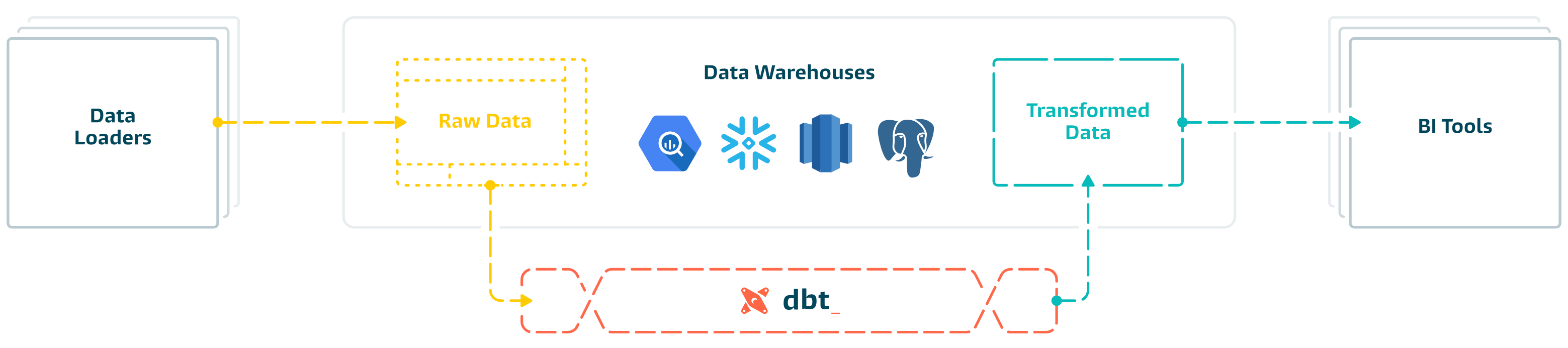
|
||||
dbt is the T in ELT. Organize, cleanse, denormalize, filter, rename, and pre-aggregate the raw data in your warehouse so that it's ready for analysis.
|
||||
|
||||
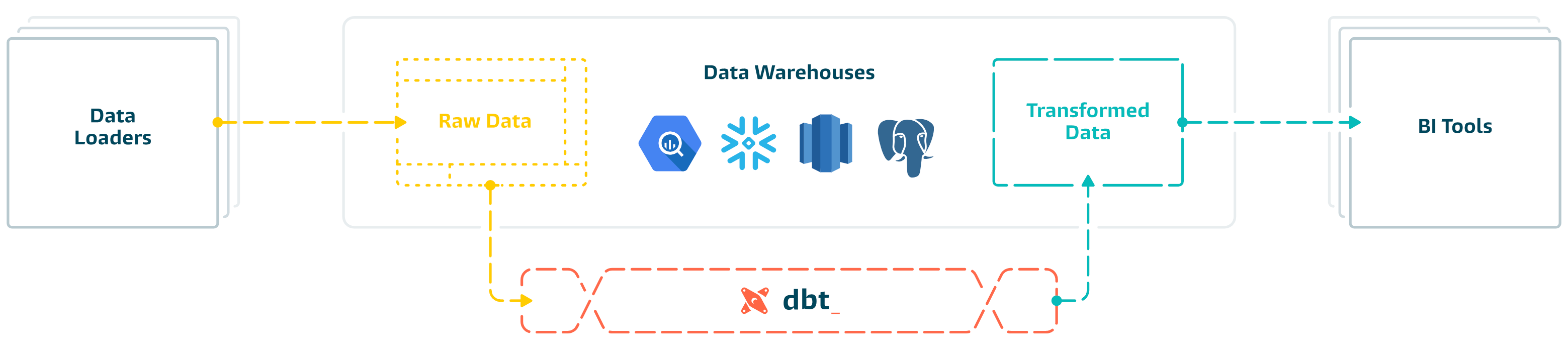
|
||||
|
||||
dbt can be used to [aggregate pageviews into sessions](https://github.com/fishtown-analytics/snowplow), calculate [ad spend ROI](https://github.com/fishtown-analytics/facebook-ads), or report on [email campaign performance](https://github.com/fishtown-analytics/mailchimp).
|
||||
|
||||
## Understanding dbt
|
||||
|
||||
@@ -20,22 +30,28 @@ Analysts using dbt can transform their data by simply writing select statements,
|
||||
|
||||
These select statements, or "models", form a dbt project. Models frequently build on top of one another – dbt makes it easy to [manage relationships](https://docs.getdbt.com/docs/ref) between models, and [visualize these relationships](https://docs.getdbt.com/docs/documentation), as well as assure the quality of your transformations through [testing](https://docs.getdbt.com/docs/testing).
|
||||
|
||||
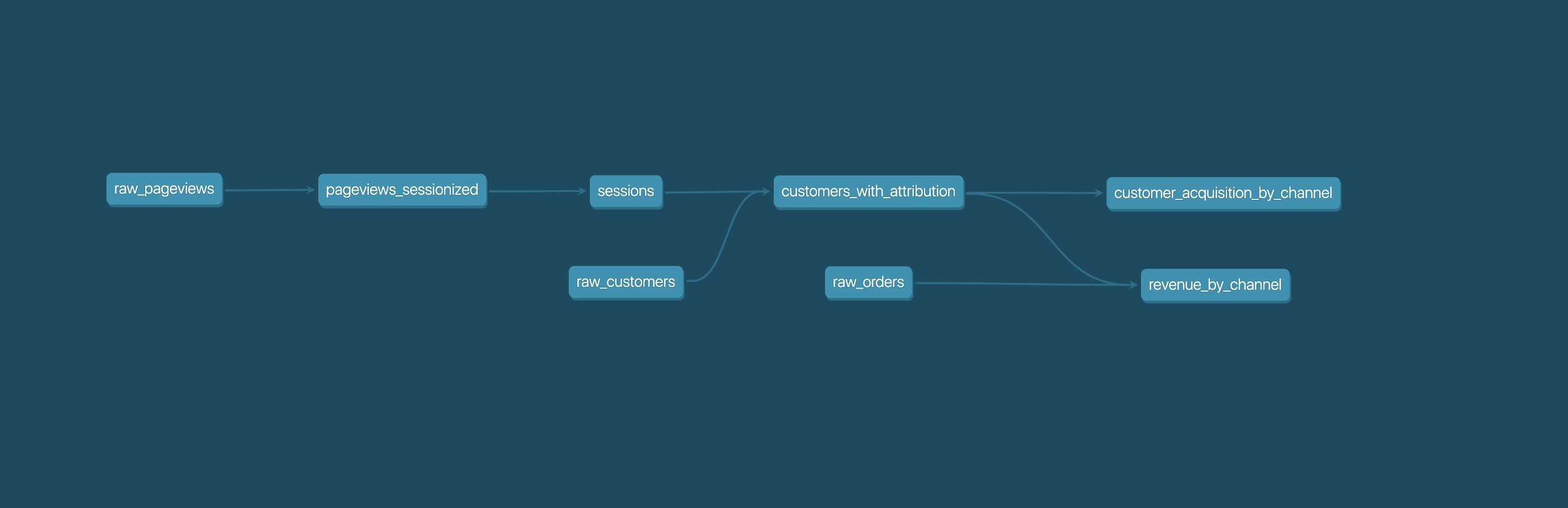
|
||||
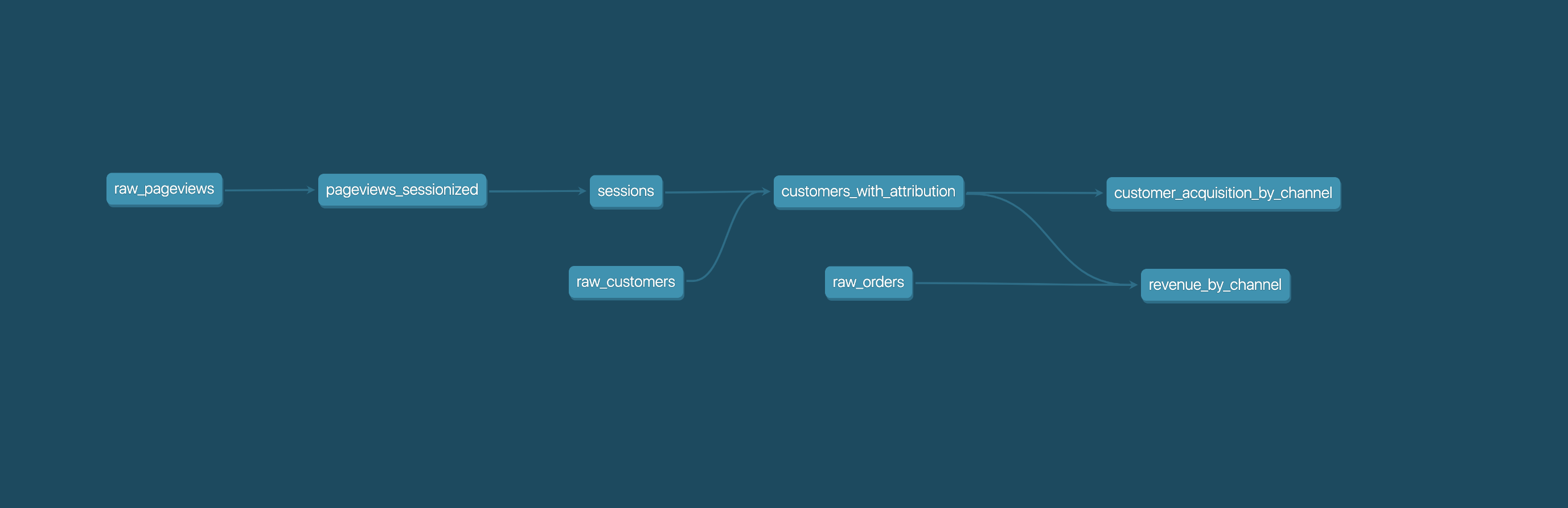
|
||||
|
||||
## Getting started
|
||||
|
||||
- [Install dbt](https://docs.getdbt.com/docs/installation)
|
||||
- Read the [introduction](https://docs.getdbt.com/docs/introduction/) and [viewpoint](https://docs.getdbt.com/docs/about/viewpoint/)
|
||||
- [Install dbt](https://docs.getdbt.com/docs/installation)
|
||||
- Read the [documentation](https://docs.getdbt.com/).
|
||||
- Productionize your dbt project with [dbt Cloud](https://www.getdbt.com)
|
||||
|
||||
## Join the dbt Community
|
||||
## Find out more
|
||||
|
||||
- Be part of the conversation in the [dbt Community Slack](http://community.getdbt.com/)
|
||||
- Read more on the [dbt Community Discourse](https://discourse.getdbt.com)
|
||||
- Check out the [Introduction to dbt](https://docs.getdbt.com/docs/introduction/).
|
||||
- Read the [dbt Viewpoint](https://docs.getdbt.com/docs/about/viewpoint/).
|
||||
|
||||
## Join thousands of analysts in the dbt community
|
||||
|
||||
- Join the [chat](http://community.getdbt.com/) on Slack.
|
||||
- Find community posts on [dbt Discourse](https://discourse.getdbt.com).
|
||||
|
||||
## Reporting bugs and contributing code
|
||||
|
||||
- Want to report a bug or request a feature? Let us know on [Slack](http://community.getdbt.com/), or open [an issue](https://github.com/dbt-labs/dbt/issues/new)
|
||||
- Want to help us build dbt? Check out the [Contributing Guide](https://github.com/dbt-labs/dbt/blob/HEAD/CONTRIBUTING.md)
|
||||
- Want to report a bug or request a feature? Let us know on [Slack](http://community.getdbt.com/), or open [an issue](https://github.com/fishtown-analytics/dbt/issues/new).
|
||||
- Want to help us build dbt? Check out the [Contributing Getting Started Guide](https://github.com/fishtown-analytics/dbt/blob/HEAD/CONTRIBUTING.md)
|
||||
|
||||
## Code of Conduct
|
||||
|
||||
|
||||
154
azure-pipelines.yml
Normal file
154
azure-pipelines.yml
Normal file
@@ -0,0 +1,154 @@
|
||||
# Python package
|
||||
# Create and test a Python package on multiple Python versions.
|
||||
# Add steps that analyze code, save the dist with the build record, publish to a PyPI-compatible index, and more:
|
||||
# https://docs.microsoft.com/azure/devops/pipelines/languages/python
|
||||
|
||||
trigger:
|
||||
branches:
|
||||
include:
|
||||
- develop
|
||||
- '*.latest'
|
||||
- pr/*
|
||||
|
||||
jobs:
|
||||
- job: UnitTest
|
||||
pool:
|
||||
vmImage: 'vs2017-win2016'
|
||||
steps:
|
||||
- task: UsePythonVersion@0
|
||||
inputs:
|
||||
versionSpec: '3.7'
|
||||
architecture: 'x64'
|
||||
|
||||
- script: python -m pip install --upgrade pip && pip install tox
|
||||
displayName: 'Install dependencies'
|
||||
|
||||
- script: python -m tox -e py -- -v
|
||||
displayName: Run unit tests
|
||||
|
||||
- job: PostgresIntegrationTest
|
||||
pool:
|
||||
vmImage: 'vs2017-win2016'
|
||||
dependsOn: UnitTest
|
||||
|
||||
steps:
|
||||
- pwsh: |
|
||||
$serviceName = Get-Service -Name postgresql*
|
||||
Set-Service -InputObject $serviceName -StartupType Automatic
|
||||
Start-Service -InputObject $serviceName
|
||||
|
||||
& $env:PGBIN\createdb.exe -U postgres dbt
|
||||
& $env:PGBIN\psql.exe -U postgres -c "CREATE ROLE root WITH PASSWORD 'password';"
|
||||
& $env:PGBIN\psql.exe -U postgres -c "ALTER ROLE root WITH LOGIN;"
|
||||
& $env:PGBIN\psql.exe -U postgres -c "GRANT CREATE, CONNECT ON DATABASE dbt TO root WITH GRANT OPTION;"
|
||||
& $env:PGBIN\psql.exe -U postgres -c "CREATE ROLE noaccess WITH PASSWORD 'password' NOSUPERUSER;"
|
||||
& $env:PGBIN\psql.exe -U postgres -c "ALTER ROLE noaccess WITH LOGIN;"
|
||||
& $env:PGBIN\psql.exe -U postgres -c "GRANT CONNECT ON DATABASE dbt TO noaccess;"
|
||||
displayName: Install postgresql and set up database
|
||||
|
||||
- task: UsePythonVersion@0
|
||||
inputs:
|
||||
versionSpec: '3.7'
|
||||
architecture: 'x64'
|
||||
|
||||
- script: python -m pip install --upgrade pip && pip install tox
|
||||
displayName: 'Install dependencies'
|
||||
|
||||
- script: python -m tox -e py-postgres -- -v -n4
|
||||
displayName: Run integration tests
|
||||
|
||||
# These three are all similar except secure environment variables, which MUST be passed along to their tasks,
|
||||
# but there's probably a better way to do this!
|
||||
- job: SnowflakeIntegrationTest
|
||||
pool:
|
||||
vmImage: 'vs2017-win2016'
|
||||
dependsOn: UnitTest
|
||||
condition: succeeded()
|
||||
steps:
|
||||
- task: UsePythonVersion@0
|
||||
inputs:
|
||||
versionSpec: '3.7'
|
||||
architecture: 'x64'
|
||||
|
||||
- script: python -m pip install --upgrade pip && pip install tox
|
||||
displayName: 'Install dependencies'
|
||||
|
||||
- script: python -m tox -e py-snowflake -- -v -n4
|
||||
env:
|
||||
SNOWFLAKE_TEST_ACCOUNT: $(SNOWFLAKE_TEST_ACCOUNT)
|
||||
SNOWFLAKE_TEST_PASSWORD: $(SNOWFLAKE_TEST_PASSWORD)
|
||||
SNOWFLAKE_TEST_USER: $(SNOWFLAKE_TEST_USER)
|
||||
SNOWFLAKE_TEST_WAREHOUSE: $(SNOWFLAKE_TEST_WAREHOUSE)
|
||||
SNOWFLAKE_TEST_OAUTH_REFRESH_TOKEN: $(SNOWFLAKE_TEST_OAUTH_REFRESH_TOKEN)
|
||||
SNOWFLAKE_TEST_OAUTH_CLIENT_ID: $(SNOWFLAKE_TEST_OAUTH_CLIENT_ID)
|
||||
SNOWFLAKE_TEST_OAUTH_CLIENT_SECRET: $(SNOWFLAKE_TEST_OAUTH_CLIENT_SECRET)
|
||||
displayName: Run integration tests
|
||||
|
||||
- job: BigQueryIntegrationTest
|
||||
pool:
|
||||
vmImage: 'vs2017-win2016'
|
||||
dependsOn: UnitTest
|
||||
condition: succeeded()
|
||||
steps:
|
||||
- task: UsePythonVersion@0
|
||||
inputs:
|
||||
versionSpec: '3.7'
|
||||
architecture: 'x64'
|
||||
- script: python -m pip install --upgrade pip && pip install tox
|
||||
displayName: 'Install dependencies'
|
||||
- script: python -m tox -e py-bigquery -- -v -n4
|
||||
env:
|
||||
BIGQUERY_SERVICE_ACCOUNT_JSON: $(BIGQUERY_SERVICE_ACCOUNT_JSON)
|
||||
displayName: Run integration tests
|
||||
|
||||
- job: RedshiftIntegrationTest
|
||||
pool:
|
||||
vmImage: 'vs2017-win2016'
|
||||
dependsOn: UnitTest
|
||||
condition: succeeded()
|
||||
steps:
|
||||
- task: UsePythonVersion@0
|
||||
inputs:
|
||||
versionSpec: '3.7'
|
||||
architecture: 'x64'
|
||||
|
||||
- script: python -m pip install --upgrade pip && pip install tox
|
||||
displayName: 'Install dependencies'
|
||||
|
||||
- script: python -m tox -e py-redshift -- -v -n4
|
||||
env:
|
||||
REDSHIFT_TEST_DBNAME: $(REDSHIFT_TEST_DBNAME)
|
||||
REDSHIFT_TEST_PASS: $(REDSHIFT_TEST_PASS)
|
||||
REDSHIFT_TEST_USER: $(REDSHIFT_TEST_USER)
|
||||
REDSHIFT_TEST_PORT: $(REDSHIFT_TEST_PORT)
|
||||
REDSHIFT_TEST_HOST: $(REDSHIFT_TEST_HOST)
|
||||
displayName: Run integration tests
|
||||
|
||||
- job: BuildWheel
|
||||
pool:
|
||||
vmImage: 'vs2017-win2016'
|
||||
dependsOn:
|
||||
- UnitTest
|
||||
- PostgresIntegrationTest
|
||||
- RedshiftIntegrationTest
|
||||
- SnowflakeIntegrationTest
|
||||
- BigQueryIntegrationTest
|
||||
condition: succeeded()
|
||||
steps:
|
||||
- task: UsePythonVersion@0
|
||||
inputs:
|
||||
versionSpec: '3.7'
|
||||
architecture: 'x64'
|
||||
- script: python -m pip install --upgrade pip setuptools && python -m pip install -r requirements.txt && python -m pip install -r dev-requirements.txt
|
||||
displayName: Install dependencies
|
||||
- task: ShellScript@2
|
||||
inputs:
|
||||
scriptPath: scripts/build-wheels.sh
|
||||
- task: CopyFiles@2
|
||||
inputs:
|
||||
contents: 'dist\?(*.whl|*.tar.gz)'
|
||||
TargetFolder: '$(Build.ArtifactStagingDirectory)'
|
||||
- task: PublishBuildArtifacts@1
|
||||
inputs:
|
||||
pathtoPublish: '$(Build.ArtifactStagingDirectory)'
|
||||
artifactName: dists
|
||||
73
converter.py
Executable file
73
converter.py
Executable file
@@ -0,0 +1,73 @@
|
||||
#!/usr/bin/env python
|
||||
import json
|
||||
import yaml
|
||||
import sys
|
||||
import argparse
|
||||
from datetime import datetime, timezone
|
||||
import dbt.clients.registry as registry
|
||||
|
||||
|
||||
def yaml_type(fname):
|
||||
with open(fname) as f:
|
||||
return yaml.load(f)
|
||||
|
||||
|
||||
def parse_args():
|
||||
parser = argparse.ArgumentParser()
|
||||
parser.add_argument("--project", type=yaml_type, default="dbt_project.yml")
|
||||
parser.add_argument("--namespace", required=True)
|
||||
return parser.parse_args()
|
||||
|
||||
|
||||
def get_full_name(args):
|
||||
return "{}/{}".format(args.namespace, args.project["name"])
|
||||
|
||||
|
||||
def init_project_in_packages(args, packages):
|
||||
full_name = get_full_name(args)
|
||||
if full_name not in packages:
|
||||
packages[full_name] = {
|
||||
"name": args.project["name"],
|
||||
"namespace": args.namespace,
|
||||
"latest": args.project["version"],
|
||||
"assets": {},
|
||||
"versions": {},
|
||||
}
|
||||
return packages[full_name]
|
||||
|
||||
|
||||
def add_version_to_package(args, project_json):
|
||||
project_json["versions"][args.project["version"]] = {
|
||||
"id": "{}/{}".format(get_full_name(args), args.project["version"]),
|
||||
"name": args.project["name"],
|
||||
"version": args.project["version"],
|
||||
"description": "",
|
||||
"published_at": datetime.now(timezone.utc).astimezone().isoformat(),
|
||||
"packages": args.project.get("packages") or [],
|
||||
"works_with": [],
|
||||
"_source": {
|
||||
"type": "github",
|
||||
"url": "",
|
||||
"readme": "",
|
||||
},
|
||||
"downloads": {
|
||||
"tarball": "",
|
||||
"format": "tgz",
|
||||
"sha1": "",
|
||||
},
|
||||
}
|
||||
|
||||
|
||||
def main():
|
||||
args = parse_args()
|
||||
packages = registry.packages()
|
||||
project_json = init_project_in_packages(args, packages)
|
||||
if args.project["version"] in project_json["versions"]:
|
||||
raise Exception("Version {} already in packages JSON"
|
||||
.format(args.project["version"]),
|
||||
file=sys.stderr)
|
||||
add_version_to_package(args, project_json)
|
||||
print(json.dumps(packages, indent=2))
|
||||
|
||||
if __name__ == "__main__":
|
||||
main()
|
||||
@@ -1 +1 @@
|
||||
recursive-include dbt/include *.py *.sql *.yml *.html *.md .gitkeep .gitignore
|
||||
recursive-include dbt/include *.py *.sql *.yml *.html *.md
|
||||
|
||||
@@ -31,6 +31,7 @@ from dbt.contracts.graph.compiled import (
|
||||
from dbt.contracts.graph.manifest import Manifest, MacroManifest
|
||||
from dbt.contracts.graph.parsed import ParsedSeedNode
|
||||
from dbt.exceptions import warn_or_error
|
||||
from dbt.node_types import NodeType
|
||||
from dbt.logger import GLOBAL_LOGGER as logger
|
||||
from dbt.utils import filter_null_values, executor
|
||||
|
||||
@@ -309,7 +310,8 @@ class BaseAdapter(metaclass=AdapterMeta):
|
||||
self.Relation.create_from(self.config, node).without_identifier()
|
||||
for node in manifest.nodes.values()
|
||||
if (
|
||||
node.is_relational and not node.is_ephemeral_model
|
||||
node.resource_type in NodeType.executable() and
|
||||
not node.is_ephemeral_model
|
||||
)
|
||||
}
|
||||
|
||||
@@ -511,7 +513,7 @@ class BaseAdapter(metaclass=AdapterMeta):
|
||||
def get_columns_in_relation(
|
||||
self, relation: BaseRelation
|
||||
) -> List[BaseColumn]:
|
||||
"""Get a list of the columns in the given Relation. """
|
||||
"""Get a list of the columns in the given Relation."""
|
||||
raise NotImplementedException(
|
||||
'`get_columns_in_relation` is not implemented for this adapter!'
|
||||
)
|
||||
|
||||
@@ -433,14 +433,13 @@ class SchemaSearchMap(Dict[InformationSchema, Set[Optional[str]]]):
|
||||
for schema in schemas:
|
||||
yield information_schema_name, schema
|
||||
|
||||
def flatten(self, allow_multiple_databases: bool = False):
|
||||
def flatten(self):
|
||||
new = self.__class__()
|
||||
|
||||
# make sure we don't have multiple databases if allow_multiple_databases is set to False
|
||||
if not allow_multiple_databases:
|
||||
seen = {r.database.lower() for r in self if r.database}
|
||||
if len(seen) > 1:
|
||||
dbt.exceptions.raise_compiler_error(str(seen))
|
||||
# make sure we don't have duplicates
|
||||
seen = {r.database.lower() for r in self if r.database}
|
||||
if len(seen) > 1:
|
||||
dbt.exceptions.raise_compiler_error(str(seen))
|
||||
|
||||
for information_schema_name, schema in self.search():
|
||||
path = {
|
||||
|
||||
@@ -35,11 +35,7 @@ class ISODateTime(agate.data_types.DateTime):
|
||||
)
|
||||
|
||||
|
||||
def build_type_tester(
|
||||
text_columns: Iterable[str],
|
||||
string_null_values: Optional[Iterable[str]] = ('null', '')
|
||||
) -> agate.TypeTester:
|
||||
|
||||
def build_type_tester(text_columns: Iterable[str]) -> agate.TypeTester:
|
||||
types = [
|
||||
agate.data_types.Number(null_values=('null', '')),
|
||||
agate.data_types.Date(null_values=('null', ''),
|
||||
@@ -50,10 +46,10 @@ def build_type_tester(
|
||||
agate.data_types.Boolean(true_values=('true',),
|
||||
false_values=('false',),
|
||||
null_values=('null', '')),
|
||||
agate.data_types.Text(null_values=string_null_values)
|
||||
agate.data_types.Text(null_values=('null', ''))
|
||||
]
|
||||
force = {
|
||||
k: agate.data_types.Text(null_values=string_null_values)
|
||||
k: agate.data_types.Text(null_values=('null', ''))
|
||||
for k in text_columns
|
||||
}
|
||||
return agate.TypeTester(force=force, types=types)
|
||||
@@ -70,13 +66,7 @@ def table_from_rows(
|
||||
if text_only_columns is None:
|
||||
column_types = DEFAULT_TYPE_TESTER
|
||||
else:
|
||||
# If text_only_columns are present, prevent coercing empty string or
|
||||
# literal 'null' strings to a None representation.
|
||||
column_types = build_type_tester(
|
||||
text_only_columns,
|
||||
string_null_values=()
|
||||
)
|
||||
|
||||
column_types = build_type_tester(text_only_columns)
|
||||
return agate.Table(rows, column_names, column_types=column_types)
|
||||
|
||||
|
||||
@@ -96,34 +86,19 @@ def table_from_data(data, column_names: Iterable[str]) -> agate.Table:
|
||||
|
||||
|
||||
def table_from_data_flat(data, column_names: Iterable[str]) -> agate.Table:
|
||||
"""
|
||||
Convert a list of dictionaries into an Agate table. This method does not
|
||||
coerce string values into more specific types (eg. '005' will not be
|
||||
coerced to '5'). Additionally, this method does not coerce values to
|
||||
None (eg. '' or 'null' will retain their string literal representations).
|
||||
"""
|
||||
"Convert list of dictionaries into an Agate table"
|
||||
|
||||
rows = []
|
||||
text_only_columns = set()
|
||||
for _row in data:
|
||||
row = []
|
||||
for col_name in column_names:
|
||||
value = _row[col_name]
|
||||
for value in list(_row.values()):
|
||||
if isinstance(value, (dict, list, tuple)):
|
||||
# Represent container types as json strings
|
||||
value = json.dumps(value, cls=dbt.utils.JSONEncoder)
|
||||
text_only_columns.add(col_name)
|
||||
elif isinstance(value, str):
|
||||
text_only_columns.add(col_name)
|
||||
row.append(value)
|
||||
|
||||
row.append(json.dumps(value, cls=dbt.utils.JSONEncoder))
|
||||
else:
|
||||
row.append(value)
|
||||
rows.append(row)
|
||||
|
||||
return table_from_rows(
|
||||
rows=rows,
|
||||
column_names=column_names,
|
||||
text_only_columns=text_only_columns
|
||||
)
|
||||
return table_from_rows(rows=rows, column_names=column_names)
|
||||
|
||||
|
||||
def empty_table():
|
||||
|
||||
@@ -153,7 +153,7 @@ def statically_parse_adapter_dispatch(func_call, ctx, db_wrapper):
|
||||
package_name = packages_arg.node.node.name
|
||||
macro_name = packages_arg.node.attr
|
||||
if (macro_name.startswith('_get') and 'namespaces' in macro_name):
|
||||
# noqa: https://github.com/dbt-labs/dbt-utils/blob/9e9407b/macros/cross_db_utils/_get_utils_namespaces.sql
|
||||
# noqa: https://github.com/fishtown-analytics/dbt-utils/blob/9e9407b/macros/cross_db_utils/_get_utils_namespaces.sql
|
||||
var_name = f'{package_name}_dispatch_list'
|
||||
# hard code compatibility for fivetran_utils, just a teensy bit different
|
||||
# noqa: https://github.com/fivetran/dbt_fivetran_utils/blob/0978ba2/macros/_get_utils_namespaces.sql
|
||||
|
||||
@@ -1,9 +1,10 @@
|
||||
import functools
|
||||
from functools import wraps
|
||||
import requests
|
||||
from dbt.utils import memoized, _connection_exception_retry as connection_exception_retry
|
||||
from dbt.exceptions import RegistryException
|
||||
from dbt.utils import memoized
|
||||
from dbt.logger import GLOBAL_LOGGER as logger
|
||||
from dbt import deprecations
|
||||
import os
|
||||
import time
|
||||
|
||||
if os.getenv('DBT_PACKAGE_HUB_URL'):
|
||||
DEFAULT_REGISTRY_BASE_URL = os.getenv('DBT_PACKAGE_HUB_URL')
|
||||
@@ -18,11 +19,26 @@ def _get_url(url, registry_base_url=None):
|
||||
return '{}{}'.format(registry_base_url, url)
|
||||
|
||||
|
||||
def _get_with_retries(path, registry_base_url=None):
|
||||
get_fn = functools.partial(_get, path, registry_base_url)
|
||||
return connection_exception_retry(get_fn, 5)
|
||||
def _wrap_exceptions(fn):
|
||||
@wraps(fn)
|
||||
def wrapper(*args, **kwargs):
|
||||
max_attempts = 5
|
||||
attempt = 0
|
||||
while True:
|
||||
attempt += 1
|
||||
try:
|
||||
return fn(*args, **kwargs)
|
||||
except (requests.exceptions.ConnectionError, requests.exceptions.Timeout) as exc:
|
||||
if attempt < max_attempts:
|
||||
time.sleep(1)
|
||||
continue
|
||||
raise RegistryException(
|
||||
'Unable to connect to registry hub'
|
||||
) from exc
|
||||
return wrapper
|
||||
|
||||
|
||||
@_wrap_exceptions
|
||||
def _get(path, registry_base_url=None):
|
||||
url = _get_url(path, registry_base_url)
|
||||
logger.debug('Making package registry request: GET {}'.format(url))
|
||||
@@ -34,44 +50,22 @@ def _get(path, registry_base_url=None):
|
||||
|
||||
|
||||
def index(registry_base_url=None):
|
||||
return _get_with_retries('api/v1/index.json', registry_base_url)
|
||||
return _get('api/v1/index.json', registry_base_url)
|
||||
|
||||
|
||||
index_cached = memoized(index)
|
||||
|
||||
|
||||
def packages(registry_base_url=None):
|
||||
return _get_with_retries('api/v1/packages.json', registry_base_url)
|
||||
return _get('api/v1/packages.json', registry_base_url)
|
||||
|
||||
|
||||
def package(name, registry_base_url=None):
|
||||
response = _get_with_retries('api/v1/{}.json'.format(name), registry_base_url)
|
||||
|
||||
# Either redirectnamespace or redirectname in the JSON response indicate a redirect
|
||||
# redirectnamespace redirects based on package ownership
|
||||
# redirectname redirects based on package name
|
||||
# Both can be present at the same time, or neither. Fails gracefully to old name
|
||||
|
||||
if ('redirectnamespace' in response) or ('redirectname' in response):
|
||||
|
||||
if ('redirectnamespace' in response) and response['redirectnamespace'] is not None:
|
||||
use_namespace = response['redirectnamespace']
|
||||
else:
|
||||
use_namespace = response['namespace']
|
||||
|
||||
if ('redirectname' in response) and response['redirectname'] is not None:
|
||||
use_name = response['redirectname']
|
||||
else:
|
||||
use_name = response['name']
|
||||
|
||||
new_nwo = use_namespace + "/" + use_name
|
||||
deprecations.warn('package-redirect', old_name=name, new_name=new_nwo)
|
||||
|
||||
return response
|
||||
return _get('api/v1/{}.json'.format(name), registry_base_url)
|
||||
|
||||
|
||||
def package_version(name, version, registry_base_url=None):
|
||||
return _get_with_retries('api/v1/{}/{}.json'.format(name, version), registry_base_url)
|
||||
return _get('api/v1/{}/{}.json'.format(name, version), registry_base_url)
|
||||
|
||||
|
||||
def get_available_versions(name):
|
||||
|
||||
@@ -1,5 +1,4 @@
|
||||
import errno
|
||||
import functools
|
||||
import fnmatch
|
||||
import json
|
||||
import os
|
||||
@@ -16,8 +15,9 @@ from typing import (
|
||||
)
|
||||
|
||||
import dbt.exceptions
|
||||
import dbt.utils
|
||||
|
||||
from dbt.logger import GLOBAL_LOGGER as logger
|
||||
from dbt.utils import _connection_exception_retry as connection_exception_retry
|
||||
|
||||
if sys.platform == 'win32':
|
||||
from ctypes import WinDLL, c_bool
|
||||
@@ -30,7 +30,7 @@ def find_matching(
|
||||
root_path: str,
|
||||
relative_paths_to_search: List[str],
|
||||
file_pattern: str,
|
||||
) -> List[Dict[str, Any]]:
|
||||
) -> List[Dict[str, str]]:
|
||||
"""
|
||||
Given an absolute `root_path`, a list of relative paths to that
|
||||
absolute root path (`relative_paths_to_search`), and a `file_pattern`
|
||||
@@ -61,19 +61,11 @@ def find_matching(
|
||||
relative_path = os.path.relpath(
|
||||
absolute_path, absolute_path_to_search
|
||||
)
|
||||
modification_time = 0.0
|
||||
try:
|
||||
modification_time = os.path.getmtime(absolute_path)
|
||||
except OSError:
|
||||
logger.exception(
|
||||
f"Error retrieving modification time for file {absolute_path}"
|
||||
)
|
||||
if reobj.match(local_file):
|
||||
matching.append({
|
||||
'searched_path': relative_path_to_search,
|
||||
'absolute_path': absolute_path,
|
||||
'relative_path': relative_path,
|
||||
'modification_time': modification_time,
|
||||
})
|
||||
|
||||
return matching
|
||||
@@ -449,13 +441,6 @@ def run_cmd(
|
||||
return out, err
|
||||
|
||||
|
||||
def download_with_retries(
|
||||
url: str, path: str, timeout: Optional[Union[float, tuple]] = None
|
||||
) -> None:
|
||||
download_fn = functools.partial(download, url, path, timeout)
|
||||
connection_exception_retry(download_fn, 5)
|
||||
|
||||
|
||||
def download(
|
||||
url: str, path: str, timeout: Optional[Union[float, tuple]] = None
|
||||
) -> None:
|
||||
|
||||
@@ -1,5 +1,5 @@
|
||||
import dbt.exceptions
|
||||
from typing import Any, Dict, Optional
|
||||
|
||||
import yaml
|
||||
import yaml.scanner
|
||||
|
||||
@@ -56,7 +56,7 @@ def contextualized_yaml_error(raw_contents, error):
|
||||
raw_error=error)
|
||||
|
||||
|
||||
def safe_load(contents) -> Optional[Dict[str, Any]]:
|
||||
def safe_load(contents):
|
||||
return yaml.load(contents, Loader=SafeLoader)
|
||||
|
||||
|
||||
|
||||
@@ -10,7 +10,7 @@ from dbt.adapters.factory import get_adapter
|
||||
from dbt.clients import jinja
|
||||
from dbt.clients.system import make_directory
|
||||
from dbt.context.providers import generate_runtime_model
|
||||
from dbt.contracts.graph.manifest import Manifest, UniqueID
|
||||
from dbt.contracts.graph.manifest import Manifest
|
||||
from dbt.contracts.graph.compiled import (
|
||||
COMPILED_TYPES,
|
||||
CompiledSchemaTestNode,
|
||||
@@ -107,18 +107,6 @@ def _extend_prepended_ctes(prepended_ctes, new_prepended_ctes):
|
||||
_add_prepended_cte(prepended_ctes, new_cte)
|
||||
|
||||
|
||||
def _get_tests_for_node(manifest: Manifest, unique_id: UniqueID) -> List[UniqueID]:
|
||||
""" Get a list of tests that depend on the node with the
|
||||
provided unique id """
|
||||
|
||||
return [
|
||||
node.unique_id
|
||||
for _, node in manifest.nodes.items()
|
||||
if node.resource_type == NodeType.Test and
|
||||
unique_id in node.depends_on_nodes
|
||||
]
|
||||
|
||||
|
||||
class Linker:
|
||||
def __init__(self, data=None):
|
||||
if data is None:
|
||||
@@ -154,7 +142,7 @@ class Linker:
|
||||
include all nodes in their corresponding graph entries.
|
||||
"""
|
||||
out_graph = self.graph.copy()
|
||||
for node_id in self.graph:
|
||||
for node_id in self.graph.nodes():
|
||||
data = manifest.expect(node_id).to_dict(omit_none=True)
|
||||
out_graph.add_node(node_id, **data)
|
||||
nx.write_gpickle(out_graph, outfile)
|
||||
@@ -424,80 +412,13 @@ class Compiler:
|
||||
self.link_node(linker, node, manifest)
|
||||
for exposure in manifest.exposures.values():
|
||||
self.link_node(linker, exposure, manifest)
|
||||
# linker.add_node(exposure.unique_id)
|
||||
|
||||
cycle = linker.find_cycles()
|
||||
|
||||
if cycle:
|
||||
raise RuntimeError("Found a cycle: {}".format(cycle))
|
||||
|
||||
self.resolve_graph(linker, manifest)
|
||||
|
||||
def resolve_graph(self, linker: Linker, manifest: Manifest) -> None:
|
||||
""" This method adds additional edges to the DAG. For a given non-test
|
||||
executable node, add an edge from an upstream test to the given node if
|
||||
the set of nodes the test depends on is a proper/strict subset of the
|
||||
upstream nodes for the given node. """
|
||||
|
||||
# Given a graph:
|
||||
# model1 --> model2 --> model3
|
||||
# | |
|
||||
# | \/
|
||||
# \/ test 2
|
||||
# test1
|
||||
#
|
||||
# Produce the following graph:
|
||||
# model1 --> model2 --> model3
|
||||
# | | /\ /\
|
||||
# | \/ | |
|
||||
# \/ test2 ------- |
|
||||
# test1 -------------------
|
||||
|
||||
for node_id in linker.graph:
|
||||
# If node is executable (in manifest.nodes) and does _not_
|
||||
# represent a test, continue.
|
||||
if (
|
||||
node_id in manifest.nodes and
|
||||
manifest.nodes[node_id].resource_type != NodeType.Test
|
||||
):
|
||||
# Get *everything* upstream of the node
|
||||
all_upstream_nodes = nx.traversal.bfs_tree(
|
||||
linker.graph, node_id, reverse=True
|
||||
)
|
||||
# Get the set of upstream nodes not including the current node.
|
||||
upstream_nodes = set([
|
||||
n for n in all_upstream_nodes if n != node_id
|
||||
])
|
||||
|
||||
# Get all tests that depend on any upstream nodes.
|
||||
upstream_tests = []
|
||||
for upstream_node in upstream_nodes:
|
||||
upstream_tests += _get_tests_for_node(
|
||||
manifest,
|
||||
upstream_node
|
||||
)
|
||||
|
||||
for upstream_test in upstream_tests:
|
||||
# Get the set of all nodes that the test depends on
|
||||
# including the upstream_node itself. This is necessary
|
||||
# because tests can depend on multiple nodes (ex:
|
||||
# relationship tests). Test nodes do not distinguish
|
||||
# between what node the test is "testing" and what
|
||||
# node(s) it depends on.
|
||||
test_depends_on = set(
|
||||
manifest.nodes[upstream_test].depends_on_nodes
|
||||
)
|
||||
|
||||
# If the set of nodes that an upstream test depends on
|
||||
# is a proper (or strict) subset of all upstream nodes of
|
||||
# the current node, add an edge from the upstream test
|
||||
# to the current node. Must be a proper/strict subset to
|
||||
# avoid adding a circular dependency to the graph.
|
||||
if (test_depends_on < upstream_nodes):
|
||||
linker.graph.add_edge(
|
||||
upstream_test,
|
||||
node_id
|
||||
)
|
||||
|
||||
def compile(self, manifest: Manifest, write=True) -> Graph:
|
||||
self.initialize()
|
||||
linker = Linker()
|
||||
|
||||
@@ -84,8 +84,7 @@ def read_user_config(directory: str) -> UserConfig:
|
||||
|
||||
# The Profile class is included in RuntimeConfig, so any attribute
|
||||
# additions must also be set where the RuntimeConfig class is created
|
||||
# `init=False` is a workaround for https://bugs.python.org/issue45081
|
||||
@dataclass(init=False)
|
||||
@dataclass
|
||||
class Profile(HasCredentials):
|
||||
profile_name: str
|
||||
target_name: str
|
||||
@@ -93,23 +92,6 @@ class Profile(HasCredentials):
|
||||
threads: int
|
||||
credentials: Credentials
|
||||
|
||||
def __init__(
|
||||
self,
|
||||
profile_name: str,
|
||||
target_name: str,
|
||||
config: UserConfig,
|
||||
threads: int,
|
||||
credentials: Credentials
|
||||
):
|
||||
"""Explicitly defining `__init__` to work around bug in Python 3.9.7
|
||||
https://bugs.python.org/issue45081
|
||||
"""
|
||||
self.profile_name = profile_name
|
||||
self.target_name = target_name
|
||||
self.config = config
|
||||
self.threads = threads
|
||||
self.credentials = credentials
|
||||
|
||||
def to_profile_info(
|
||||
self, serialize_credentials: bool = False
|
||||
) -> Dict[str, Any]:
|
||||
|
||||
@@ -645,24 +645,13 @@ class Project:
|
||||
def hashed_name(self):
|
||||
return hashlib.md5(self.project_name.encode('utf-8')).hexdigest()
|
||||
|
||||
def get_selector(self, name: str) -> Union[SelectionSpec, bool]:
|
||||
def get_selector(self, name: str) -> SelectionSpec:
|
||||
if name not in self.selectors:
|
||||
raise RuntimeException(
|
||||
f'Could not find selector named {name}, expected one of '
|
||||
f'{list(self.selectors)}'
|
||||
)
|
||||
return self.selectors[name]["definition"]
|
||||
|
||||
def get_default_selector_name(self) -> Union[str, None]:
|
||||
"""This function fetch the default selector to use on `dbt run` (if any)
|
||||
:return: either a selector if default is set or None
|
||||
:rtype: Union[SelectionSpec, None]
|
||||
"""
|
||||
for selector_name, selector in self.selectors.items():
|
||||
if selector["default"] is True:
|
||||
return selector_name
|
||||
|
||||
return None
|
||||
return self.selectors[name]
|
||||
|
||||
def get_macro_search_order(self, macro_namespace: str):
|
||||
for dispatch_entry in self.dispatch:
|
||||
|
||||
@@ -147,7 +147,7 @@ class DbtProjectYamlRenderer(BaseRenderer):
|
||||
|
||||
if first in {'seeds', 'models', 'snapshots', 'tests'}:
|
||||
keypath_parts = {
|
||||
(k.lstrip('+ ') if isinstance(k, str) else k)
|
||||
(k.lstrip('+') if isinstance(k, str) else k)
|
||||
for k in keypath
|
||||
}
|
||||
# model-level hooks
|
||||
|
||||
@@ -391,10 +391,6 @@ class UnsetCredentials(Credentials):
|
||||
def type(self):
|
||||
return None
|
||||
|
||||
@property
|
||||
def unique_field(self):
|
||||
return None
|
||||
|
||||
def connection_info(self, *args, **kwargs):
|
||||
return {}
|
||||
|
||||
|
||||
@@ -1,5 +1,5 @@
|
||||
from pathlib import Path
|
||||
from typing import Dict, Any, Union
|
||||
from typing import Dict, Any
|
||||
from dbt.clients.yaml_helper import ( # noqa: F401
|
||||
yaml, Loader, Dumper, load_yaml_text
|
||||
)
|
||||
@@ -29,14 +29,13 @@ Validator Error:
|
||||
"""
|
||||
|
||||
|
||||
class SelectorConfig(Dict[str, Dict[str, Union[SelectionSpec, bool]]]):
|
||||
class SelectorConfig(Dict[str, SelectionSpec]):
|
||||
|
||||
@classmethod
|
||||
def selectors_from_dict(cls, data: Dict[str, Any]) -> 'SelectorConfig':
|
||||
try:
|
||||
SelectorFile.validate(data)
|
||||
selector_file = SelectorFile.from_dict(data)
|
||||
validate_selector_default(selector_file)
|
||||
selectors = parse_from_selectors_definition(selector_file)
|
||||
except ValidationError as exc:
|
||||
yaml_sel_cfg = yaml.dump(exc.instance)
|
||||
@@ -119,24 +118,6 @@ def selector_config_from_data(
|
||||
return selectors
|
||||
|
||||
|
||||
def validate_selector_default(selector_file: SelectorFile) -> None:
|
||||
"""Check if a selector.yml file has more than 1 default key set to true"""
|
||||
default_set: bool = False
|
||||
default_selector_name: Union[str, None] = None
|
||||
|
||||
for selector in selector_file.selectors:
|
||||
if selector.default is True and default_set is False:
|
||||
default_set = True
|
||||
default_selector_name = selector.name
|
||||
continue
|
||||
if selector.default is True and default_set is True:
|
||||
raise DbtSelectorsError(
|
||||
"Error when parsing the selector file. "
|
||||
"Found multiple selectors with `default: true`:"
|
||||
f"{default_selector_name} and {selector.name}"
|
||||
)
|
||||
|
||||
|
||||
# These are utilities to clean up the dictionary created from
|
||||
# selectors.yml by turning the cli-string format entries into
|
||||
# normalized dictionary entries. It parallels the flow in
|
||||
|
||||
@@ -97,7 +97,7 @@ class BaseContextConfigGenerator(Generic[T]):
|
||||
result = {}
|
||||
for key, value in level_config.items():
|
||||
if key.startswith('+'):
|
||||
result[key[1:].strip()] = deepcopy(value)
|
||||
result[key[1:]] = deepcopy(value)
|
||||
elif not isinstance(value, dict):
|
||||
result[key] = deepcopy(value)
|
||||
|
||||
@@ -120,12 +120,11 @@ class BaseContextConfigGenerator(Generic[T]):
|
||||
|
||||
def calculate_node_config(
|
||||
self,
|
||||
config_call_dict: Dict[str, Any],
|
||||
config_calls: List[Dict[str, Any]],
|
||||
fqn: List[str],
|
||||
resource_type: NodeType,
|
||||
project_name: str,
|
||||
base: bool,
|
||||
patch_config_dict: Dict[str, Any] = None
|
||||
) -> BaseConfig:
|
||||
own_config = self.get_node_project(project_name)
|
||||
|
||||
@@ -135,15 +134,8 @@ class BaseContextConfigGenerator(Generic[T]):
|
||||
for fqn_config in project_configs:
|
||||
result = self._update_from_config(result, fqn_config)
|
||||
|
||||
# When schema files patch config, it has lower precedence than
|
||||
# config in the models (config_call_dict), so we add the patch_config_dict
|
||||
# before the config_call_dict
|
||||
if patch_config_dict:
|
||||
result = self._update_from_config(result, patch_config_dict)
|
||||
|
||||
# config_calls are created in the 'experimental' model parser and
|
||||
# the ParseConfigObject (via add_config_call)
|
||||
result = self._update_from_config(result, config_call_dict)
|
||||
for config_call in config_calls:
|
||||
result = self._update_from_config(result, config_call)
|
||||
|
||||
if own_config.project_name != self._active_project.project_name:
|
||||
for fqn_config in self._active_project_configs(fqn, resource_type):
|
||||
@@ -155,12 +147,11 @@ class BaseContextConfigGenerator(Generic[T]):
|
||||
@abstractmethod
|
||||
def calculate_node_config_dict(
|
||||
self,
|
||||
config_call_dict: Dict[str, Any],
|
||||
config_calls: List[Dict[str, Any]],
|
||||
fqn: List[str],
|
||||
resource_type: NodeType,
|
||||
project_name: str,
|
||||
base: bool,
|
||||
patch_config_dict: Dict[str, Any],
|
||||
) -> Dict[str, Any]:
|
||||
...
|
||||
|
||||
@@ -195,20 +186,18 @@ class ContextConfigGenerator(BaseContextConfigGenerator[C]):
|
||||
|
||||
def calculate_node_config_dict(
|
||||
self,
|
||||
config_call_dict: Dict[str, Any],
|
||||
config_calls: List[Dict[str, Any]],
|
||||
fqn: List[str],
|
||||
resource_type: NodeType,
|
||||
project_name: str,
|
||||
base: bool,
|
||||
patch_config_dict: dict = None
|
||||
) -> Dict[str, Any]:
|
||||
config = self.calculate_node_config(
|
||||
config_call_dict=config_call_dict,
|
||||
config_calls=config_calls,
|
||||
fqn=fqn,
|
||||
resource_type=resource_type,
|
||||
project_name=project_name,
|
||||
base=base,
|
||||
patch_config_dict=patch_config_dict
|
||||
)
|
||||
finalized = config.finalize_and_validate()
|
||||
return finalized.to_dict(omit_none=True)
|
||||
@@ -220,20 +209,18 @@ class UnrenderedConfigGenerator(BaseContextConfigGenerator[Dict[str, Any]]):
|
||||
|
||||
def calculate_node_config_dict(
|
||||
self,
|
||||
config_call_dict: Dict[str, Any],
|
||||
config_calls: List[Dict[str, Any]],
|
||||
fqn: List[str],
|
||||
resource_type: NodeType,
|
||||
project_name: str,
|
||||
base: bool,
|
||||
patch_config_dict: dict = None
|
||||
) -> Dict[str, Any]:
|
||||
return self.calculate_node_config(
|
||||
config_call_dict=config_call_dict,
|
||||
config_calls=config_calls,
|
||||
fqn=fqn,
|
||||
resource_type=resource_type,
|
||||
project_name=project_name,
|
||||
base=base,
|
||||
patch_config_dict=patch_config_dict
|
||||
)
|
||||
|
||||
def initial_result(
|
||||
@@ -264,39 +251,20 @@ class ContextConfig:
|
||||
resource_type: NodeType,
|
||||
project_name: str,
|
||||
) -> None:
|
||||
self._config_call_dict: Dict[str, Any] = {}
|
||||
self._config_calls: List[Dict[str, Any]] = []
|
||||
self._active_project = active_project
|
||||
self._fqn = fqn
|
||||
self._resource_type = resource_type
|
||||
self._project_name = project_name
|
||||
|
||||
def add_config_call(self, opts: Dict[str, Any]) -> None:
|
||||
dct = self._config_call_dict
|
||||
self._add_config_call(dct, opts)
|
||||
|
||||
@classmethod
|
||||
def _add_config_call(cls, config_call_dict, opts: Dict[str, Any]) -> None:
|
||||
for k, v in opts.items():
|
||||
# MergeBehavior for post-hook and pre-hook is to collect all
|
||||
# values, instead of overwriting
|
||||
if k in BaseConfig.mergebehavior['append']:
|
||||
if not isinstance(v, list):
|
||||
v = [v]
|
||||
if k in BaseConfig.mergebehavior['update'] and not isinstance(v, dict):
|
||||
raise InternalException(f'expected dict, got {v}')
|
||||
if k in config_call_dict and isinstance(config_call_dict[k], list):
|
||||
config_call_dict[k].extend(v)
|
||||
elif k in config_call_dict and isinstance(config_call_dict[k], dict):
|
||||
config_call_dict[k].update(v)
|
||||
else:
|
||||
config_call_dict[k] = v
|
||||
def update_in_model_config(self, opts: Dict[str, Any]) -> None:
|
||||
self._config_calls.append(opts)
|
||||
|
||||
def build_config_dict(
|
||||
self,
|
||||
base: bool = False,
|
||||
*,
|
||||
rendered: bool = True,
|
||||
patch_config_dict: dict = None
|
||||
) -> Dict[str, Any]:
|
||||
if rendered:
|
||||
src = ContextConfigGenerator(self._active_project)
|
||||
@@ -304,10 +272,9 @@ class ContextConfig:
|
||||
src = UnrenderedConfigGenerator(self._active_project)
|
||||
|
||||
return src.calculate_node_config_dict(
|
||||
config_call_dict=self._config_call_dict,
|
||||
config_calls=self._config_calls,
|
||||
fqn=self._fqn,
|
||||
resource_type=self._resource_type,
|
||||
project_name=self._project_name,
|
||||
base=base,
|
||||
patch_config_dict=patch_config_dict
|
||||
)
|
||||
|
||||
@@ -169,8 +169,6 @@ class TestMacroNamespace:
|
||||
|
||||
def recursively_get_depends_on_macros(self, depends_on_macros, dep_macros):
|
||||
for macro_unique_id in depends_on_macros:
|
||||
if macro_unique_id in dep_macros:
|
||||
continue
|
||||
dep_macros.append(macro_unique_id)
|
||||
if macro_unique_id in self.macro_resolver.macros:
|
||||
macro = self.macro_resolver.macros[macro_unique_id]
|
||||
|
||||
@@ -279,7 +279,7 @@ class Config(Protocol):
|
||||
...
|
||||
|
||||
|
||||
# Implementation of "config(..)" calls in models
|
||||
# `config` implementations
|
||||
class ParseConfigObject(Config):
|
||||
def __init__(self, model, context_config: Optional[ContextConfig]):
|
||||
self.model = model
|
||||
@@ -316,7 +316,7 @@ class ParseConfigObject(Config):
|
||||
raise RuntimeException(
|
||||
'At parse time, did not receive a context config'
|
||||
)
|
||||
self.context_config.add_config_call(opts)
|
||||
self.context_config.update_in_model_config(opts)
|
||||
return ''
|
||||
|
||||
def set(self, name, value):
|
||||
@@ -1243,7 +1243,7 @@ class ModelContext(ProviderContext):
|
||||
|
||||
@contextproperty
|
||||
def pre_hooks(self) -> List[Dict[str, Any]]:
|
||||
if self.model.resource_type in [NodeType.Source, NodeType.Test]:
|
||||
if isinstance(self.model, ParsedSourceDefinition):
|
||||
return []
|
||||
return [
|
||||
h.to_dict(omit_none=True) for h in self.model.config.pre_hook
|
||||
@@ -1251,7 +1251,7 @@ class ModelContext(ProviderContext):
|
||||
|
||||
@contextproperty
|
||||
def post_hooks(self) -> List[Dict[str, Any]]:
|
||||
if self.model.resource_type in [NodeType.Source, NodeType.Test]:
|
||||
if isinstance(self.model, ParsedSourceDefinition):
|
||||
return []
|
||||
return [
|
||||
h.to_dict(omit_none=True) for h in self.model.config.post_hook
|
||||
|
||||
@@ -1,6 +1,5 @@
|
||||
import abc
|
||||
import itertools
|
||||
import hashlib
|
||||
from dataclasses import dataclass, field
|
||||
from typing import (
|
||||
Any, ClassVar, Dict, Tuple, Iterable, Optional, List, Callable,
|
||||
@@ -128,15 +127,6 @@ class Credentials(
|
||||
'type not implemented for base credentials class'
|
||||
)
|
||||
|
||||
@abc.abstractproperty
|
||||
def unique_field(self) -> str:
|
||||
raise NotImplementedError(
|
||||
'type not implemented for base credentials class'
|
||||
)
|
||||
|
||||
def hashed_unique_field(self) -> str:
|
||||
return hashlib.md5(self.unique_field.encode('utf-8')).hexdigest()
|
||||
|
||||
def connection_info(
|
||||
self, *, with_aliases: bool = False
|
||||
) -> Iterable[Tuple[str, Any]]:
|
||||
|
||||
@@ -42,7 +42,6 @@ parse_file_type_to_parser = {
|
||||
class FilePath(dbtClassMixin):
|
||||
searched_path: str
|
||||
relative_path: str
|
||||
modification_time: float
|
||||
project_root: str
|
||||
|
||||
@property
|
||||
@@ -133,10 +132,6 @@ class RemoteFile(dbtClassMixin):
|
||||
def original_file_path(self):
|
||||
return 'from remote system'
|
||||
|
||||
@property
|
||||
def modification_time(self):
|
||||
return 'from remote system'
|
||||
|
||||
|
||||
@dataclass
|
||||
class BaseSourceFile(dbtClassMixin, SerializableType):
|
||||
@@ -155,15 +150,26 @@ class BaseSourceFile(dbtClassMixin, SerializableType):
|
||||
def file_id(self):
|
||||
if isinstance(self.path, RemoteFile):
|
||||
return None
|
||||
if self.checksum.name == 'none':
|
||||
return None
|
||||
return f'{self.project_name}://{self.path.original_file_path}'
|
||||
|
||||
def _serialize(self):
|
||||
dct = self.to_dict()
|
||||
if 'pp_files' in dct:
|
||||
del dct['pp_files']
|
||||
if 'pp_test_index' in dct:
|
||||
del dct['pp_test_index']
|
||||
return dct
|
||||
|
||||
@classmethod
|
||||
def _deserialize(cls, dct: Dict[str, int]):
|
||||
if dct['parse_file_type'] == 'schema':
|
||||
# TODO: why are these keys even here
|
||||
if 'pp_files' in dct:
|
||||
del dct['pp_files']
|
||||
if 'pp_test_index' in dct:
|
||||
del dct['pp_test_index']
|
||||
sf = SchemaSourceFile.from_dict(dct)
|
||||
else:
|
||||
sf = SourceFile.from_dict(dct)
|
||||
@@ -217,13 +223,13 @@ class SourceFile(BaseSourceFile):
|
||||
class SchemaSourceFile(BaseSourceFile):
|
||||
dfy: Dict[str, Any] = field(default_factory=dict)
|
||||
# these are in the manifest.nodes dictionary
|
||||
tests: Dict[str, Any] = field(default_factory=dict)
|
||||
tests: List[str] = field(default_factory=list)
|
||||
sources: List[str] = field(default_factory=list)
|
||||
exposures: List[str] = field(default_factory=list)
|
||||
# node patches contain models, seeds, snapshots, analyses
|
||||
ndp: List[str] = field(default_factory=list)
|
||||
# any macro patches in this file by macro unique_id.
|
||||
mcp: Dict[str, str] = field(default_factory=dict)
|
||||
mcp: List[str] = field(default_factory=list)
|
||||
# any source patches in this file. The entries are package, name pairs
|
||||
# Patches are only against external sources. Sources can be
|
||||
# created too, but those are in 'sources'
|
||||
@@ -249,53 +255,14 @@ class SchemaSourceFile(BaseSourceFile):
|
||||
|
||||
def __post_serialize__(self, dct):
|
||||
dct = super().__post_serialize__(dct)
|
||||
# Remove partial parsing specific data
|
||||
for key in ('pp_files', 'pp_test_index', 'pp_dict'):
|
||||
if key in dct:
|
||||
del dct[key]
|
||||
if 'pp_files' in dct:
|
||||
del dct['pp_files']
|
||||
if 'pp_test_index' in dct:
|
||||
del dct['pp_test_index']
|
||||
return dct
|
||||
|
||||
def append_patch(self, yaml_key, unique_id):
|
||||
self.node_patches.append(unique_id)
|
||||
|
||||
def add_test(self, node_unique_id, test_from):
|
||||
name = test_from['name']
|
||||
key = test_from['key']
|
||||
if key not in self.tests:
|
||||
self.tests[key] = {}
|
||||
if name not in self.tests[key]:
|
||||
self.tests[key][name] = []
|
||||
self.tests[key][name].append(node_unique_id)
|
||||
|
||||
def remove_tests(self, yaml_key, name):
|
||||
if yaml_key in self.tests:
|
||||
if name in self.tests[yaml_key]:
|
||||
del self.tests[yaml_key][name]
|
||||
|
||||
def get_tests(self, yaml_key, name):
|
||||
if yaml_key in self.tests:
|
||||
if name in self.tests[yaml_key]:
|
||||
return self.tests[yaml_key][name]
|
||||
return []
|
||||
|
||||
def get_key_and_name_for_test(self, test_unique_id):
|
||||
yaml_key = None
|
||||
block_name = None
|
||||
for key in self.tests.keys():
|
||||
for name in self.tests[key]:
|
||||
for unique_id in self.tests[key][name]:
|
||||
if unique_id == test_unique_id:
|
||||
yaml_key = key
|
||||
block_name = name
|
||||
break
|
||||
return (yaml_key, block_name)
|
||||
|
||||
def get_all_test_ids(self):
|
||||
test_ids = []
|
||||
for key in self.tests.keys():
|
||||
for name in self.tests[key]:
|
||||
test_ids.extend(self.tests[key][name])
|
||||
return test_ids
|
||||
|
||||
|
||||
AnySourceFile = Union[SchemaSourceFile, SourceFile]
|
||||
|
||||
@@ -109,9 +109,7 @@ class CompiledSnapshotNode(CompiledNode):
|
||||
@dataclass
|
||||
class CompiledDataTestNode(CompiledNode):
|
||||
resource_type: NodeType = field(metadata={'restrict': [NodeType.Test]})
|
||||
# Was not able to make mypy happy and keep the code working. We need to
|
||||
# refactor the various configs.
|
||||
config: TestConfig = field(default_factory=TestConfig) # type:ignore
|
||||
config: TestConfig = field(default_factory=TestConfig)
|
||||
|
||||
|
||||
@dataclass
|
||||
@@ -119,9 +117,7 @@ class CompiledSchemaTestNode(CompiledNode, HasTestMetadata):
|
||||
# keep this in sync with ParsedSchemaTestNode!
|
||||
resource_type: NodeType = field(metadata={'restrict': [NodeType.Test]})
|
||||
column_name: Optional[str] = None
|
||||
# Was not able to make mypy happy and keep the code working. We need to
|
||||
# refactor the various configs.
|
||||
config: TestConfig = field(default_factory=TestConfig) # type:ignore
|
||||
config: TestConfig = field(default_factory=TestConfig)
|
||||
|
||||
def same_contents(self, other) -> bool:
|
||||
if other is None:
|
||||
|
||||
@@ -14,7 +14,7 @@ from dbt.contracts.graph.compiled import (
|
||||
CompileResultNode, ManifestNode, NonSourceCompiledNode, GraphMemberNode
|
||||
)
|
||||
from dbt.contracts.graph.parsed import (
|
||||
ParsedMacro, ParsedDocumentation,
|
||||
ParsedMacro, ParsedDocumentation, ParsedNodePatch, ParsedMacroPatch,
|
||||
ParsedSourceDefinition, ParsedExposure, HasUniqueID,
|
||||
UnpatchedSourceDefinition, ManifestNodes
|
||||
)
|
||||
@@ -26,7 +26,9 @@ from dbt.contracts.util import (
|
||||
from dbt.dataclass_schema import dbtClassMixin
|
||||
from dbt.exceptions import (
|
||||
CompilationException,
|
||||
raise_duplicate_resource_name, raise_compiler_error,
|
||||
raise_duplicate_resource_name, raise_compiler_error, warn_or_error,
|
||||
raise_duplicate_patch_name,
|
||||
raise_duplicate_macro_patch_name, raise_duplicate_source_patch_name,
|
||||
)
|
||||
from dbt.helper_types import PathSet
|
||||
from dbt.logger import GLOBAL_LOGGER as logger
|
||||
@@ -170,7 +172,7 @@ class RefableLookup(dbtClassMixin):
|
||||
|
||||
|
||||
class AnalysisLookup(RefableLookup):
|
||||
_lookup_types: ClassVar[set] = set([NodeType.Analysis])
|
||||
_lookup_types: ClassVar[set] = set(NodeType.Analysis)
|
||||
|
||||
|
||||
def _search_packages(
|
||||
@@ -241,7 +243,7 @@ def _sort_values(dct):
|
||||
return {k: sorted(v) for k, v in dct.items()}
|
||||
|
||||
|
||||
def build_node_edges(nodes: List[ManifestNode]):
|
||||
def build_edges(nodes: List[ManifestNode]):
|
||||
"""Build the forward and backward edges on the given list of ParsedNodes
|
||||
and return them as two separate dictionaries, each mapping unique IDs to
|
||||
lists of edges.
|
||||
@@ -257,18 +259,6 @@ def build_node_edges(nodes: List[ManifestNode]):
|
||||
return _sort_values(forward_edges), _sort_values(backward_edges)
|
||||
|
||||
|
||||
# Build a map of children of macros
|
||||
def build_macro_edges(nodes: List[Any]):
|
||||
forward_edges: Dict[str, List[str]] = {
|
||||
n.unique_id: [] for n in nodes if n.unique_id.startswith('macro') or n.depends_on.macros
|
||||
}
|
||||
for node in nodes:
|
||||
for unique_id in node.depends_on.macros:
|
||||
if unique_id in forward_edges.keys():
|
||||
forward_edges[unique_id].append(node.unique_id)
|
||||
return _sort_values(forward_edges)
|
||||
|
||||
|
||||
def _deepcopy(value):
|
||||
return value.from_dict(value.to_dict(omit_none=True))
|
||||
|
||||
@@ -535,12 +525,6 @@ class MacroMethods:
|
||||
return candidates
|
||||
|
||||
|
||||
@dataclass
|
||||
class ParsingInfo:
|
||||
static_analysis_parsed_path_count: int = 0
|
||||
static_analysis_path_count: int = 0
|
||||
|
||||
|
||||
@dataclass
|
||||
class ManifestStateCheck(dbtClassMixin):
|
||||
vars_hash: FileHash = field(default_factory=FileHash.empty)
|
||||
@@ -582,13 +566,9 @@ class Manifest(MacroMethods, DataClassMessagePackMixin, dbtClassMixin):
|
||||
_analysis_lookup: Optional[AnalysisLookup] = field(
|
||||
default=None, metadata={'serialize': lambda x: None, 'deserialize': lambda x: None}
|
||||
)
|
||||
_parsing_info: ParsingInfo = field(
|
||||
default_factory=ParsingInfo,
|
||||
metadata={'serialize': lambda x: None, 'deserialize': lambda x: None}
|
||||
)
|
||||
_lock: Lock = field(
|
||||
default_factory=flags.MP_CONTEXT.Lock,
|
||||
metadata={'serialize': lambda x: None, 'deserialize': lambda x: None}
|
||||
metadata={'serialize': lambda x: None, 'deserialize': lambda x: flags.MP_CONTEXT.Lock}
|
||||
)
|
||||
|
||||
def __pre_serialize__(self):
|
||||
@@ -597,11 +577,6 @@ class Manifest(MacroMethods, DataClassMessagePackMixin, dbtClassMixin):
|
||||
self.source_patches = {}
|
||||
return self
|
||||
|
||||
@classmethod
|
||||
def __post_deserialize__(cls, obj):
|
||||
obj._lock = flags.MP_CONTEXT.Lock()
|
||||
return obj
|
||||
|
||||
def sync_update_node(
|
||||
self, new_node: NonSourceCompiledNode
|
||||
) -> NonSourceCompiledNode:
|
||||
@@ -716,6 +691,60 @@ class Manifest(MacroMethods, DataClassMessagePackMixin, dbtClassMixin):
|
||||
resource_fqns[resource_type_plural].add(tuple(resource.fqn))
|
||||
return resource_fqns
|
||||
|
||||
# This is called by 'parse_patch' in the NodePatchParser
|
||||
def add_patch(
|
||||
self, source_file: SchemaSourceFile, patch: ParsedNodePatch,
|
||||
) -> None:
|
||||
if patch.yaml_key in ['models', 'seeds', 'snapshots']:
|
||||
unique_id = self.ref_lookup.get_unique_id(patch.name, None)
|
||||
elif patch.yaml_key == 'analyses':
|
||||
unique_id = self.analysis_lookup.get_unique_id(patch.name, None)
|
||||
else:
|
||||
raise dbt.exceptions.InternalException(
|
||||
f'Unexpected yaml_key {patch.yaml_key} for patch in '
|
||||
f'file {source_file.path.original_file_path}'
|
||||
)
|
||||
if unique_id is None:
|
||||
# This will usually happen when a node is disabled
|
||||
return
|
||||
|
||||
# patches can't be overwritten
|
||||
node = self.nodes.get(unique_id)
|
||||
if node:
|
||||
if node.patch_path:
|
||||
package_name, existing_file_path = node.patch_path.split('://')
|
||||
raise_duplicate_patch_name(patch, existing_file_path)
|
||||
source_file.append_patch(patch.yaml_key, unique_id)
|
||||
node.patch(patch)
|
||||
|
||||
def add_macro_patch(
|
||||
self, source_file: SchemaSourceFile, patch: ParsedMacroPatch,
|
||||
) -> None:
|
||||
# macros are fully namespaced
|
||||
unique_id = f'macro.{patch.package_name}.{patch.name}'
|
||||
macro = self.macros.get(unique_id)
|
||||
if not macro:
|
||||
warn_or_error(
|
||||
f'WARNING: Found documentation for macro "{patch.name}" '
|
||||
f'which was not found'
|
||||
)
|
||||
return
|
||||
if macro.patch_path:
|
||||
package_name, existing_file_path = macro.patch_path.split('://')
|
||||
raise_duplicate_macro_patch_name(patch, existing_file_path)
|
||||
source_file.macro_patches.append(unique_id)
|
||||
macro.patch(patch)
|
||||
|
||||
def add_source_patch(
|
||||
self, source_file: SchemaSourceFile, patch: SourcePatch,
|
||||
) -> None:
|
||||
# source patches must be unique
|
||||
key = (patch.overrides, patch.name)
|
||||
if key in self.source_patches:
|
||||
raise_duplicate_source_patch_name(patch, self.source_patches[key])
|
||||
self.source_patches[key] = patch
|
||||
source_file.source_patches.append(key)
|
||||
|
||||
def get_used_schemas(self, resource_types=None):
|
||||
return frozenset({
|
||||
(node.database, node.schema) for node in
|
||||
@@ -750,18 +779,10 @@ class Manifest(MacroMethods, DataClassMessagePackMixin, dbtClassMixin):
|
||||
self.sources.values(),
|
||||
self.exposures.values(),
|
||||
))
|
||||
forward_edges, backward_edges = build_node_edges(edge_members)
|
||||
forward_edges, backward_edges = build_edges(edge_members)
|
||||
self.child_map = forward_edges
|
||||
self.parent_map = backward_edges
|
||||
|
||||
def build_macro_child_map(self):
|
||||
edge_members = list(chain(
|
||||
self.nodes.values(),
|
||||
self.macros.values(),
|
||||
))
|
||||
forward_edges = build_macro_edges(edge_members)
|
||||
return forward_edges
|
||||
|
||||
def writable_manifest(self):
|
||||
self.build_parent_and_child_maps()
|
||||
return WritableManifest(
|
||||
@@ -995,11 +1016,10 @@ class Manifest(MacroMethods, DataClassMessagePackMixin, dbtClassMixin):
|
||||
_check_duplicates(node, self.nodes)
|
||||
self.nodes[node.unique_id] = node
|
||||
|
||||
def add_node(self, source_file: AnySourceFile, node: ManifestNodes, test_from=None):
|
||||
def add_node(self, source_file: AnySourceFile, node: ManifestNodes):
|
||||
self.add_node_nofile(node)
|
||||
if isinstance(source_file, SchemaSourceFile):
|
||||
assert test_from
|
||||
source_file.add_test(node.unique_id, test_from)
|
||||
source_file.tests.append(node.unique_id)
|
||||
else:
|
||||
source_file.nodes.append(node.unique_id)
|
||||
|
||||
@@ -1014,11 +1034,10 @@ class Manifest(MacroMethods, DataClassMessagePackMixin, dbtClassMixin):
|
||||
else:
|
||||
self._disabled[node.unique_id] = [node]
|
||||
|
||||
def add_disabled(self, source_file: AnySourceFile, node: CompileResultNode, test_from=None):
|
||||
def add_disabled(self, source_file: AnySourceFile, node: CompileResultNode):
|
||||
self.add_disabled_nofile(node)
|
||||
if isinstance(source_file, SchemaSourceFile):
|
||||
assert test_from
|
||||
source_file.add_test(node.unique_id, test_from)
|
||||
source_file.tests.append(node.unique_id)
|
||||
else:
|
||||
source_file.nodes.append(node.unique_id)
|
||||
|
||||
|
||||
@@ -2,13 +2,13 @@ from dataclasses import field, Field, dataclass
|
||||
from enum import Enum
|
||||
from itertools import chain
|
||||
from typing import (
|
||||
Any, List, Optional, Dict, Union, Type, TypeVar, Callable
|
||||
Any, List, Optional, Dict, Union, Type, TypeVar
|
||||
)
|
||||
from dbt.dataclass_schema import (
|
||||
dbtClassMixin, ValidationError, register_pattern,
|
||||
)
|
||||
from dbt.contracts.graph.unparsed import AdditionalPropertiesAllowed
|
||||
from dbt.exceptions import InternalException, CompilationException
|
||||
from dbt.exceptions import InternalException
|
||||
from dbt.contracts.util import Replaceable, list_str
|
||||
from dbt import hooks
|
||||
from dbt.node_types import NodeType
|
||||
@@ -204,34 +204,6 @@ class BaseConfig(
|
||||
else:
|
||||
self._extra[key] = value
|
||||
|
||||
def __delitem__(self, key):
|
||||
if hasattr(self, key):
|
||||
msg = (
|
||||
'Error, tried to delete config key "{}": Cannot delete '
|
||||
'built-in keys'
|
||||
).format(key)
|
||||
raise CompilationException(msg)
|
||||
else:
|
||||
del self._extra[key]
|
||||
|
||||
def _content_iterator(self, include_condition: Callable[[Field], bool]):
|
||||
seen = set()
|
||||
for fld, _ in self._get_fields():
|
||||
seen.add(fld.name)
|
||||
if include_condition(fld):
|
||||
yield fld.name
|
||||
|
||||
for key in self._extra:
|
||||
if key not in seen:
|
||||
seen.add(key)
|
||||
yield key
|
||||
|
||||
def __iter__(self):
|
||||
yield from self._content_iterator(include_condition=lambda f: True)
|
||||
|
||||
def __len__(self):
|
||||
return len(self._get_fields()) + len(self._extra)
|
||||
|
||||
@staticmethod
|
||||
def compare_key(
|
||||
unrendered: Dict[str, Any],
|
||||
@@ -267,15 +239,8 @@ class BaseConfig(
|
||||
return False
|
||||
return True
|
||||
|
||||
# This is used in 'add_config_call' to created the combined config_call_dict.
|
||||
# 'meta' moved here from node
|
||||
mergebehavior = {
|
||||
"append": ['pre-hook', 'pre_hook', 'post-hook', 'post_hook', 'tags'],
|
||||
"update": ['quoting', 'column_types', 'meta'],
|
||||
}
|
||||
|
||||
@classmethod
|
||||
def _merge_dicts(
|
||||
def _extract_dict(
|
||||
cls, src: Dict[str, Any], data: Dict[str, Any]
|
||||
) -> Dict[str, Any]:
|
||||
"""Find all the items in data that match a target_field on this class,
|
||||
@@ -321,10 +286,10 @@ class BaseConfig(
|
||||
|
||||
adapter_config_cls = get_config_class_by_name(adapter_type)
|
||||
|
||||
self_merged = self._merge_dicts(dct, data)
|
||||
self_merged = self._extract_dict(dct, data)
|
||||
dct.update(self_merged)
|
||||
|
||||
adapter_merged = adapter_config_cls._merge_dicts(dct, data)
|
||||
adapter_merged = adapter_config_cls._extract_dict(dct, data)
|
||||
dct.update(adapter_merged)
|
||||
|
||||
# any remaining fields must be "clobber"
|
||||
@@ -356,8 +321,33 @@ class SourceConfig(BaseConfig):
|
||||
|
||||
|
||||
@dataclass
|
||||
class NodeAndTestConfig(BaseConfig):
|
||||
class NodeConfig(BaseConfig):
|
||||
enabled: bool = True
|
||||
materialized: str = 'view'
|
||||
persist_docs: Dict[str, Any] = field(default_factory=dict)
|
||||
post_hook: List[Hook] = field(
|
||||
default_factory=list,
|
||||
metadata=MergeBehavior.Append.meta(),
|
||||
)
|
||||
pre_hook: List[Hook] = field(
|
||||
default_factory=list,
|
||||
metadata=MergeBehavior.Append.meta(),
|
||||
)
|
||||
# this only applies for config v1, so it doesn't participate in comparison
|
||||
vars: Dict[str, Any] = field(
|
||||
default_factory=dict,
|
||||
metadata=metas(CompareBehavior.Exclude, MergeBehavior.Update),
|
||||
)
|
||||
quoting: Dict[str, Any] = field(
|
||||
default_factory=dict,
|
||||
metadata=MergeBehavior.Update.meta(),
|
||||
)
|
||||
# This is actually only used by seeds. Should it be available to others?
|
||||
# That would be a breaking change!
|
||||
column_types: Dict[str, Any] = field(
|
||||
default_factory=dict,
|
||||
metadata=MergeBehavior.Update.meta(),
|
||||
)
|
||||
# these fields are included in serialized output, but are not part of
|
||||
# config comparison (they are part of database_representation)
|
||||
alias: Optional[str] = field(
|
||||
@@ -378,38 +368,7 @@ class NodeAndTestConfig(BaseConfig):
|
||||
MergeBehavior.Append,
|
||||
CompareBehavior.Exclude),
|
||||
)
|
||||
meta: Dict[str, Any] = field(
|
||||
default_factory=dict,
|
||||
metadata=MergeBehavior.Update.meta(),
|
||||
)
|
||||
|
||||
|
||||
@dataclass
|
||||
class NodeConfig(NodeAndTestConfig):
|
||||
# Note: if any new fields are added with MergeBehavior, also update the
|
||||
# 'mergebehavior' dictionary
|
||||
materialized: str = 'view'
|
||||
persist_docs: Dict[str, Any] = field(default_factory=dict)
|
||||
post_hook: List[Hook] = field(
|
||||
default_factory=list,
|
||||
metadata=MergeBehavior.Append.meta(),
|
||||
)
|
||||
pre_hook: List[Hook] = field(
|
||||
default_factory=list,
|
||||
metadata=MergeBehavior.Append.meta(),
|
||||
)
|
||||
quoting: Dict[str, Any] = field(
|
||||
default_factory=dict,
|
||||
metadata=MergeBehavior.Update.meta(),
|
||||
)
|
||||
# This is actually only used by seeds. Should it be available to others?
|
||||
# That would be a breaking change!
|
||||
column_types: Dict[str, Any] = field(
|
||||
default_factory=dict,
|
||||
metadata=MergeBehavior.Update.meta(),
|
||||
)
|
||||
full_refresh: Optional[bool] = None
|
||||
on_schema_change: Optional[str] = 'ignore'
|
||||
|
||||
@classmethod
|
||||
def __pre_deserialize__(cls, data):
|
||||
@@ -451,8 +410,7 @@ class SeedConfig(NodeConfig):
|
||||
|
||||
|
||||
@dataclass
|
||||
class TestConfig(NodeAndTestConfig):
|
||||
# this is repeated because of a different default
|
||||
class TestConfig(NodeConfig):
|
||||
schema: Optional[str] = field(
|
||||
default='dbt_test__audit',
|
||||
metadata=CompareBehavior.Exclude.meta(),
|
||||
|
||||
@@ -148,7 +148,6 @@ class ParsedNodeMixins(dbtClassMixin):
|
||||
"""Given a ParsedNodePatch, add the new information to the node."""
|
||||
# explicitly pick out the parts to update so we don't inadvertently
|
||||
# step on the model name or anything
|
||||
# Note: config should already be updated
|
||||
self.patch_path: Optional[str] = patch.file_id
|
||||
# update created_at so process_docs will run in partial parsing
|
||||
self.created_at = int(time.time())
|
||||
@@ -167,6 +166,9 @@ class ParsedNodeMixins(dbtClassMixin):
|
||||
def get_materialization(self):
|
||||
return self.config.materialized
|
||||
|
||||
def local_vars(self):
|
||||
return self.config.vars
|
||||
|
||||
|
||||
@dataclass
|
||||
class ParsedNodeMandatory(
|
||||
@@ -201,7 +203,6 @@ class ParsedNodeDefaults(ParsedNodeMandatory):
|
||||
deferred: bool = False
|
||||
unrendered_config: Dict[str, Any] = field(default_factory=dict)
|
||||
created_at: int = field(default_factory=lambda: int(time.time()))
|
||||
config_call_dict: Dict[str, Any] = field(default_factory=dict)
|
||||
|
||||
def write_node(self, target_path: str, subdirectory: str, payload: str):
|
||||
if (os.path.basename(self.path) ==
|
||||
@@ -228,11 +229,6 @@ class ParsedNode(ParsedNodeDefaults, ParsedNodeMixins, SerializableType):
|
||||
def _serialize(self):
|
||||
return self.to_dict()
|
||||
|
||||
def __post_serialize__(self, dct):
|
||||
if 'config_call_dict' in dct:
|
||||
del dct['config_call_dict']
|
||||
return dct
|
||||
|
||||
@classmethod
|
||||
def _deserialize(cls, dct: Dict[str, int]):
|
||||
# The serialized ParsedNodes do not differ from each other
|
||||
@@ -262,16 +258,10 @@ class ParsedNode(ParsedNodeDefaults, ParsedNodeMixins, SerializableType):
|
||||
return cls.from_dict(dct)
|
||||
|
||||
def _persist_column_docs(self) -> bool:
|
||||
if hasattr(self.config, 'persist_docs'):
|
||||
assert isinstance(self.config, NodeConfig)
|
||||
return bool(self.config.persist_docs.get('columns'))
|
||||
return False
|
||||
return bool(self.config.persist_docs.get('columns'))
|
||||
|
||||
def _persist_relation_docs(self) -> bool:
|
||||
if hasattr(self.config, 'persist_docs'):
|
||||
assert isinstance(self.config, NodeConfig)
|
||||
return bool(self.config.persist_docs.get('relation'))
|
||||
return False
|
||||
return bool(self.config.persist_docs.get('relation'))
|
||||
|
||||
def same_body(self: T, other: T) -> bool:
|
||||
return self.raw_sql == other.raw_sql
|
||||
@@ -421,9 +411,7 @@ class HasTestMetadata(dbtClassMixin):
|
||||
@dataclass
|
||||
class ParsedDataTestNode(ParsedNode):
|
||||
resource_type: NodeType = field(metadata={'restrict': [NodeType.Test]})
|
||||
# Was not able to make mypy happy and keep the code working. We need to
|
||||
# refactor the various configs.
|
||||
config: TestConfig = field(default_factory=TestConfig) # type: ignore
|
||||
config: TestConfig = field(default_factory=TestConfig)
|
||||
|
||||
|
||||
@dataclass
|
||||
@@ -431,9 +419,7 @@ class ParsedSchemaTestNode(ParsedNode, HasTestMetadata):
|
||||
# keep this in sync with CompiledSchemaTestNode!
|
||||
resource_type: NodeType = field(metadata={'restrict': [NodeType.Test]})
|
||||
column_name: Optional[str] = None
|
||||
# Was not able to make mypy happy and keep the code working. We need to
|
||||
# refactor the various configs.
|
||||
config: TestConfig = field(default_factory=TestConfig) # type: ignore
|
||||
config: TestConfig = field(default_factory=TestConfig)
|
||||
|
||||
def same_contents(self, other) -> bool:
|
||||
if other is None:
|
||||
@@ -470,7 +456,6 @@ class ParsedPatch(HasYamlMetadata, Replaceable):
|
||||
description: str
|
||||
meta: Dict[str, Any]
|
||||
docs: Docs
|
||||
config: Dict[str, Any]
|
||||
|
||||
|
||||
# The parsed node update is only the 'patch', not the test. The test became a
|
||||
@@ -502,6 +487,9 @@ class ParsedMacro(UnparsedBaseNode, HasUniqueID):
|
||||
arguments: List[MacroArgument] = field(default_factory=list)
|
||||
created_at: int = field(default_factory=lambda: int(time.time()))
|
||||
|
||||
def local_vars(self):
|
||||
return {}
|
||||
|
||||
def patch(self, patch: ParsedMacroPatch):
|
||||
self.patch_path: Optional[str] = patch.file_id
|
||||
self.description = patch.description
|
||||
@@ -604,8 +592,7 @@ class ParsedSourceDefinition(
|
||||
UnparsedBaseNode,
|
||||
HasUniqueID,
|
||||
HasRelationMetadata,
|
||||
HasFqn,
|
||||
|
||||
HasFqn
|
||||
):
|
||||
name: str
|
||||
source_name: str
|
||||
@@ -702,10 +689,6 @@ class ParsedSourceDefinition(
|
||||
def depends_on_nodes(self):
|
||||
return []
|
||||
|
||||
@property
|
||||
def depends_on(self):
|
||||
return DependsOn(macros=[], nodes=[])
|
||||
|
||||
@property
|
||||
def refs(self):
|
||||
return []
|
||||
|
||||
@@ -126,17 +126,12 @@ class HasYamlMetadata(dbtClassMixin):
|
||||
|
||||
|
||||
@dataclass
|
||||
class HasConfig():
|
||||
config: Dict[str, Any] = field(default_factory=dict)
|
||||
|
||||
|
||||
@dataclass
|
||||
class UnparsedAnalysisUpdate(HasConfig, HasColumnDocs, HasDocs, HasYamlMetadata):
|
||||
class UnparsedAnalysisUpdate(HasColumnDocs, HasDocs, HasYamlMetadata):
|
||||
pass
|
||||
|
||||
|
||||
@dataclass
|
||||
class UnparsedNodeUpdate(HasConfig, HasColumnTests, HasTests, HasYamlMetadata):
|
||||
class UnparsedNodeUpdate(HasColumnTests, HasTests, HasYamlMetadata):
|
||||
quote_columns: Optional[bool] = None
|
||||
|
||||
|
||||
@@ -148,7 +143,7 @@ class MacroArgument(dbtClassMixin):
|
||||
|
||||
|
||||
@dataclass
|
||||
class UnparsedMacroUpdate(HasConfig, HasDocs, HasYamlMetadata):
|
||||
class UnparsedMacroUpdate(HasDocs, HasYamlMetadata):
|
||||
arguments: List[MacroArgument] = field(default_factory=list)
|
||||
|
||||
|
||||
@@ -266,7 +261,6 @@ class UnparsedSourceDefinition(dbtClassMixin, Replaceable):
|
||||
loaded_at_field: Optional[str] = None
|
||||
tables: List[UnparsedSourceTableDefinition] = field(default_factory=list)
|
||||
tags: List[str] = field(default_factory=list)
|
||||
config: Dict[str, Any] = field(default_factory=dict)
|
||||
|
||||
@property
|
||||
def yaml_key(self) -> 'str':
|
||||
|
||||
@@ -83,7 +83,6 @@ class GitPackage(Package):
|
||||
class RegistryPackage(Package):
|
||||
package: str
|
||||
version: Union[RawVersion, List[RawVersion]]
|
||||
install_prerelease: Optional[bool] = False
|
||||
|
||||
def get_versions(self) -> List[str]:
|
||||
if isinstance(self.version, list):
|
||||
|
||||
@@ -78,7 +78,6 @@ class TestStatus(StrEnum):
|
||||
Error = NodeStatus.Error
|
||||
Fail = NodeStatus.Fail
|
||||
Warn = NodeStatus.Warn
|
||||
Skipped = NodeStatus.Skipped
|
||||
|
||||
|
||||
class FreshnessStatus(StrEnum):
|
||||
@@ -285,9 +284,6 @@ class SourceFreshnessOutput(dbtClassMixin):
|
||||
status: FreshnessStatus
|
||||
criteria: FreshnessThreshold
|
||||
adapter_response: Dict[str, Any]
|
||||
timing: List[TimingInfo]
|
||||
thread_id: str
|
||||
execution_time: float
|
||||
|
||||
|
||||
@dataclass
|
||||
@@ -336,10 +332,7 @@ def process_freshness_result(
|
||||
max_loaded_at_time_ago_in_s=result.age,
|
||||
status=result.status,
|
||||
criteria=criteria,
|
||||
adapter_response=result.adapter_response,
|
||||
timing=result.timing,
|
||||
thread_id=result.thread_id,
|
||||
execution_time=result.execution_time,
|
||||
adapter_response=result.adapter_response
|
||||
)
|
||||
|
||||
|
||||
|
||||
@@ -58,7 +58,6 @@ class RPCExecParameters(RPCParameters):
|
||||
class RPCCompileParameters(RPCParameters):
|
||||
threads: Optional[int] = None
|
||||
models: Union[None, str, List[str]] = None
|
||||
select: Union[None, str, List[str]] = None
|
||||
exclude: Union[None, str, List[str]] = None
|
||||
selector: Optional[str] = None
|
||||
state: Optional[str] = None
|
||||
@@ -72,14 +71,12 @@ class RPCListParameters(RPCParameters):
|
||||
select: Union[None, str, List[str]] = None
|
||||
selector: Optional[str] = None
|
||||
output: Optional[str] = 'json'
|
||||
output_keys: Optional[List[str]] = None
|
||||
|
||||
|
||||
@dataclass
|
||||
class RPCRunParameters(RPCParameters):
|
||||
threads: Optional[int] = None
|
||||
models: Union[None, str, List[str]] = None
|
||||
select: Union[None, str, List[str]] = None
|
||||
exclude: Union[None, str, List[str]] = None
|
||||
selector: Optional[str] = None
|
||||
state: Optional[str] = None
|
||||
@@ -119,17 +116,6 @@ class RPCDocsGenerateParameters(RPCParameters):
|
||||
state: Optional[str] = None
|
||||
|
||||
|
||||
@dataclass
|
||||
class RPCBuildParameters(RPCParameters):
|
||||
resource_types: Optional[List[str]] = None
|
||||
select: Union[None, str, List[str]] = None
|
||||
threads: Optional[int] = None
|
||||
exclude: Union[None, str, List[str]] = None
|
||||
selector: Optional[str] = None
|
||||
state: Optional[str] = None
|
||||
defer: Optional[bool] = None
|
||||
|
||||
|
||||
@dataclass
|
||||
class RPCCliParameters(RPCParameters):
|
||||
cli: str
|
||||
@@ -200,8 +186,6 @@ class RPCRunOperationParameters(RPCParameters):
|
||||
class RPCSourceFreshnessParameters(RPCParameters):
|
||||
threads: Optional[int] = None
|
||||
select: Union[None, str, List[str]] = None
|
||||
exclude: Union[None, str, List[str]] = None
|
||||
selector: Optional[str] = None
|
||||
|
||||
|
||||
@dataclass
|
||||
|
||||
@@ -9,7 +9,6 @@ class SelectorDefinition(dbtClassMixin):
|
||||
name: str
|
||||
definition: Union[str, Dict[str, Any]]
|
||||
description: str = ''
|
||||
default: bool = False
|
||||
|
||||
|
||||
@dataclass
|
||||
|
||||
@@ -131,14 +131,6 @@ class AdapterMacroDeprecation(DBTDeprecation):
|
||||
'''
|
||||
|
||||
|
||||
class PackageRedirectDeprecation(DBTDeprecation):
|
||||
_name = 'package-redirect'
|
||||
_description = '''\
|
||||
The `{old_name}` package is deprecated in favor of `{new_name}`. Please update
|
||||
your `packages.yml` configuration to use `{new_name}` instead.
|
||||
'''
|
||||
|
||||
|
||||
_adapter_renamed_description = """\
|
||||
The adapter function `adapter.{old_name}` is deprecated and will be removed in
|
||||
a future release of dbt. Please use `adapter.{new_name}` instead.
|
||||
@@ -184,7 +176,6 @@ deprecations_list: List[DBTDeprecation] = [
|
||||
ModelsKeyNonModelDeprecation(),
|
||||
ExecuteMacrosReleaseDeprecation(),
|
||||
AdapterMacroDeprecation(),
|
||||
PackageRedirectDeprecation()
|
||||
]
|
||||
|
||||
deprecations: Dict[str, DBTDeprecation] = {
|
||||
|
||||
@@ -30,13 +30,9 @@ class RegistryPackageMixin:
|
||||
|
||||
|
||||
class RegistryPinnedPackage(RegistryPackageMixin, PinnedPackage):
|
||||
def __init__(self,
|
||||
package: str,
|
||||
version: str,
|
||||
version_latest: str) -> None:
|
||||
def __init__(self, package: str, version: str) -> None:
|
||||
super().__init__(package)
|
||||
self.version = version
|
||||
self.version_latest = version_latest
|
||||
|
||||
@property
|
||||
def name(self):
|
||||
@@ -48,9 +44,6 @@ class RegistryPinnedPackage(RegistryPackageMixin, PinnedPackage):
|
||||
def get_version(self):
|
||||
return self.version
|
||||
|
||||
def get_version_latest(self):
|
||||
return self.version_latest
|
||||
|
||||
def nice_version_name(self):
|
||||
return 'version {}'.format(self.version)
|
||||
|
||||
@@ -68,7 +61,7 @@ class RegistryPinnedPackage(RegistryPackageMixin, PinnedPackage):
|
||||
system.make_directory(os.path.dirname(tar_path))
|
||||
|
||||
download_url = metadata.downloads.tarball
|
||||
system.download_with_retries(download_url, tar_path)
|
||||
system.download(download_url, tar_path)
|
||||
deps_path = project.modules_path
|
||||
package_name = self.get_project_name(project, renderer)
|
||||
system.untar_package(tar_path, deps_path, package_name)
|
||||
@@ -78,14 +71,10 @@ class RegistryUnpinnedPackage(
|
||||
RegistryPackageMixin, UnpinnedPackage[RegistryPinnedPackage]
|
||||
):
|
||||
def __init__(
|
||||
self,
|
||||
package: str,
|
||||
versions: List[semver.VersionSpecifier],
|
||||
install_prerelease: bool
|
||||
self, package: str, versions: List[semver.VersionSpecifier]
|
||||
) -> None:
|
||||
super().__init__(package)
|
||||
self.versions = versions
|
||||
self.install_prerelease = install_prerelease
|
||||
|
||||
def _check_in_index(self):
|
||||
index = registry.index_cached()
|
||||
@@ -102,18 +91,13 @@ class RegistryUnpinnedPackage(
|
||||
semver.VersionSpecifier.from_version_string(v)
|
||||
for v in raw_version
|
||||
]
|
||||
return cls(
|
||||
package=contract.package,
|
||||
versions=versions,
|
||||
install_prerelease=contract.install_prerelease
|
||||
)
|
||||
return cls(package=contract.package, versions=versions)
|
||||
|
||||
def incorporate(
|
||||
self, other: 'RegistryUnpinnedPackage'
|
||||
) -> 'RegistryUnpinnedPackage':
|
||||
return RegistryUnpinnedPackage(
|
||||
package=self.package,
|
||||
install_prerelease=self.install_prerelease,
|
||||
versions=self.versions + other.versions,
|
||||
)
|
||||
|
||||
@@ -127,18 +111,12 @@ class RegistryUnpinnedPackage(
|
||||
raise DependencyException(new_msg) from e
|
||||
|
||||
available = registry.get_available_versions(self.package)
|
||||
installable = semver.filter_installable(
|
||||
available,
|
||||
self.install_prerelease
|
||||
)
|
||||
available_latest = installable[-1]
|
||||
|
||||
# for now, pick a version and then recurse. later on,
|
||||
# we'll probably want to traverse multiple options
|
||||
# so we can match packages. not going to make a difference
|
||||
# right now.
|
||||
target = semver.resolve_to_specific_version(range_, installable)
|
||||
target = semver.resolve_to_specific_version(range_, available)
|
||||
if not target:
|
||||
package_version_not_found(self.package, range_, installable)
|
||||
return RegistryPinnedPackage(package=self.package, version=target,
|
||||
version_latest=available_latest)
|
||||
package_version_not_found(self.package, range_, available)
|
||||
return RegistryPinnedPackage(package=self.package, version=target)
|
||||
|
||||
@@ -710,11 +710,11 @@ def system_error(operation_name):
|
||||
raise_compiler_error(
|
||||
"dbt encountered an error when attempting to {}. "
|
||||
"If this error persists, please create an issue at: \n\n"
|
||||
"https://github.com/dbt-labs/dbt"
|
||||
"https://github.com/fishtown-analytics/dbt"
|
||||
.format(operation_name))
|
||||
|
||||
|
||||
class ConnectionException(Exception):
|
||||
class RegistryException(Exception):
|
||||
pass
|
||||
|
||||
|
||||
|
||||
@@ -18,7 +18,6 @@ WRITE_JSON = None
|
||||
PARTIAL_PARSE = None
|
||||
USE_COLORS = None
|
||||
STORE_FAILURES = None
|
||||
GREEDY = None
|
||||
|
||||
|
||||
def env_set_truthy(key: str) -> Optional[str]:
|
||||
@@ -57,7 +56,7 @@ MP_CONTEXT = _get_context()
|
||||
def reset():
|
||||
global STRICT_MODE, FULL_REFRESH, USE_CACHE, WARN_ERROR, TEST_NEW_PARSER, \
|
||||
USE_EXPERIMENTAL_PARSER, WRITE_JSON, PARTIAL_PARSE, MP_CONTEXT, USE_COLORS, \
|
||||
STORE_FAILURES, GREEDY
|
||||
STORE_FAILURES
|
||||
|
||||
STRICT_MODE = False
|
||||
FULL_REFRESH = False
|
||||
@@ -70,13 +69,12 @@ def reset():
|
||||
MP_CONTEXT = _get_context()
|
||||
USE_COLORS = True
|
||||
STORE_FAILURES = False
|
||||
GREEDY = False
|
||||
|
||||
|
||||
def set_from_args(args):
|
||||
global STRICT_MODE, FULL_REFRESH, USE_CACHE, WARN_ERROR, TEST_NEW_PARSER, \
|
||||
USE_EXPERIMENTAL_PARSER, WRITE_JSON, PARTIAL_PARSE, MP_CONTEXT, USE_COLORS, \
|
||||
STORE_FAILURES, GREEDY
|
||||
STORE_FAILURES
|
||||
|
||||
USE_CACHE = getattr(args, 'use_cache', USE_CACHE)
|
||||
|
||||
@@ -101,7 +99,6 @@ def set_from_args(args):
|
||||
USE_COLORS = use_colors_override
|
||||
|
||||
STORE_FAILURES = getattr(args, 'store_failures', STORE_FAILURES)
|
||||
GREEDY = getattr(args, 'greedy', GREEDY)
|
||||
|
||||
|
||||
# initialize everything to the defaults on module load
|
||||
|
||||
@@ -1,5 +1,4 @@
|
||||
# special support for CLI argument parsing.
|
||||
from dbt import flags
|
||||
import itertools
|
||||
from dbt.clients.yaml_helper import yaml, Loader, Dumper # noqa: F401
|
||||
|
||||
@@ -67,7 +66,7 @@ def parse_union_from_default(
|
||||
def parse_difference(
|
||||
include: Optional[List[str]], exclude: Optional[List[str]]
|
||||
) -> SelectionDifference:
|
||||
included = parse_union_from_default(include, DEFAULT_INCLUDES, greedy=bool(flags.GREEDY))
|
||||
included = parse_union_from_default(include, DEFAULT_INCLUDES)
|
||||
excluded = parse_union_from_default(exclude, DEFAULT_EXCLUDES, greedy=True)
|
||||
return SelectionDifference(components=[included, excluded])
|
||||
|
||||
@@ -181,7 +180,7 @@ def parse_union_definition(definition: Dict[str, Any]) -> SelectionSpec:
|
||||
union_def_parts = _get_list_dicts(definition, 'union')
|
||||
include, exclude = _parse_include_exclude_subdefs(union_def_parts)
|
||||
|
||||
union = SelectionUnion(components=include, greedy_warning=False)
|
||||
union = SelectionUnion(components=include)
|
||||
|
||||
if exclude is None:
|
||||
union.raw = definition
|
||||
@@ -189,8 +188,7 @@ def parse_union_definition(definition: Dict[str, Any]) -> SelectionSpec:
|
||||
else:
|
||||
return SelectionDifference(
|
||||
components=[union, exclude],
|
||||
raw=definition,
|
||||
greedy_warning=False
|
||||
raw=definition
|
||||
)
|
||||
|
||||
|
||||
@@ -199,7 +197,7 @@ def parse_intersection_definition(
|
||||
) -> SelectionSpec:
|
||||
intersection_def_parts = _get_list_dicts(definition, 'intersection')
|
||||
include, exclude = _parse_include_exclude_subdefs(intersection_def_parts)
|
||||
intersection = SelectionIntersection(components=include, greedy_warning=False)
|
||||
intersection = SelectionIntersection(components=include)
|
||||
|
||||
if exclude is None:
|
||||
intersection.raw = definition
|
||||
@@ -207,8 +205,7 @@ def parse_intersection_definition(
|
||||
else:
|
||||
return SelectionDifference(
|
||||
components=[intersection, exclude],
|
||||
raw=definition,
|
||||
greedy_warning=False
|
||||
raw=definition
|
||||
)
|
||||
|
||||
|
||||
@@ -242,7 +239,7 @@ def parse_dict_definition(definition: Dict[str, Any]) -> SelectionSpec:
|
||||
if diff_arg is None:
|
||||
return base
|
||||
else:
|
||||
return SelectionDifference(components=[base, diff_arg], greedy_warning=False)
|
||||
return SelectionDifference(components=[base, diff_arg])
|
||||
|
||||
|
||||
def parse_from_definition(
|
||||
@@ -274,12 +271,10 @@ def parse_from_definition(
|
||||
|
||||
def parse_from_selectors_definition(
|
||||
source: SelectorFile
|
||||
) -> Dict[str, Dict[str, Union[SelectionSpec, bool]]]:
|
||||
result: Dict[str, Dict[str, Union[SelectionSpec, bool]]] = {}
|
||||
) -> Dict[str, SelectionSpec]:
|
||||
result: Dict[str, SelectionSpec] = {}
|
||||
selector: SelectorDefinition
|
||||
for selector in source.selectors:
|
||||
result[selector.name] = {
|
||||
"default": selector.default,
|
||||
"definition": parse_from_definition(selector.definition, rootlevel=True)
|
||||
}
|
||||
result[selector.name] = parse_from_definition(selector.definition,
|
||||
rootlevel=True)
|
||||
return result
|
||||
|
||||
@@ -1,8 +1,10 @@
|
||||
import networkx as nx # type: ignore
|
||||
import threading
|
||||
|
||||
from queue import PriorityQueue
|
||||
from typing import Dict, Set, List, Generator, Optional
|
||||
from typing import (
|
||||
Dict, Set, Optional
|
||||
)
|
||||
|
||||
import networkx as nx # type: ignore
|
||||
|
||||
from .graph import UniqueId
|
||||
from dbt.contracts.graph.parsed import ParsedSourceDefinition, ParsedExposure
|
||||
@@ -19,8 +21,9 @@ class GraphQueue:
|
||||
that separate threads do not call `.empty()` or `__len__()` and `.get()` at
|
||||
the same time, as there is an unlocked race!
|
||||
"""
|
||||
|
||||
def __init__(self, graph: nx.DiGraph, manifest: Manifest, selected: Set[UniqueId]):
|
||||
def __init__(
|
||||
self, graph: nx.DiGraph, manifest: Manifest, selected: Set[UniqueId]
|
||||
):
|
||||
self.graph = graph
|
||||
self.manifest = manifest
|
||||
self._selected = selected
|
||||
@@ -34,7 +37,7 @@ class GraphQueue:
|
||||
# this lock controls most things
|
||||
self.lock = threading.Lock()
|
||||
# store the 'score' of each node as a number. Lower is higher priority.
|
||||
self._scores = self._get_scores(self.graph)
|
||||
self._scores = self._calculate_scores()
|
||||
# populate the initial queue
|
||||
self._find_new_additions()
|
||||
# awaits after task end
|
||||
@@ -53,59 +56,30 @@ class GraphQueue:
|
||||
return False
|
||||
return True
|
||||
|
||||
@staticmethod
|
||||
def _grouped_topological_sort(
|
||||
graph: nx.DiGraph,
|
||||
) -> Generator[List[str], None, None]:
|
||||
"""Topological sort of given graph that groups ties.
|
||||
def _calculate_scores(self) -> Dict[UniqueId, int]:
|
||||
"""Calculate the 'value' of each node in the graph based on how many
|
||||
blocking descendants it has. We use this score for the internal
|
||||
priority queue's ordering, so the quality of this metric is important.
|
||||
|
||||
Adapted from `nx.topological_sort`, this function returns a topo sort of a graph however
|
||||
instead of arbitrarily ordering ties in the sort order, ties are grouped together in
|
||||
lists.
|
||||
The score is stored as a negative number because the internal
|
||||
PriorityQueue picks lowest values first.
|
||||
|
||||
Args:
|
||||
graph: The graph to be sorted.
|
||||
We could do this in one pass over the graph instead of len(self.graph)
|
||||
passes but this is easy. For large graphs this may hurt performance.
|
||||
|
||||
Returns:
|
||||
A generator that yields lists of nodes, one list per graph depth level.
|
||||
This operates on the graph, so it would require a lock if called from
|
||||
outside __init__.
|
||||
|
||||
:return Dict[str, int]: The score dict, mapping unique IDs to integer
|
||||
scores. Lower scores are higher priority.
|
||||
"""
|
||||
indegree_map = {v: d for v, d in graph.in_degree() if d > 0}
|
||||
zero_indegree = [v for v, d in graph.in_degree() if d == 0]
|
||||
|
||||
while zero_indegree:
|
||||
yield zero_indegree
|
||||
new_zero_indegree = []
|
||||
for v in zero_indegree:
|
||||
for _, child in graph.edges(v):
|
||||
indegree_map[child] -= 1
|
||||
if not indegree_map[child]:
|
||||
new_zero_indegree.append(child)
|
||||
zero_indegree = new_zero_indegree
|
||||
|
||||
def _get_scores(self, graph: nx.DiGraph) -> Dict[str, int]:
|
||||
"""Scoring nodes for processing order.
|
||||
|
||||
Scores are calculated by the graph depth level. Lowest score (0) should be processed first.
|
||||
|
||||
Args:
|
||||
graph: The graph to be scored.
|
||||
|
||||
Returns:
|
||||
A dictionary consisting of `node name`:`score` pairs.
|
||||
"""
|
||||
# split graph by connected subgraphs
|
||||
subgraphs = (
|
||||
graph.subgraph(x) for x in nx.connected_components(nx.Graph(graph))
|
||||
)
|
||||
|
||||
# score all nodes in all subgraphs
|
||||
scores = {}
|
||||
for subgraph in subgraphs:
|
||||
grouped_nodes = self._grouped_topological_sort(subgraph)
|
||||
for level, group in enumerate(grouped_nodes):
|
||||
for node in group:
|
||||
scores[node] = level
|
||||
|
||||
for node in self.graph.nodes():
|
||||
score = -1 * len([
|
||||
d for d in nx.descendants(self.graph, node)
|
||||
if self._include_in_cost(d)
|
||||
])
|
||||
scores[node] = score
|
||||
return scores
|
||||
|
||||
def get(
|
||||
@@ -159,6 +133,8 @@ class GraphQueue:
|
||||
def _find_new_additions(self) -> None:
|
||||
"""Find any nodes in the graph that need to be added to the internal
|
||||
queue and add them.
|
||||
|
||||
Callers must hold the lock.
|
||||
"""
|
||||
for node, in_degree in self.graph.in_degree():
|
||||
if not self._already_known(node) and in_degree == 0:
|
||||
|
||||
@@ -1,3 +1,4 @@
|
||||
|
||||
from typing import Set, List, Optional, Tuple
|
||||
|
||||
from .graph import Graph, UniqueId
|
||||
@@ -29,24 +30,6 @@ def alert_non_existence(raw_spec, nodes):
|
||||
)
|
||||
|
||||
|
||||
def alert_unused_nodes(raw_spec, node_names):
|
||||
summary_nodes_str = ("\n - ").join(node_names[:3])
|
||||
debug_nodes_str = ("\n - ").join(node_names)
|
||||
and_more_str = f"\n - and {len(node_names) - 3} more" if len(node_names) > 4 else ""
|
||||
summary_msg = (
|
||||
f"\nSome tests were excluded because at least one parent is not selected. "
|
||||
f"Use the --greedy flag to include them."
|
||||
f"\n - {summary_nodes_str}{and_more_str}"
|
||||
)
|
||||
logger.info(summary_msg)
|
||||
if len(node_names) > 4:
|
||||
debug_msg = (
|
||||
f"Full list of tests that were excluded:"
|
||||
f"\n - {debug_nodes_str}"
|
||||
)
|
||||
logger.debug(debug_msg)
|
||||
|
||||
|
||||
def can_select_indirectly(node):
|
||||
"""If a node is not selected itself, but its parent(s) are, it may qualify
|
||||
for indirect selection.
|
||||
@@ -168,16 +151,16 @@ class NodeSelector(MethodManager):
|
||||
|
||||
return direct_nodes, indirect_nodes
|
||||
|
||||
def select_nodes(self, spec: SelectionSpec) -> Tuple[Set[UniqueId], Set[UniqueId]]:
|
||||
def select_nodes(self, spec: SelectionSpec) -> Set[UniqueId]:
|
||||
"""Select the nodes in the graph according to the spec.
|
||||
|
||||
This is the main point of entry for turning a spec into a set of nodes:
|
||||
- Recurse through spec, select by criteria, combine by set operation
|
||||
- Return final (unfiltered) selection set
|
||||
"""
|
||||
|
||||
direct_nodes, indirect_nodes = self.select_nodes_recursively(spec)
|
||||
indirect_only = indirect_nodes.difference(direct_nodes)
|
||||
return direct_nodes, indirect_only
|
||||
return direct_nodes
|
||||
|
||||
def _is_graph_member(self, unique_id: UniqueId) -> bool:
|
||||
if unique_id in self.manifest.sources:
|
||||
@@ -230,8 +213,6 @@ class NodeSelector(MethodManager):
|
||||
# - If ANY parent is missing, return it separately. We'll keep it around
|
||||
# for later and see if its other parents show up.
|
||||
# We use this for INCLUSION.
|
||||
# Users can also opt in to inclusive GREEDY mode by passing --greedy flag,
|
||||
# or by specifying `greedy: true` in a yaml selector
|
||||
|
||||
direct_nodes = set(selected)
|
||||
indirect_nodes = set()
|
||||
@@ -270,24 +251,15 @@ class NodeSelector(MethodManager):
|
||||
|
||||
- node selection. Based on the include/exclude sets, the set
|
||||
of matched unique IDs is returned
|
||||
- includes direct + indirect selection (for tests)
|
||||
- expand the graph at each leaf node, before combination
|
||||
- selectors might override this. for example, this is where
|
||||
tests are added
|
||||
- filtering:
|
||||
- selectors can filter the nodes after all of them have been
|
||||
selected
|
||||
"""
|
||||
selected_nodes, indirect_only = self.select_nodes(spec)
|
||||
selected_nodes = self.select_nodes(spec)
|
||||
filtered_nodes = self.filter_selection(selected_nodes)
|
||||
|
||||
if indirect_only:
|
||||
filtered_unused_nodes = self.filter_selection(indirect_only)
|
||||
if filtered_unused_nodes and spec.greedy_warning:
|
||||
# log anything that didn't make the cut
|
||||
unused_node_names = []
|
||||
for unique_id in filtered_unused_nodes:
|
||||
name = self.manifest.nodes[unique_id].name
|
||||
unused_node_names.append(name)
|
||||
alert_unused_nodes(spec, unused_node_names)
|
||||
|
||||
return filtered_nodes
|
||||
|
||||
def get_graph_queue(self, spec: SelectionSpec) -> GraphQueue:
|
||||
|
||||
@@ -22,11 +22,13 @@ from dbt.contracts.graph.parsed import (
|
||||
ParsedSourceDefinition,
|
||||
)
|
||||
from dbt.contracts.state import PreviousState
|
||||
from dbt.logger import GLOBAL_LOGGER as logger
|
||||
from dbt.exceptions import (
|
||||
InternalException,
|
||||
RuntimeException,
|
||||
)
|
||||
from dbt.node_types import NodeType
|
||||
from dbt.ui import warning_tag
|
||||
|
||||
|
||||
SELECTOR_GLOB = '*'
|
||||
@@ -379,7 +381,7 @@ class TestTypeSelectorMethod(SelectorMethod):
|
||||
class StateSelectorMethod(SelectorMethod):
|
||||
def __init__(self, *args, **kwargs):
|
||||
super().__init__(*args, **kwargs)
|
||||
self.modified_macros: Optional[List[str]] = None
|
||||
self.macros_were_modified: Optional[List[str]] = None
|
||||
|
||||
def _macros_modified(self) -> List[str]:
|
||||
# we checked in the caller!
|
||||
@@ -392,74 +394,44 @@ class StateSelectorMethod(SelectorMethod):
|
||||
|
||||
modified = []
|
||||
for uid, macro in new_macros.items():
|
||||
name = f'{macro.package_name}.{macro.name}'
|
||||
if uid in old_macros:
|
||||
old_macro = old_macros[uid]
|
||||
if macro.macro_sql != old_macro.macro_sql:
|
||||
modified.append(uid)
|
||||
modified.append(f'{name} changed')
|
||||
else:
|
||||
modified.append(uid)
|
||||
modified.append(f'{name} added')
|
||||
|
||||
for uid, macro in old_macros.items():
|
||||
if uid not in new_macros:
|
||||
modified.append(uid)
|
||||
modified.append(f'{macro.package_name}.{macro.name} removed')
|
||||
|
||||
return modified
|
||||
return modified[:3]
|
||||
|
||||
def recursively_check_macros_modified(self, node):
|
||||
# check if there are any changes in macros the first time
|
||||
if self.modified_macros is None:
|
||||
self.modified_macros = self._macros_modified()
|
||||
|
||||
# loop through all macros that this node depends on
|
||||
for macro_uid in node.depends_on.macros:
|
||||
# is this macro one of the modified macros?
|
||||
if macro_uid in self.modified_macros:
|
||||
return True
|
||||
# if not, and this macro depends on other macros, keep looping
|
||||
macro = self.manifest.macros[macro_uid]
|
||||
if len(macro.depends_on.macros) > 0:
|
||||
return self.recursively_check_macros_modified(macro)
|
||||
else:
|
||||
return False
|
||||
return False
|
||||
|
||||
def check_modified(self, old: Optional[SelectorTarget], new: SelectorTarget) -> bool:
|
||||
different_contents = not new.same_contents(old) # type: ignore
|
||||
upstream_macro_change = self.recursively_check_macros_modified(new)
|
||||
return different_contents or upstream_macro_change
|
||||
|
||||
def check_modified_body(self, old: Optional[SelectorTarget], new: SelectorTarget) -> bool:
|
||||
if hasattr(new, "same_body"):
|
||||
return not new.same_body(old) # type: ignore
|
||||
else:
|
||||
return False
|
||||
|
||||
def check_modified_configs(self, old: Optional[SelectorTarget], new: SelectorTarget) -> bool:
|
||||
if hasattr(new, "same_config"):
|
||||
return not new.same_config(old) # type: ignore
|
||||
else:
|
||||
return False
|
||||
|
||||
def check_modified_persisted_descriptions(
|
||||
self, old: Optional[SelectorTarget], new: SelectorTarget
|
||||
def check_modified(
|
||||
self,
|
||||
old: Optional[SelectorTarget],
|
||||
new: SelectorTarget,
|
||||
) -> bool:
|
||||
if hasattr(new, "same_persisted_description"):
|
||||
return not new.same_persisted_description(old) # type: ignore
|
||||
else:
|
||||
return False
|
||||
# check if there are any changes in macros, if so, log a warning the
|
||||
# first time
|
||||
if self.macros_were_modified is None:
|
||||
self.macros_were_modified = self._macros_modified()
|
||||
if self.macros_were_modified:
|
||||
log_str = ', '.join(self.macros_were_modified)
|
||||
logger.warning(warning_tag(
|
||||
f'During a state comparison, dbt detected a change in '
|
||||
f'macros. This will not be marked as a modification. Some '
|
||||
f'macros: {log_str}'
|
||||
))
|
||||
|
||||
def check_modified_relation(
|
||||
self, old: Optional[SelectorTarget], new: SelectorTarget
|
||||
return not new.same_contents(old) # type: ignore
|
||||
|
||||
def check_new(
|
||||
self,
|
||||
old: Optional[SelectorTarget],
|
||||
new: SelectorTarget,
|
||||
) -> bool:
|
||||
if hasattr(new, "same_database_representation"):
|
||||
return not new.same_database_representation(old) # type: ignore
|
||||
else:
|
||||
return False
|
||||
|
||||
def check_modified_macros(self, _, new: SelectorTarget) -> bool:
|
||||
return self.recursively_check_macros_modified(new)
|
||||
|
||||
def check_new(self, old: Optional[SelectorTarget], new: SelectorTarget) -> bool:
|
||||
return old is None
|
||||
|
||||
def search(
|
||||
@@ -471,15 +443,8 @@ class StateSelectorMethod(SelectorMethod):
|
||||
)
|
||||
|
||||
state_checks = {
|
||||
# it's new if there is no old version
|
||||
'new': lambda old, _: old is None,
|
||||
# use methods defined above to compare properties of old + new
|
||||
'modified': self.check_modified,
|
||||
'modified.body': self.check_modified_body,
|
||||
'modified.configs': self.check_modified_configs,
|
||||
'modified.persisted_descriptions': self.check_modified_persisted_descriptions,
|
||||
'modified.relation': self.check_modified_relation,
|
||||
'modified.macros': self.check_modified_macros,
|
||||
'new': self.check_new,
|
||||
}
|
||||
if selector in state_checks:
|
||||
checker = state_checks[selector]
|
||||
|
||||
@@ -67,7 +67,6 @@ class SelectionCriteria:
|
||||
children: bool
|
||||
children_depth: Optional[int]
|
||||
greedy: bool = False
|
||||
greedy_warning: bool = False # do not raise warning for yaml selectors
|
||||
|
||||
def __post_init__(self):
|
||||
if self.children and self.childrens_parents:
|
||||
@@ -125,11 +124,11 @@ class SelectionCriteria:
|
||||
parents_depth=parents_depth,
|
||||
children=bool(dct.get('children')),
|
||||
children_depth=children_depth,
|
||||
greedy=(greedy or bool(dct.get('greedy'))),
|
||||
greedy=greedy
|
||||
)
|
||||
|
||||
@classmethod
|
||||
def dict_from_single_spec(cls, raw: str):
|
||||
def dict_from_single_spec(cls, raw: str, greedy: bool = False):
|
||||
result = RAW_SELECTOR_PATTERN.match(raw)
|
||||
if result is None:
|
||||
return {'error': 'Invalid selector spec'}
|
||||
@@ -146,8 +145,6 @@ class SelectionCriteria:
|
||||
dct['parents'] = bool(dct.get('parents'))
|
||||
if 'children' in dct:
|
||||
dct['children'] = bool(dct.get('children'))
|
||||
if 'greedy' in dct:
|
||||
dct['greedy'] = bool(dct.get('greedy'))
|
||||
return dct
|
||||
|
||||
@classmethod
|
||||
@@ -165,12 +162,10 @@ class BaseSelectionGroup(Iterable[SelectionSpec], metaclass=ABCMeta):
|
||||
self,
|
||||
components: Iterable[SelectionSpec],
|
||||
expect_exists: bool = False,
|
||||
greedy_warning: bool = True,
|
||||
raw: Any = None,
|
||||
):
|
||||
self.components: List[SelectionSpec] = list(components)
|
||||
self.expect_exists = expect_exists
|
||||
self.greedy_warning = greedy_warning
|
||||
self.raw = raw
|
||||
|
||||
def __iter__(self) -> Iterator[SelectionSpec]:
|
||||
|
||||
@@ -1,5 +1,5 @@
|
||||
{% macro get_columns_in_query(select_sql) -%}
|
||||
{{ return(adapter.dispatch('get_columns_in_query', 'dbt')(select_sql)) }}
|
||||
{{ return(adapter.dispatch('get_columns_in_query')(select_sql)) }}
|
||||
{% endmacro %}
|
||||
|
||||
{% macro default__get_columns_in_query(select_sql) %}
|
||||
@@ -15,7 +15,7 @@
|
||||
{% endmacro %}
|
||||
|
||||
{% macro create_schema(relation) -%}
|
||||
{{ adapter.dispatch('create_schema', 'dbt')(relation) }}
|
||||
{{ adapter.dispatch('create_schema')(relation) }}
|
||||
{% endmacro %}
|
||||
|
||||
{% macro default__create_schema(relation) -%}
|
||||
@@ -25,7 +25,7 @@
|
||||
{% endmacro %}
|
||||
|
||||
{% macro drop_schema(relation) -%}
|
||||
{{ adapter.dispatch('drop_schema', 'dbt')(relation) }}
|
||||
{{ adapter.dispatch('drop_schema')(relation) }}
|
||||
{% endmacro %}
|
||||
|
||||
{% macro default__drop_schema(relation) -%}
|
||||
@@ -35,7 +35,7 @@
|
||||
{% endmacro %}
|
||||
|
||||
{% macro create_table_as(temporary, relation, sql) -%}
|
||||
{{ adapter.dispatch('create_table_as', 'dbt')(temporary, relation, sql) }}
|
||||
{{ adapter.dispatch('create_table_as')(temporary, relation, sql) }}
|
||||
{%- endmacro %}
|
||||
|
||||
{% macro default__create_table_as(temporary, relation, sql) -%}
|
||||
@@ -52,7 +52,7 @@
|
||||
{% endmacro %}
|
||||
|
||||
{% macro get_create_index_sql(relation, index_dict) -%}
|
||||
{{ return(adapter.dispatch('get_create_index_sql', 'dbt')(relation, index_dict)) }}
|
||||
{{ return(adapter.dispatch('get_create_index_sql')(relation, index_dict)) }}
|
||||
{% endmacro %}
|
||||
|
||||
{% macro default__get_create_index_sql(relation, index_dict) -%}
|
||||
@@ -60,7 +60,7 @@
|
||||
{% endmacro %}
|
||||
|
||||
{% macro create_indexes(relation) -%}
|
||||
{{ adapter.dispatch('create_indexes', 'dbt')(relation) }}
|
||||
{{ adapter.dispatch('create_indexes')(relation) }}
|
||||
{%- endmacro %}
|
||||
|
||||
{% macro default__create_indexes(relation) -%}
|
||||
@@ -75,7 +75,7 @@
|
||||
{% endmacro %}
|
||||
|
||||
{% macro create_view_as(relation, sql) -%}
|
||||
{{ adapter.dispatch('create_view_as', 'dbt')(relation, sql) }}
|
||||
{{ adapter.dispatch('create_view_as')(relation, sql) }}
|
||||
{%- endmacro %}
|
||||
|
||||
{% macro default__create_view_as(relation, sql) -%}
|
||||
@@ -89,7 +89,7 @@
|
||||
|
||||
|
||||
{% macro get_catalog(information_schema, schemas) -%}
|
||||
{{ return(adapter.dispatch('get_catalog', 'dbt')(information_schema, schemas)) }}
|
||||
{{ return(adapter.dispatch('get_catalog')(information_schema, schemas)) }}
|
||||
{%- endmacro %}
|
||||
|
||||
{% macro default__get_catalog(information_schema, schemas) -%}
|
||||
@@ -104,7 +104,7 @@
|
||||
|
||||
|
||||
{% macro get_columns_in_relation(relation) -%}
|
||||
{{ return(adapter.dispatch('get_columns_in_relation', 'dbt')(relation)) }}
|
||||
{{ return(adapter.dispatch('get_columns_in_relation')(relation)) }}
|
||||
{% endmacro %}
|
||||
|
||||
{% macro sql_convert_columns_in_relation(table) -%}
|
||||
@@ -121,13 +121,13 @@
|
||||
{% endmacro %}
|
||||
|
||||
{% macro alter_column_type(relation, column_name, new_column_type) -%}
|
||||
{{ return(adapter.dispatch('alter_column_type', 'dbt')(relation, column_name, new_column_type)) }}
|
||||
{{ return(adapter.dispatch('alter_column_type')(relation, column_name, new_column_type)) }}
|
||||
{% endmacro %}
|
||||
|
||||
|
||||
|
||||
{% macro alter_column_comment(relation, column_dict) -%}
|
||||
{{ return(adapter.dispatch('alter_column_comment', 'dbt')(relation, column_dict)) }}
|
||||
{{ return(adapter.dispatch('alter_column_comment')(relation, column_dict)) }}
|
||||
{% endmacro %}
|
||||
|
||||
{% macro default__alter_column_comment(relation, column_dict) -%}
|
||||
@@ -136,7 +136,7 @@
|
||||
{% endmacro %}
|
||||
|
||||
{% macro alter_relation_comment(relation, relation_comment) -%}
|
||||
{{ return(adapter.dispatch('alter_relation_comment', 'dbt')(relation, relation_comment)) }}
|
||||
{{ return(adapter.dispatch('alter_relation_comment')(relation, relation_comment)) }}
|
||||
{% endmacro %}
|
||||
|
||||
{% macro default__alter_relation_comment(relation, relation_comment) -%}
|
||||
@@ -145,7 +145,7 @@
|
||||
{% endmacro %}
|
||||
|
||||
{% macro persist_docs(relation, model, for_relation=true, for_columns=true) -%}
|
||||
{{ return(adapter.dispatch('persist_docs', 'dbt')(relation, model, for_relation, for_columns)) }}
|
||||
{{ return(adapter.dispatch('persist_docs')(relation, model, for_relation, for_columns)) }}
|
||||
{% endmacro %}
|
||||
|
||||
{% macro default__persist_docs(relation, model, for_relation, for_columns) -%}
|
||||
@@ -180,7 +180,7 @@
|
||||
|
||||
|
||||
{% macro drop_relation(relation) -%}
|
||||
{{ return(adapter.dispatch('drop_relation', 'dbt')(relation)) }}
|
||||
{{ return(adapter.dispatch('drop_relation')(relation)) }}
|
||||
{% endmacro %}
|
||||
|
||||
|
||||
@@ -191,7 +191,7 @@
|
||||
{% endmacro %}
|
||||
|
||||
{% macro truncate_relation(relation) -%}
|
||||
{{ return(adapter.dispatch('truncate_relation', 'dbt')(relation)) }}
|
||||
{{ return(adapter.dispatch('truncate_relation')(relation)) }}
|
||||
{% endmacro %}
|
||||
|
||||
|
||||
@@ -202,7 +202,7 @@
|
||||
{% endmacro %}
|
||||
|
||||
{% macro rename_relation(from_relation, to_relation) -%}
|
||||
{{ return(adapter.dispatch('rename_relation', 'dbt')(from_relation, to_relation)) }}
|
||||
{{ return(adapter.dispatch('rename_relation')(from_relation, to_relation)) }}
|
||||
{% endmacro %}
|
||||
|
||||
{% macro default__rename_relation(from_relation, to_relation) -%}
|
||||
@@ -214,7 +214,7 @@
|
||||
|
||||
|
||||
{% macro information_schema_name(database) %}
|
||||
{{ return(adapter.dispatch('information_schema_name', 'dbt')(database)) }}
|
||||
{{ return(adapter.dispatch('information_schema_name')(database)) }}
|
||||
{% endmacro %}
|
||||
|
||||
{% macro default__information_schema_name(database) -%}
|
||||
@@ -227,7 +227,7 @@
|
||||
|
||||
|
||||
{% macro list_schemas(database) -%}
|
||||
{{ return(adapter.dispatch('list_schemas', 'dbt')(database)) }}
|
||||
{{ return(adapter.dispatch('list_schemas')(database)) }}
|
||||
{% endmacro %}
|
||||
|
||||
{% macro default__list_schemas(database) -%}
|
||||
@@ -241,7 +241,7 @@
|
||||
|
||||
|
||||
{% macro check_schema_exists(information_schema, schema) -%}
|
||||
{{ return(adapter.dispatch('check_schema_exists', 'dbt')(information_schema, schema)) }}
|
||||
{{ return(adapter.dispatch('check_schema_exists')(information_schema, schema)) }}
|
||||
{% endmacro %}
|
||||
|
||||
{% macro default__check_schema_exists(information_schema, schema) -%}
|
||||
@@ -256,7 +256,7 @@
|
||||
|
||||
|
||||
{% macro list_relations_without_caching(schema_relation) %}
|
||||
{{ return(adapter.dispatch('list_relations_without_caching', 'dbt')(schema_relation)) }}
|
||||
{{ return(adapter.dispatch('list_relations_without_caching')(schema_relation)) }}
|
||||
{% endmacro %}
|
||||
|
||||
|
||||
@@ -267,7 +267,7 @@
|
||||
|
||||
|
||||
{% macro current_timestamp() -%}
|
||||
{{ adapter.dispatch('current_timestamp', 'dbt')() }}
|
||||
{{ adapter.dispatch('current_timestamp')() }}
|
||||
{%- endmacro %}
|
||||
|
||||
|
||||
@@ -278,7 +278,7 @@
|
||||
|
||||
|
||||
{% macro collect_freshness(source, loaded_at_field, filter) %}
|
||||
{{ return(adapter.dispatch('collect_freshness', 'dbt')(source, loaded_at_field, filter))}}
|
||||
{{ return(adapter.dispatch('collect_freshness')(source, loaded_at_field, filter))}}
|
||||
{% endmacro %}
|
||||
|
||||
|
||||
@@ -296,7 +296,7 @@
|
||||
{% endmacro %}
|
||||
|
||||
{% macro make_temp_relation(base_relation, suffix='__dbt_tmp') %}
|
||||
{{ return(adapter.dispatch('make_temp_relation', 'dbt')(base_relation, suffix))}}
|
||||
{{ return(adapter.dispatch('make_temp_relation')(base_relation, suffix))}}
|
||||
{% endmacro %}
|
||||
|
||||
{% macro default__make_temp_relation(base_relation, suffix) %}
|
||||
@@ -311,34 +311,3 @@
|
||||
{{ config.set('sql_header', caller()) }}
|
||||
{%- endmacro %}
|
||||
|
||||
|
||||
{% macro alter_relation_add_remove_columns(relation, add_columns = none, remove_columns = none) -%}
|
||||
{{ return(adapter.dispatch('alter_relation_add_remove_columns', 'dbt')(relation, add_columns, remove_columns)) }}
|
||||
{% endmacro %}
|
||||
|
||||
{% macro default__alter_relation_add_remove_columns(relation, add_columns, remove_columns) %}
|
||||
|
||||
{% if add_columns is none %}
|
||||
{% set add_columns = [] %}
|
||||
{% endif %}
|
||||
{% if remove_columns is none %}
|
||||
{% set remove_columns = [] %}
|
||||
{% endif %}
|
||||
|
||||
{% set sql -%}
|
||||
|
||||
alter {{ relation.type }} {{ relation }}
|
||||
|
||||
{% for column in add_columns %}
|
||||
add column {{ column.name }} {{ column.data_type }}{{ ',' if not loop.last }}
|
||||
{% endfor %}{{ ',' if remove_columns | length > 0 }}
|
||||
|
||||
{% for column in remove_columns %}
|
||||
drop column {{ column.name }}{{ ',' if not loop.last }}
|
||||
{% endfor %}
|
||||
|
||||
{%- endset -%}
|
||||
|
||||
{% do run_query(sql) %}
|
||||
|
||||
{% endmacro %}
|
||||
|
||||
@@ -13,10 +13,6 @@
|
||||
|
||||
#}
|
||||
{% macro generate_alias_name(custom_alias_name=none, node=none) -%}
|
||||
{% do return(adapter.dispatch('generate_alias_name', 'dbt')(custom_alias_name, node)) %}
|
||||
{%- endmacro %}
|
||||
|
||||
{% macro default__generate_alias_name(custom_alias_name=none, node=none) -%}
|
||||
|
||||
{%- if custom_alias_name is none -%}
|
||||
|
||||
|
||||
@@ -14,7 +14,7 @@
|
||||
|
||||
#}
|
||||
{% macro generate_database_name(custom_database_name=none, node=none) -%}
|
||||
{% do return(adapter.dispatch('generate_database_name', 'dbt')(custom_database_name, node)) %}
|
||||
{% do return(adapter.dispatch('generate_database_name')(custom_database_name, node)) %}
|
||||
{%- endmacro %}
|
||||
|
||||
{% macro default__generate_database_name(custom_database_name=none, node=none) -%}
|
||||
|
||||
@@ -15,10 +15,6 @@
|
||||
|
||||
#}
|
||||
{% macro generate_schema_name(custom_schema_name, node) -%}
|
||||
{{ return(adapter.dispatch('generate_schema_name', 'dbt')(custom_schema_name, node)) }}
|
||||
{% endmacro %}
|
||||
|
||||
{% macro default__generate_schema_name(custom_schema_name, node) -%}
|
||||
|
||||
{%- set default_schema = target.schema -%}
|
||||
{%- if custom_schema_name is none -%}
|
||||
|
||||
@@ -1,15 +0,0 @@
|
||||
{% macro get_where_subquery(relation) -%}
|
||||
{% do return(adapter.dispatch('get_where_subquery')(relation)) %}
|
||||
{%- endmacro %}
|
||||
|
||||
{% macro default__get_where_subquery(relation) -%}
|
||||
{% set where = config.get('where', '') %}
|
||||
{% if where %}
|
||||
{%- set filtered -%}
|
||||
(select * from {{ relation }} where {{ where }}) dbt_subquery
|
||||
{%- endset -%}
|
||||
{% do return(filtered) %}
|
||||
{%- else -%}
|
||||
{% do return(relation) %}
|
||||
{%- endif -%}
|
||||
{%- endmacro %}
|
||||
@@ -1,17 +1,17 @@
|
||||
|
||||
|
||||
{% macro get_merge_sql(target, source, unique_key, dest_columns, predicates=none) -%}
|
||||
{{ adapter.dispatch('get_merge_sql', 'dbt')(target, source, unique_key, dest_columns, predicates) }}
|
||||
{{ adapter.dispatch('get_merge_sql')(target, source, unique_key, dest_columns, predicates) }}
|
||||
{%- endmacro %}
|
||||
|
||||
|
||||
{% macro get_delete_insert_merge_sql(target, source, unique_key, dest_columns) -%}
|
||||
{{ adapter.dispatch('get_delete_insert_merge_sql', 'dbt')(target, source, unique_key, dest_columns) }}
|
||||
{{ adapter.dispatch('get_delete_insert_merge_sql')(target, source, unique_key, dest_columns) }}
|
||||
{%- endmacro %}
|
||||
|
||||
|
||||
{% macro get_insert_overwrite_merge_sql(target, source, dest_columns, predicates, include_sql_header=false) -%}
|
||||
{{ adapter.dispatch('get_insert_overwrite_merge_sql', 'dbt')(target, source, dest_columns, predicates, include_sql_header) }}
|
||||
{{ adapter.dispatch('get_insert_overwrite_merge_sql')(target, source, dest_columns, predicates, include_sql_header) }}
|
||||
{%- endmacro %}
|
||||
|
||||
|
||||
@@ -79,7 +79,7 @@
|
||||
(
|
||||
select {{ dest_cols_csv }}
|
||||
from {{ source }}
|
||||
)
|
||||
);
|
||||
|
||||
{%- endmacro %}
|
||||
|
||||
|
||||
@@ -1,6 +1,5 @@
|
||||
|
||||
{% macro incremental_upsert(tmp_relation, target_relation, unique_key=none, statement_name="main") %}
|
||||
|
||||
{%- set dest_columns = adapter.get_columns_in_relation(target_relation) -%}
|
||||
{%- set dest_cols_csv = dest_columns | map(attribute='quoted') | join(', ') -%}
|
||||
|
||||
|
||||
@@ -5,26 +5,6 @@
|
||||
|
||||
{% set target_relation = this.incorporate(type='table') %}
|
||||
{% set existing_relation = load_relation(this) %}
|
||||
{% set tmp_relation = make_temp_relation(target_relation) %}
|
||||
{%- set full_refresh_mode = (should_full_refresh()) -%}
|
||||
|
||||
{% set on_schema_change = incremental_validate_on_schema_change(config.get('on_schema_change'), default='ignore') %}
|
||||
|
||||
{% set tmp_identifier = model['name'] + '__dbt_tmp' %}
|
||||
{% set backup_identifier = model['name'] + "__dbt_backup" %}
|
||||
|
||||
-- the intermediate_ and backup_ relations should not already exist in the database; get_relation
|
||||
-- will return None in that case. Otherwise, we get a relation that we can drop
|
||||
-- later, before we try to use this name for the current operation. This has to happen before
|
||||
-- BEGIN, in a separate transaction
|
||||
{% set preexisting_intermediate_relation = adapter.get_relation(identifier=tmp_identifier,
|
||||
schema=schema,
|
||||
database=database) %}
|
||||
{% set preexisting_backup_relation = adapter.get_relation(identifier=backup_identifier,
|
||||
schema=schema,
|
||||
database=database) %}
|
||||
{{ drop_relation_if_exists(preexisting_intermediate_relation) }}
|
||||
{{ drop_relation_if_exists(preexisting_backup_relation) }}
|
||||
|
||||
{{ run_hooks(pre_hooks, inside_transaction=False) }}
|
||||
|
||||
@@ -32,30 +12,29 @@
|
||||
{{ run_hooks(pre_hooks, inside_transaction=True) }}
|
||||
|
||||
{% set to_drop = [] %}
|
||||
|
||||
{# -- first check whether we want to full refresh for source view or config reasons #}
|
||||
{% set trigger_full_refresh = (full_refresh_mode or existing_relation.is_view) %}
|
||||
|
||||
{% if existing_relation is none %}
|
||||
{% set build_sql = create_table_as(False, target_relation, sql) %}
|
||||
{% elif trigger_full_refresh %}
|
||||
{% elif existing_relation.is_view or should_full_refresh() %}
|
||||
{#-- Make sure the backup doesn't exist so we don't encounter issues with the rename below #}
|
||||
{% set tmp_identifier = model['name'] + '__dbt_tmp' %}
|
||||
{% set backup_identifier = model['name'] + '__dbt_backup' %}
|
||||
{% set backup_identifier = model['name'] + "__dbt_backup" %}
|
||||
|
||||
{% set intermediate_relation = existing_relation.incorporate(path={"identifier": tmp_identifier}) %}
|
||||
{% set backup_relation = existing_relation.incorporate(path={"identifier": backup_identifier}) %}
|
||||
|
||||
{% do adapter.drop_relation(intermediate_relation) %}
|
||||
{% do adapter.drop_relation(backup_relation) %}
|
||||
|
||||
{% set build_sql = create_table_as(False, intermediate_relation, sql) %}
|
||||
{% set need_swap = true %}
|
||||
{% do to_drop.append(backup_relation) %}
|
||||
{% else %}
|
||||
{% do run_query(create_table_as(True, tmp_relation, sql)) %}
|
||||
{% do adapter.expand_target_column_types(
|
||||
{% set tmp_relation = make_temp_relation(target_relation) %}
|
||||
{% do run_query(create_table_as(True, tmp_relation, sql)) %}
|
||||
{% do adapter.expand_target_column_types(
|
||||
from_relation=tmp_relation,
|
||||
to_relation=target_relation) %}
|
||||
{% do process_schema_changes(on_schema_change, tmp_relation, existing_relation) %}
|
||||
{% set build_sql = incremental_upsert(tmp_relation, target_relation, unique_key=unique_key) %}
|
||||
|
||||
{% set build_sql = incremental_upsert(tmp_relation, target_relation, unique_key=unique_key) %}
|
||||
{% endif %}
|
||||
|
||||
{% call statement("main") %}
|
||||
|
||||
@@ -1,164 +0,0 @@
|
||||
{% macro incremental_validate_on_schema_change(on_schema_change, default='ignore') %}
|
||||
|
||||
{% if on_schema_change not in ['sync_all_columns', 'append_new_columns', 'fail', 'ignore'] %}
|
||||
|
||||
{% set log_message = 'Invalid value for on_schema_change (%s) specified. Setting default value of %s.' % (on_schema_change, default) %}
|
||||
{% do log(log_message) %}
|
||||
|
||||
{{ return(default) }}
|
||||
|
||||
{% else %}
|
||||
|
||||
{{ return(on_schema_change) }}
|
||||
|
||||
{% endif %}
|
||||
|
||||
{% endmacro %}
|
||||
|
||||
{% macro diff_columns(source_columns, target_columns) %}
|
||||
|
||||
{% set result = [] %}
|
||||
{% set source_names = source_columns | map(attribute = 'column') | list %}
|
||||
{% set target_names = target_columns | map(attribute = 'column') | list %}
|
||||
|
||||
{# --check whether the name attribute exists in the target - this does not perform a data type check #}
|
||||
{% for sc in source_columns %}
|
||||
{% if sc.name not in target_names %}
|
||||
{{ result.append(sc) }}
|
||||
{% endif %}
|
||||
{% endfor %}
|
||||
|
||||
{{ return(result) }}
|
||||
|
||||
{% endmacro %}
|
||||
|
||||
{% macro diff_column_data_types(source_columns, target_columns) %}
|
||||
|
||||
{% set result = [] %}
|
||||
{% for sc in source_columns %}
|
||||
{% set tc = target_columns | selectattr("name", "equalto", sc.name) | list | first %}
|
||||
{% if tc %}
|
||||
{% if sc.data_type != tc.data_type %}
|
||||
{{ result.append( { 'column_name': tc.name, 'new_type': sc.data_type } ) }}
|
||||
{% endif %}
|
||||
{% endif %}
|
||||
{% endfor %}
|
||||
|
||||
{{ return(result) }}
|
||||
|
||||
{% endmacro %}
|
||||
|
||||
|
||||
{% macro check_for_schema_changes(source_relation, target_relation) %}
|
||||
|
||||
{% set schema_changed = False %}
|
||||
|
||||
{%- set source_columns = adapter.get_columns_in_relation(source_relation) -%}
|
||||
{%- set target_columns = adapter.get_columns_in_relation(target_relation) -%}
|
||||
{%- set source_not_in_target = diff_columns(source_columns, target_columns) -%}
|
||||
{%- set target_not_in_source = diff_columns(target_columns, source_columns) -%}
|
||||
|
||||
{% set new_target_types = diff_column_data_types(source_columns, target_columns) %}
|
||||
|
||||
{% if source_not_in_target != [] %}
|
||||
{% set schema_changed = True %}
|
||||
{% elif target_not_in_source != [] or new_target_types != [] %}
|
||||
{% set schema_changed = True %}
|
||||
{% elif new_target_types != [] %}
|
||||
{% set schema_changed = True %}
|
||||
{% endif %}
|
||||
|
||||
{% set changes_dict = {
|
||||
'schema_changed': schema_changed,
|
||||
'source_not_in_target': source_not_in_target,
|
||||
'target_not_in_source': target_not_in_source,
|
||||
'new_target_types': new_target_types
|
||||
} %}
|
||||
|
||||
{% set msg %}
|
||||
In {{ target_relation }}:
|
||||
Schema changed: {{ schema_changed }}
|
||||
Source columns not in target: {{ source_not_in_target }}
|
||||
Target columns not in source: {{ target_not_in_source }}
|
||||
New column types: {{ new_target_types }}
|
||||
{% endset %}
|
||||
|
||||
{% do log(msg) %}
|
||||
|
||||
{{ return(changes_dict) }}
|
||||
|
||||
{% endmacro %}
|
||||
|
||||
|
||||
{% macro sync_column_schemas(on_schema_change, target_relation, schema_changes_dict) %}
|
||||
|
||||
{%- set add_to_target_arr = schema_changes_dict['source_not_in_target'] -%}
|
||||
|
||||
{%- if on_schema_change == 'append_new_columns'-%}
|
||||
{%- if add_to_target_arr | length > 0 -%}
|
||||
{%- do alter_relation_add_remove_columns(target_relation, add_to_target_arr, none) -%}
|
||||
{%- endif -%}
|
||||
|
||||
{% elif on_schema_change == 'sync_all_columns' %}
|
||||
{%- set remove_from_target_arr = schema_changes_dict['target_not_in_source'] -%}
|
||||
{%- set new_target_types = schema_changes_dict['new_target_types'] -%}
|
||||
|
||||
{% if add_to_target_arr | length > 0 or remove_from_target_arr | length > 0 %}
|
||||
{%- do alter_relation_add_remove_columns(target_relation, add_to_target_arr, remove_from_target_arr) -%}
|
||||
{% endif %}
|
||||
|
||||
{% if new_target_types != [] %}
|
||||
{% for ntt in new_target_types %}
|
||||
{% set column_name = ntt['column_name'] %}
|
||||
{% set new_type = ntt['new_type'] %}
|
||||
{% do alter_column_type(target_relation, column_name, new_type) %}
|
||||
{% endfor %}
|
||||
{% endif %}
|
||||
|
||||
{% endif %}
|
||||
|
||||
{% set schema_change_message %}
|
||||
In {{ target_relation }}:
|
||||
Schema change approach: {{ on_schema_change }}
|
||||
Columns added: {{ add_to_target_arr }}
|
||||
Columns removed: {{ remove_from_target_arr }}
|
||||
Data types changed: {{ new_target_types }}
|
||||
{% endset %}
|
||||
|
||||
{% do log(schema_change_message) %}
|
||||
|
||||
{% endmacro %}
|
||||
|
||||
|
||||
{% macro process_schema_changes(on_schema_change, source_relation, target_relation) %}
|
||||
|
||||
{% if on_schema_change != 'ignore' %}
|
||||
|
||||
{% set schema_changes_dict = check_for_schema_changes(source_relation, target_relation) %}
|
||||
|
||||
{% if schema_changes_dict['schema_changed'] %}
|
||||
|
||||
{% if on_schema_change == 'fail' %}
|
||||
|
||||
{% set fail_msg %}
|
||||
The source and target schemas on this incremental model are out of sync!
|
||||
They can be reconciled in several ways:
|
||||
- set the `on_schema_change` config to either append_new_columns or sync_all_columns, depending on your situation.
|
||||
- Re-run the incremental model with `full_refresh: True` to update the target schema.
|
||||
- update the schema manually and re-run the process.
|
||||
{% endset %}
|
||||
|
||||
{% do exceptions.raise_compiler_error(fail_msg) %}
|
||||
|
||||
{# -- unless we ignore, run the sync operation per the config #}
|
||||
{% else %}
|
||||
|
||||
{% do sync_column_schemas(on_schema_change, target_relation, schema_changes_dict) %}
|
||||
|
||||
{% endif %}
|
||||
|
||||
{% endif %}
|
||||
|
||||
{% endif %}
|
||||
|
||||
{% endmacro %}
|
||||
@@ -1,6 +1,14 @@
|
||||
|
||||
{% macro create_csv_table(model, agate_table) -%}
|
||||
{{ adapter.dispatch('create_csv_table', 'dbt')(model, agate_table) }}
|
||||
{{ adapter.dispatch('create_csv_table')(model, agate_table) }}
|
||||
{%- endmacro %}
|
||||
|
||||
{% macro reset_csv_table(model, full_refresh, old_relation, agate_table) -%}
|
||||
{{ adapter.dispatch('reset_csv_table')(model, full_refresh, old_relation, agate_table) }}
|
||||
{%- endmacro %}
|
||||
|
||||
{% macro load_csv_rows(model, agate_table) -%}
|
||||
{{ adapter.dispatch('load_csv_rows')(model, agate_table) }}
|
||||
{%- endmacro %}
|
||||
|
||||
{% macro default__create_csv_table(model, agate_table) %}
|
||||
@@ -25,9 +33,6 @@
|
||||
{{ return(sql) }}
|
||||
{% endmacro %}
|
||||
|
||||
{% macro reset_csv_table(model, full_refresh, old_relation, agate_table) -%}
|
||||
{{ adapter.dispatch('reset_csv_table', 'dbt')(model, full_refresh, old_relation, agate_table) }}
|
||||
{%- endmacro %}
|
||||
|
||||
{% macro default__reset_csv_table(model, full_refresh, old_relation, agate_table) %}
|
||||
{% set sql = "" %}
|
||||
@@ -42,21 +47,6 @@
|
||||
{{ return(sql) }}
|
||||
{% endmacro %}
|
||||
|
||||
{% macro get_binding_char() -%}
|
||||
{{ adapter.dispatch('get_binding_char', 'dbt')() }}
|
||||
{%- endmacro %}
|
||||
|
||||
{% macro default__get_binding_char() %}
|
||||
{{ return('%s') }}
|
||||
{% endmacro %}
|
||||
|
||||
{% macro get_batch_size() -%}
|
||||
{{ adapter.dispatch('get_batch_size', 'dbt')() }}
|
||||
{%- endmacro %}
|
||||
|
||||
{% macro default__get_batch_size() %}
|
||||
{{ return(10000) }}
|
||||
{% endmacro %}
|
||||
|
||||
{% macro get_seed_column_quoted_csv(model, column_names) %}
|
||||
{%- set quote_seed_column = model['config'].get('quote_columns', None) -%}
|
||||
@@ -69,48 +59,48 @@
|
||||
{{ return(dest_cols_csv) }}
|
||||
{% endmacro %}
|
||||
|
||||
{% macro load_csv_rows(model, agate_table) -%}
|
||||
{{ adapter.dispatch('load_csv_rows', 'dbt')(model, agate_table) }}
|
||||
{%- endmacro %}
|
||||
|
||||
{% macro basic_load_csv_rows(model, batch_size, agate_table) %}
|
||||
{% set cols_sql = get_seed_column_quoted_csv(model, agate_table.column_names) %}
|
||||
{% set bindings = [] %}
|
||||
|
||||
{% set statements = [] %}
|
||||
|
||||
{% for chunk in agate_table.rows | batch(batch_size) %}
|
||||
{% set bindings = [] %}
|
||||
|
||||
{% for row in chunk %}
|
||||
{% do bindings.extend(row) %}
|
||||
{% endfor %}
|
||||
|
||||
{% set sql %}
|
||||
insert into {{ this.render() }} ({{ cols_sql }}) values
|
||||
{% for row in chunk -%}
|
||||
({%- for column in agate_table.column_names -%}
|
||||
%s
|
||||
{%- if not loop.last%},{%- endif %}
|
||||
{%- endfor -%})
|
||||
{%- if not loop.last%},{%- endif %}
|
||||
{%- endfor %}
|
||||
{% endset %}
|
||||
|
||||
{% do adapter.add_query(sql, bindings=bindings, abridge_sql_log=True) %}
|
||||
|
||||
{% if loop.index0 == 0 %}
|
||||
{% do statements.append(sql) %}
|
||||
{% endif %}
|
||||
{% endfor %}
|
||||
|
||||
{# Return SQL so we can render it out into the compiled files #}
|
||||
{{ return(statements[0]) }}
|
||||
{% endmacro %}
|
||||
|
||||
|
||||
{% macro default__load_csv_rows(model, agate_table) %}
|
||||
|
||||
{% set batch_size = get_batch_size() %}
|
||||
|
||||
{% set cols_sql = get_seed_column_quoted_csv(model, agate_table.column_names) %}
|
||||
{% set bindings = [] %}
|
||||
|
||||
{% set statements = [] %}
|
||||
|
||||
{% for chunk in agate_table.rows | batch(batch_size) %}
|
||||
{% set bindings = [] %}
|
||||
|
||||
{% for row in chunk %}
|
||||
{% do bindings.extend(row) %}
|
||||
{% endfor %}
|
||||
|
||||
{% set sql %}
|
||||
insert into {{ this.render() }} ({{ cols_sql }}) values
|
||||
{% for row in chunk -%}
|
||||
({%- for column in agate_table.column_names -%}
|
||||
{{ get_binding_char() }}
|
||||
{%- if not loop.last%},{%- endif %}
|
||||
{%- endfor -%})
|
||||
{%- if not loop.last%},{%- endif %}
|
||||
{%- endfor %}
|
||||
{% endset %}
|
||||
|
||||
{% do adapter.add_query(sql, bindings=bindings, abridge_sql_log=True) %}
|
||||
|
||||
{% if loop.index0 == 0 %}
|
||||
{% do statements.append(sql) %}
|
||||
{% endif %}
|
||||
{% endfor %}
|
||||
|
||||
{# Return SQL so we can render it out into the compiled files #}
|
||||
{{ return(statements[0]) }}
|
||||
{{ return(basic_load_csv_rows(model, 10000, agate_table) )}}
|
||||
{% endmacro %}
|
||||
|
||||
|
||||
{% materialization seed, default %}
|
||||
|
||||
{%- set identifier = model['alias'] -%}
|
||||
|
||||
@@ -2,7 +2,7 @@
|
||||
Add new columns to the table if applicable
|
||||
#}
|
||||
{% macro create_columns(relation, columns) %}
|
||||
{{ adapter.dispatch('create_columns', 'dbt')(relation, columns) }}
|
||||
{{ adapter.dispatch('create_columns')(relation, columns) }}
|
||||
{% endmacro %}
|
||||
|
||||
{% macro default__create_columns(relation, columns) %}
|
||||
@@ -15,7 +15,7 @@
|
||||
|
||||
|
||||
{% macro post_snapshot(staging_relation) %}
|
||||
{{ adapter.dispatch('post_snapshot', 'dbt')(staging_relation) }}
|
||||
{{ adapter.dispatch('post_snapshot')(staging_relation) }}
|
||||
{% endmacro %}
|
||||
|
||||
{% macro default__post_snapshot(staging_relation) %}
|
||||
|
||||
@@ -1,6 +1,6 @@
|
||||
|
||||
{% macro snapshot_merge_sql(target, source, insert_cols) -%}
|
||||
{{ adapter.dispatch('snapshot_merge_sql', 'dbt')(target, source, insert_cols) }}
|
||||
{{ adapter.dispatch('snapshot_merge_sql')(target, source, insert_cols) }}
|
||||
{%- endmacro %}
|
||||
|
||||
|
||||
@@ -21,6 +21,7 @@
|
||||
and DBT_INTERNAL_SOURCE.dbt_change_type = 'insert'
|
||||
then insert ({{ insert_cols_csv }})
|
||||
values ({{ insert_cols_csv }})
|
||||
|
||||
;
|
||||
{% endmacro %}
|
||||
|
||||
|
||||
|
||||
@@ -36,7 +36,7 @@
|
||||
Create SCD Hash SQL fields cross-db
|
||||
#}
|
||||
{% macro snapshot_hash_arguments(args) -%}
|
||||
{{ adapter.dispatch('snapshot_hash_arguments', 'dbt')(args) }}
|
||||
{{ adapter.dispatch('snapshot_hash_arguments')(args) }}
|
||||
{%- endmacro %}
|
||||
|
||||
|
||||
@@ -52,7 +52,7 @@
|
||||
Get the current time cross-db
|
||||
#}
|
||||
{% macro snapshot_get_time() -%}
|
||||
{{ adapter.dispatch('snapshot_get_time', 'dbt')() }}
|
||||
{{ adapter.dispatch('snapshot_get_time')() }}
|
||||
{%- endmacro %}
|
||||
|
||||
{% macro default__snapshot_get_time() -%}
|
||||
@@ -75,7 +75,7 @@
|
||||
table instead of assuming that the user-supplied {{ updated_at }}
|
||||
will be present in the historical data.
|
||||
|
||||
See https://github.com/dbt-labs/dbt/issues/2350
|
||||
See https://github.com/fishtown-analytics/dbt/issues/2350
|
||||
*/ #}
|
||||
{% set row_changed_expr -%}
|
||||
({{ snapshotted_rel }}.dbt_valid_from < {{ current_rel }}.{{ updated_at }})
|
||||
@@ -94,7 +94,7 @@
|
||||
|
||||
|
||||
{% macro snapshot_string_as_time(timestamp) -%}
|
||||
{{ adapter.dispatch('snapshot_string_as_time', 'dbt')(timestamp) }}
|
||||
{{ adapter.dispatch('snapshot_string_as_time')(timestamp) }}
|
||||
{%- endmacro %}
|
||||
|
||||
|
||||
|
||||
@@ -12,12 +12,7 @@
|
||||
schema=schema,
|
||||
database=database,
|
||||
type='table') -%}
|
||||
-- the intermediate_relation should not already exist in the database; get_relation
|
||||
-- will return None in that case. Otherwise, we get a relation that we can drop
|
||||
-- later, before we try to use this name for the current operation
|
||||
{%- set preexisting_intermediate_relation = adapter.get_relation(identifier=tmp_identifier,
|
||||
schema=schema,
|
||||
database=database) -%}
|
||||
|
||||
/*
|
||||
See ../view/view.sql for more information about this relation.
|
||||
*/
|
||||
@@ -26,15 +21,14 @@
|
||||
schema=schema,
|
||||
database=database,
|
||||
type=backup_relation_type) -%}
|
||||
-- as above, the backup_relation should not already exist
|
||||
{%- set preexisting_backup_relation = adapter.get_relation(identifier=backup_identifier,
|
||||
schema=schema,
|
||||
database=database) -%}
|
||||
|
||||
{%- set exists_as_table = (old_relation is not none and old_relation.is_table) -%}
|
||||
{%- set exists_as_view = (old_relation is not none and old_relation.is_view) -%}
|
||||
|
||||
|
||||
-- drop the temp relations if they exist already in the database
|
||||
{{ drop_relation_if_exists(preexisting_intermediate_relation) }}
|
||||
{{ drop_relation_if_exists(preexisting_backup_relation) }}
|
||||
-- drop the temp relations if they exists for some reason
|
||||
{{ adapter.drop_relation(intermediate_relation) }}
|
||||
{{ adapter.drop_relation(backup_relation) }}
|
||||
|
||||
{{ run_hooks(pre_hooks, inside_transaction=False) }}
|
||||
|
||||
@@ -48,7 +42,7 @@
|
||||
|
||||
-- cleanup
|
||||
{% if old_relation is not none %}
|
||||
{{ adapter.rename_relation(old_relation, backup_relation) }}
|
||||
{{ adapter.rename_relation(target_relation, backup_relation) }}
|
||||
{% endif %}
|
||||
|
||||
{{ adapter.rename_relation(intermediate_relation, target_relation) }}
|
||||
|
||||
@@ -1,19 +1,3 @@
|
||||
{% macro get_test_sql(main_sql, fail_calc, warn_if, error_if, limit) -%}
|
||||
{{ adapter.dispatch('get_test_sql', 'dbt')(main_sql, fail_calc, warn_if, error_if, limit) }}
|
||||
{%- endmacro %}
|
||||
|
||||
|
||||
{% macro default__get_test_sql(main_sql, fail_calc, warn_if, error_if, limit) -%}
|
||||
select
|
||||
{{ fail_calc }} as failures,
|
||||
{{ fail_calc }} {{ warn_if }} as should_warn,
|
||||
{{ fail_calc }} {{ error_if }} as should_error
|
||||
from (
|
||||
{{ main_sql }}
|
||||
{{ "limit " ~ limit if limit != none }}
|
||||
) dbt_internal_test
|
||||
{%- endmacro %}
|
||||
|
||||
{%- materialization test, default -%}
|
||||
|
||||
{% set relations = [] %}
|
||||
@@ -55,7 +39,14 @@
|
||||
|
||||
{% call statement('main', fetch_result=True) -%}
|
||||
|
||||
{{ get_test_sql(main_sql, fail_calc, warn_if, error_if, limit)}}
|
||||
select
|
||||
{{ fail_calc }} as failures,
|
||||
{{ fail_calc }} {{ warn_if }} as should_warn,
|
||||
{{ fail_calc }} {{ error_if }} as should_error
|
||||
from (
|
||||
{{ main_sql }}
|
||||
{{ "limit " ~ limit if limit != none }}
|
||||
) dbt_internal_test
|
||||
|
||||
{%- endcall %}
|
||||
|
||||
|
||||
@@ -1,10 +1,9 @@
|
||||
|
||||
{% macro handle_existing_table(full_refresh, old_relation) %}
|
||||
{{ adapter.dispatch('handle_existing_table', 'dbt')(full_refresh, old_relation) }}
|
||||
{{ adapter.dispatch('handle_existing_table', macro_namespace = 'dbt')(full_refresh, old_relation) }}
|
||||
{% endmacro %}
|
||||
|
||||
{% macro default__handle_existing_table(full_refresh, old_relation) %}
|
||||
{{ log("Dropping relation " ~ old_relation ~ " because it is of type " ~ old_relation.type) }}
|
||||
{{ adapter.drop_relation(old_relation) }}
|
||||
{% endmacro %}
|
||||
|
||||
@@ -20,7 +19,7 @@
|
||||
*/
|
||||
#}
|
||||
|
||||
{% macro create_or_replace_view() %}
|
||||
{% macro create_or_replace_view(run_outside_transaction_hooks=True) %}
|
||||
{%- set identifier = model['alias'] -%}
|
||||
|
||||
{%- set old_relation = adapter.get_relation(database=database, schema=schema, identifier=identifier) -%}
|
||||
@@ -31,7 +30,13 @@
|
||||
identifier=identifier, schema=schema, database=database,
|
||||
type='view') -%}
|
||||
|
||||
{{ run_hooks(pre_hooks) }}
|
||||
{% if run_outside_transaction_hooks %}
|
||||
-- no transactions on BigQuery
|
||||
{{ run_hooks(pre_hooks, inside_transaction=False) }}
|
||||
{% endif %}
|
||||
|
||||
-- `BEGIN` happens here on Snowflake
|
||||
{{ run_hooks(pre_hooks, inside_transaction=True) }}
|
||||
|
||||
-- If there's a table with the same name and we weren't told to full refresh,
|
||||
-- that's an error. If we were told to full refresh, drop it. This behavior differs
|
||||
@@ -45,7 +50,14 @@
|
||||
{{ create_view_as(target_relation, sql) }}
|
||||
{%- endcall %}
|
||||
|
||||
{{ run_hooks(post_hooks) }}
|
||||
{{ run_hooks(post_hooks, inside_transaction=True) }}
|
||||
|
||||
{{ adapter.commit() }}
|
||||
|
||||
{% if run_outside_transaction_hooks %}
|
||||
-- No transactions on BigQuery
|
||||
{{ run_hooks(post_hooks, inside_transaction=False) }}
|
||||
{% endif %}
|
||||
|
||||
{{ return({'relations': [target_relation]}) }}
|
||||
|
||||
|
||||
@@ -9,12 +9,7 @@
|
||||
type='view') -%}
|
||||
{%- set intermediate_relation = api.Relation.create(identifier=tmp_identifier,
|
||||
schema=schema, database=database, type='view') -%}
|
||||
-- the intermediate_relation should not already exist in the database; get_relation
|
||||
-- will return None in that case. Otherwise, we get a relation that we can drop
|
||||
-- later, before we try to use this name for the current operation
|
||||
{%- set preexisting_intermediate_relation = adapter.get_relation(identifier=tmp_identifier,
|
||||
schema=schema,
|
||||
database=database) -%}
|
||||
|
||||
/*
|
||||
This relation (probably) doesn't exist yet. If it does exist, it's a leftover from
|
||||
a previous run, and we're going to try to drop it immediately. At the end of this
|
||||
@@ -32,16 +27,14 @@
|
||||
{%- set backup_relation = api.Relation.create(identifier=backup_identifier,
|
||||
schema=schema, database=database,
|
||||
type=backup_relation_type) -%}
|
||||
-- as above, the backup_relation should not already exist
|
||||
{%- set preexisting_backup_relation = adapter.get_relation(identifier=backup_identifier,
|
||||
schema=schema,
|
||||
database=database) -%}
|
||||
|
||||
{%- set exists_as_view = (old_relation is not none and old_relation.is_view) -%}
|
||||
|
||||
{{ run_hooks(pre_hooks, inside_transaction=False) }}
|
||||
|
||||
-- drop the temp relations if they exist already in the database
|
||||
{{ drop_relation_if_exists(preexisting_intermediate_relation) }}
|
||||
{{ drop_relation_if_exists(preexisting_backup_relation) }}
|
||||
-- drop the temp relations if they exists for some reason
|
||||
{{ adapter.drop_relation(intermediate_relation) }}
|
||||
{{ adapter.drop_relation(backup_relation) }}
|
||||
|
||||
-- `BEGIN` happens here:
|
||||
{{ run_hooks(pre_hooks, inside_transaction=True) }}
|
||||
@@ -54,7 +47,7 @@
|
||||
-- cleanup
|
||||
-- move the existing view out of the way
|
||||
{% if old_relation is not none %}
|
||||
{{ adapter.rename_relation(old_relation, backup_relation) }}
|
||||
{{ adapter.rename_relation(target_relation, backup_relation) }}
|
||||
{% endif %}
|
||||
{{ adapter.rename_relation(intermediate_relation, target_relation) }}
|
||||
|
||||
|
||||
@@ -7,7 +7,7 @@ with all_values as (
|
||||
count(*) as n_records
|
||||
|
||||
from {{ model }}
|
||||
group by {{ column_name }}
|
||||
group by 1
|
||||
|
||||
)
|
||||
|
||||
@@ -28,6 +28,6 @@ where value_field not in (
|
||||
|
||||
|
||||
{% test accepted_values(model, column_name, values, quote=True) %}
|
||||
{% set macro = adapter.dispatch('test_accepted_values', 'dbt') %}
|
||||
{% set macro = adapter.dispatch('test_accepted_values') %}
|
||||
{{ macro(model, column_name, values, quote) }}
|
||||
{% endtest %}
|
||||
|
||||
@@ -8,6 +8,6 @@ where {{ column_name }} is null
|
||||
|
||||
|
||||
{% test not_null(model, column_name) %}
|
||||
{% set macro = adapter.dispatch('test_not_null', 'dbt') %}
|
||||
{% set macro = adapter.dispatch('test_not_null') %}
|
||||
{{ macro(model, column_name) }}
|
||||
{% endtest %}
|
||||
|
||||
@@ -1,30 +1,21 @@
|
||||
|
||||
{% macro default__test_relationships(model, column_name, to, field) %}
|
||||
|
||||
with child as (
|
||||
select {{ column_name }} as from_field
|
||||
from {{ model }}
|
||||
where {{ column_name }} is not null
|
||||
),
|
||||
|
||||
parent as (
|
||||
select {{ field }} as to_field
|
||||
from {{ to }}
|
||||
)
|
||||
|
||||
select
|
||||
from_field
|
||||
child.{{ column_name }}
|
||||
|
||||
from child
|
||||
left join parent
|
||||
on child.from_field = parent.to_field
|
||||
from {{ model }} as child
|
||||
|
||||
where parent.to_field is null
|
||||
left join {{ to }} as parent
|
||||
on child.{{ column_name }} = parent.{{ field }}
|
||||
|
||||
where child.{{ column_name }} is not null
|
||||
and parent.{{ field }} is null
|
||||
|
||||
{% endmacro %}
|
||||
|
||||
|
||||
{% test relationships(model, column_name, to, field) %}
|
||||
{% set macro = adapter.dispatch('test_relationships', 'dbt') %}
|
||||
{% set macro = adapter.dispatch('test_relationships') %}
|
||||
{{ macro(model, column_name, to, field) }}
|
||||
{% endtest %}
|
||||
|
||||
@@ -1,7 +1,7 @@
|
||||
{% macro default__test_unique(model, column_name) %}
|
||||
|
||||
select
|
||||
{{ column_name }} as unique_field,
|
||||
{{ column_name }},
|
||||
count(*) as n_records
|
||||
|
||||
from {{ model }}
|
||||
@@ -13,6 +13,6 @@ having count(*) > 1
|
||||
|
||||
|
||||
{% test unique(model, column_name) %}
|
||||
{% set macro = adapter.dispatch('test_unique', 'dbt') %}
|
||||
{% set macro = adapter.dispatch('test_unique') %}
|
||||
{{ macro(model, column_name) }}
|
||||
{% endtest %}
|
||||
|
||||
File diff suppressed because one or more lines are too long
4
core/dbt/include/starter_project/.gitignore
vendored
4
core/dbt/include/starter_project/.gitignore
vendored
@@ -1,4 +0,0 @@
|
||||
|
||||
target/
|
||||
dbt_modules/
|
||||
logs/
|
||||
@@ -1,15 +0,0 @@
|
||||
Welcome to your new dbt project!
|
||||
|
||||
### Using the starter project
|
||||
|
||||
Try running the following commands:
|
||||
- dbt run
|
||||
- dbt test
|
||||
|
||||
|
||||
### Resources:
|
||||
- Learn more about dbt [in the docs](https://docs.getdbt.com/docs/introduction)
|
||||
- Check out [Discourse](https://discourse.getdbt.com/) for commonly asked questions and answers
|
||||
- Join the [chat](https://community.getdbt.com/) on Slack for live discussions and support
|
||||
- Find [dbt events](https://events.getdbt.com) near you
|
||||
- Check out [the blog](https://blog.getdbt.com/) for the latest news on dbt's development and best practices
|
||||
@@ -1,3 +0,0 @@
|
||||
import os
|
||||
|
||||
PACKAGE_PATH = os.path.dirname(__file__)
|
||||
@@ -1,38 +0,0 @@
|
||||
|
||||
# Name your project! Project names should contain only lowercase characters
|
||||
# and underscores. A good package name should reflect your organization's
|
||||
# name or the intended use of these models
|
||||
name: 'my_new_project'
|
||||
version: '1.0.0'
|
||||
config-version: 2
|
||||
|
||||
# This setting configures which "profile" dbt uses for this project.
|
||||
profile: 'default'
|
||||
|
||||
# These configurations specify where dbt should look for different types of files.
|
||||
# The `source-paths` config, for example, states that models in this project can be
|
||||
# found in the "models/" directory. You probably won't need to change these!
|
||||
source-paths: ["models"]
|
||||
analysis-paths: ["analysis"]
|
||||
test-paths: ["tests"]
|
||||
data-paths: ["data"]
|
||||
macro-paths: ["macros"]
|
||||
snapshot-paths: ["snapshots"]
|
||||
|
||||
target-path: "target" # directory which will store compiled SQL files
|
||||
clean-targets: # directories to be removed by `dbt clean`
|
||||
- "target"
|
||||
- "dbt_modules"
|
||||
|
||||
|
||||
# Configuring models
|
||||
# Full documentation: https://docs.getdbt.com/docs/configuring-models
|
||||
|
||||
# In this example config, we tell dbt to build all models in the example/ directory
|
||||
# as tables. These settings can be overridden in the individual model files
|
||||
# using the `{{ config(...) }}` macro.
|
||||
models:
|
||||
my_new_project:
|
||||
# Config indicated by + and applies to all files under models/example/
|
||||
example:
|
||||
+materialized: view
|
||||
@@ -1,27 +0,0 @@
|
||||
|
||||
/*
|
||||
Welcome to your first dbt model!
|
||||
Did you know that you can also configure models directly within SQL files?
|
||||
This will override configurations stated in dbt_project.yml
|
||||
|
||||
Try changing "table" to "view" below
|
||||
*/
|
||||
|
||||
{{ config(materialized='table') }}
|
||||
|
||||
with source_data as (
|
||||
|
||||
select 1 as id
|
||||
union all
|
||||
select null as id
|
||||
|
||||
)
|
||||
|
||||
select *
|
||||
from source_data
|
||||
|
||||
/*
|
||||
Uncomment the line below to remove records with null `id` values
|
||||
*/
|
||||
|
||||
-- where id is not null
|
||||
@@ -1,6 +0,0 @@
|
||||
|
||||
-- Use the `ref` function to select from other models
|
||||
|
||||
select *
|
||||
from {{ ref('my_first_dbt_model') }}
|
||||
where id = 1
|
||||
@@ -1,21 +0,0 @@
|
||||
|
||||
version: 2
|
||||
|
||||
models:
|
||||
- name: my_first_dbt_model
|
||||
description: "A starter dbt model"
|
||||
columns:
|
||||
- name: id
|
||||
description: "The primary key for this table"
|
||||
tests:
|
||||
- unique
|
||||
- not_null
|
||||
|
||||
- name: my_second_dbt_model
|
||||
description: "A starter dbt model"
|
||||
columns:
|
||||
- name: id
|
||||
description: "The primary key for this table"
|
||||
tests:
|
||||
- unique
|
||||
- not_null
|
||||
@@ -43,15 +43,6 @@ DEBUG_LOG_FORMAT = (
|
||||
'{record.message}'
|
||||
)
|
||||
|
||||
SECRET_ENV_PREFIX = 'DBT_ENV_SECRET_'
|
||||
|
||||
|
||||
def get_secret_env() -> List[str]:
|
||||
return [
|
||||
v for k, v in os.environ.items()
|
||||
if k.startswith(SECRET_ENV_PREFIX)
|
||||
]
|
||||
|
||||
|
||||
ExceptionInformation = str
|
||||
|
||||
@@ -342,12 +333,6 @@ class TimestampNamed(logbook.Processor):
|
||||
record.extra[self.name] = datetime.utcnow().isoformat()
|
||||
|
||||
|
||||
class ScrubSecrets(logbook.Processor):
|
||||
def process(self, record):
|
||||
for secret in get_secret_env():
|
||||
record.message = record.message.replace(secret, "*****")
|
||||
|
||||
|
||||
logger = logbook.Logger('dbt')
|
||||
# provide this for the cache, disabled by default
|
||||
CACHE_LOGGER = logbook.Logger('dbt.cache')
|
||||
@@ -488,8 +473,7 @@ class LogManager(logbook.NestedSetup):
|
||||
self._file_handler = DelayedFileHandler()
|
||||
self._relevel_processor = Relevel(allowed=['dbt', 'werkzeug'])
|
||||
self._state_processor = DbtProcessState('internal')
|
||||
self._scrub_processor = ScrubSecrets()
|
||||
# keep track of whether we've already entered to decide if we should
|
||||
# keep track of wheter we've already entered to decide if we should
|
||||
# be actually pushing. This allows us to log in main() and also
|
||||
# support entering dbt execution via handle_and_check.
|
||||
self._stack_depth = 0
|
||||
@@ -499,7 +483,6 @@ class LogManager(logbook.NestedSetup):
|
||||
self._file_handler,
|
||||
self._relevel_processor,
|
||||
self._state_processor,
|
||||
self._scrub_processor
|
||||
])
|
||||
|
||||
def push_application(self):
|
||||
|
||||
230
core/dbt/main.py
230
core/dbt/main.py
@@ -10,23 +10,22 @@ from pathlib import Path
|
||||
|
||||
import dbt.version
|
||||
import dbt.flags as flags
|
||||
import dbt.task.build as build_task
|
||||
import dbt.task.clean as clean_task
|
||||
import dbt.task.run as run_task
|
||||
import dbt.task.compile as compile_task
|
||||
import dbt.task.debug as debug_task
|
||||
import dbt.task.clean as clean_task
|
||||
import dbt.task.deps as deps_task
|
||||
import dbt.task.freshness as freshness_task
|
||||
import dbt.task.generate as generate_task
|
||||
import dbt.task.init as init_task
|
||||
import dbt.task.list as list_task
|
||||
import dbt.task.parse as parse_task
|
||||
import dbt.task.run as run_task
|
||||
import dbt.task.run_operation as run_operation_task
|
||||
import dbt.task.seed as seed_task
|
||||
import dbt.task.serve as serve_task
|
||||
import dbt.task.snapshot as snapshot_task
|
||||
import dbt.task.test as test_task
|
||||
import dbt.task.snapshot as snapshot_task
|
||||
import dbt.task.generate as generate_task
|
||||
import dbt.task.serve as serve_task
|
||||
import dbt.task.freshness as freshness_task
|
||||
import dbt.task.run_operation as run_operation_task
|
||||
import dbt.task.parse as parse_task
|
||||
from dbt.profiler import profiler
|
||||
from dbt.task.list import ListTask
|
||||
from dbt.task.rpc.server import RPCServerTask
|
||||
from dbt.adapters.factory import reset_adapters, cleanup_connections
|
||||
|
||||
@@ -41,7 +40,6 @@ class DBTVersion(argparse.Action):
|
||||
"""This is very very similar to the builtin argparse._Version action,
|
||||
except it just calls dbt.version.get_version_information().
|
||||
"""
|
||||
|
||||
def __init__(self,
|
||||
option_strings,
|
||||
version=None,
|
||||
@@ -369,6 +367,7 @@ def _build_init_subparser(subparsers, base_subparser):
|
||||
)
|
||||
sub.add_argument(
|
||||
'--adapter',
|
||||
default='redshift',
|
||||
type=str,
|
||||
help='''
|
||||
Write sample profiles.yml for which adapter
|
||||
@@ -378,64 +377,6 @@ def _build_init_subparser(subparsers, base_subparser):
|
||||
return sub
|
||||
|
||||
|
||||
def _build_build_subparser(subparsers, base_subparser):
|
||||
sub = subparsers.add_parser(
|
||||
'build',
|
||||
parents=[base_subparser],
|
||||
help='''
|
||||
Run all Seeds, Models, Snapshots, and tests in DAG order
|
||||
'''
|
||||
)
|
||||
sub.set_defaults(
|
||||
cls=build_task.BuildTask,
|
||||
which='build',
|
||||
rpc_method='build'
|
||||
)
|
||||
sub.add_argument(
|
||||
'-x',
|
||||
'--fail-fast',
|
||||
action='store_true',
|
||||
help='''
|
||||
Stop execution upon a first failure.
|
||||
'''
|
||||
)
|
||||
sub.add_argument(
|
||||
'--store-failures',
|
||||
action='store_true',
|
||||
help='''
|
||||
Store test results (failing rows) in the database
|
||||
'''
|
||||
)
|
||||
sub.add_argument(
|
||||
'--greedy',
|
||||
action='store_true',
|
||||
help='''
|
||||
Select all tests that touch the selected resources,
|
||||
even if they also depend on unselected resources
|
||||
'''
|
||||
)
|
||||
resource_values: List[str] = [
|
||||
str(s) for s in build_task.BuildTask.ALL_RESOURCE_VALUES
|
||||
] + ['all']
|
||||
sub.add_argument('--resource-type',
|
||||
choices=resource_values,
|
||||
action='append',
|
||||
default=[],
|
||||
dest='resource_types')
|
||||
# explicity don't support --models
|
||||
sub.add_argument(
|
||||
'-s',
|
||||
'--select',
|
||||
dest='select',
|
||||
nargs='+',
|
||||
help='''
|
||||
Specify the nodes to include.
|
||||
''',
|
||||
)
|
||||
_add_common_selector_arguments(sub)
|
||||
return sub
|
||||
|
||||
|
||||
def _build_clean_subparser(subparsers, base_subparser):
|
||||
sub = subparsers.add_parser(
|
||||
'clean',
|
||||
@@ -588,6 +529,39 @@ def _build_docs_generate_subparser(subparsers, base_subparser):
|
||||
return generate_sub
|
||||
|
||||
|
||||
def _add_models_argument(sub, help_override=None, **kwargs):
|
||||
help_str = '''
|
||||
Specify the models to include.
|
||||
'''
|
||||
if help_override is not None:
|
||||
help_str = help_override
|
||||
sub.add_argument(
|
||||
'-m',
|
||||
'--models',
|
||||
dest='models',
|
||||
nargs='+',
|
||||
help=help_str,
|
||||
**kwargs
|
||||
)
|
||||
|
||||
|
||||
def _add_select_argument(sub, dest='models', help_override=None, **kwargs):
|
||||
help_str = '''
|
||||
Specify the nodes to include.
|
||||
'''
|
||||
if help_override is not None:
|
||||
help_str = help_override
|
||||
|
||||
sub.add_argument(
|
||||
'-s',
|
||||
'--select',
|
||||
dest=dest,
|
||||
nargs='+',
|
||||
help=help_str,
|
||||
**kwargs
|
||||
)
|
||||
|
||||
|
||||
def _add_common_selector_arguments(sub):
|
||||
sub.add_argument(
|
||||
'--exclude',
|
||||
@@ -616,26 +590,17 @@ def _add_common_selector_arguments(sub):
|
||||
)
|
||||
|
||||
|
||||
def _add_selection_arguments(*subparsers):
|
||||
def _add_selection_arguments(*subparsers, **kwargs):
|
||||
models_name = kwargs.get('models_name', 'models')
|
||||
for sub in subparsers:
|
||||
sub.add_argument(
|
||||
'-m',
|
||||
'--models',
|
||||
dest='select',
|
||||
nargs='+',
|
||||
help='''
|
||||
Specify the nodes to include.
|
||||
''',
|
||||
)
|
||||
sub.add_argument(
|
||||
'-s',
|
||||
'--select',
|
||||
dest='select',
|
||||
nargs='+',
|
||||
help='''
|
||||
Specify the nodes to include.
|
||||
''',
|
||||
)
|
||||
if models_name == 'models':
|
||||
_add_models_argument(sub)
|
||||
elif models_name == 'select':
|
||||
# these still get stored in 'models', so they present the same
|
||||
# interface to the task
|
||||
_add_select_argument(sub)
|
||||
else:
|
||||
raise InternalException(f'Unknown models style {models_name}')
|
||||
_add_common_selector_arguments(sub)
|
||||
|
||||
|
||||
@@ -645,7 +610,7 @@ def _add_table_mutability_arguments(*subparsers):
|
||||
'--full-refresh',
|
||||
action='store_true',
|
||||
help='''
|
||||
If specified, dbt will drop incremental models and
|
||||
If specified, DBT will drop incremental models and
|
||||
fully-recalculate the incremental table from the model definition.
|
||||
'''
|
||||
)
|
||||
@@ -761,27 +726,28 @@ def _build_test_subparser(subparsers, base_subparser):
|
||||
Store test results (failing rows) in the database
|
||||
'''
|
||||
)
|
||||
sub.add_argument(
|
||||
'--greedy',
|
||||
action='store_true',
|
||||
help='''
|
||||
Select all tests that touch the selected resources,
|
||||
even if they also depend on unselected resources
|
||||
'''
|
||||
)
|
||||
|
||||
sub.set_defaults(cls=test_task.TestTask, which='test', rpc_method='test')
|
||||
return sub
|
||||
|
||||
|
||||
def _build_source_freshness_subparser(subparsers, base_subparser):
|
||||
def _build_source_snapshot_freshness_subparser(subparsers, base_subparser):
|
||||
sub = subparsers.add_parser(
|
||||
'freshness',
|
||||
'snapshot-freshness',
|
||||
parents=[base_subparser],
|
||||
help='''
|
||||
Snapshots the current freshness of the project's sources
|
||||
''',
|
||||
aliases=['snapshot-freshness'],
|
||||
)
|
||||
sub.add_argument(
|
||||
'-s',
|
||||
'--select',
|
||||
required=False,
|
||||
nargs='+',
|
||||
help='''
|
||||
Specify the sources to snapshot freshness
|
||||
''',
|
||||
dest='selected'
|
||||
)
|
||||
sub.add_argument(
|
||||
'-o',
|
||||
@@ -802,19 +768,9 @@ def _build_source_freshness_subparser(subparsers, base_subparser):
|
||||
)
|
||||
sub.set_defaults(
|
||||
cls=freshness_task.FreshnessTask,
|
||||
which='source-freshness',
|
||||
rpc_method='source-freshness',
|
||||
which='snapshot-freshness',
|
||||
rpc_method='snapshot-freshness',
|
||||
)
|
||||
sub.add_argument(
|
||||
'-s',
|
||||
'--select',
|
||||
dest='select',
|
||||
nargs='+',
|
||||
help='''
|
||||
Specify the nodes to include.
|
||||
''',
|
||||
)
|
||||
_add_common_selector_arguments(sub)
|
||||
return sub
|
||||
|
||||
|
||||
@@ -857,9 +813,9 @@ def _build_list_subparser(subparsers, base_subparser):
|
||||
''',
|
||||
aliases=['ls'],
|
||||
)
|
||||
sub.set_defaults(cls=list_task.ListTask, which='list', rpc_method=None)
|
||||
sub.set_defaults(cls=ListTask, which='list', rpc_method=None)
|
||||
resource_values: List[str] = [
|
||||
str(s) for s in list_task.ListTask.ALL_RESOURCE_VALUES
|
||||
str(s) for s in ListTask.ALL_RESOURCE_VALUES
|
||||
] + ['default', 'all']
|
||||
sub.add_argument('--resource-type',
|
||||
choices=resource_values,
|
||||
@@ -869,39 +825,22 @@ def _build_list_subparser(subparsers, base_subparser):
|
||||
sub.add_argument('--output',
|
||||
choices=['json', 'name', 'path', 'selector'],
|
||||
default='selector')
|
||||
sub.add_argument('--output-keys')
|
||||
|
||||
sub.add_argument(
|
||||
'-m',
|
||||
'--models',
|
||||
dest='models',
|
||||
nargs='+',
|
||||
help='''
|
||||
_add_models_argument(
|
||||
sub,
|
||||
help_override='''
|
||||
Specify the models to select and set the resource-type to 'model'.
|
||||
Mutually exclusive with '--select' (or '-s') and '--resource-type'
|
||||
''',
|
||||
metavar='SELECTOR',
|
||||
required=False,
|
||||
required=False
|
||||
)
|
||||
sub.add_argument(
|
||||
'-s',
|
||||
'--select',
|
||||
_add_select_argument(
|
||||
sub,
|
||||
dest='select',
|
||||
nargs='+',
|
||||
help='''
|
||||
Specify the nodes to include.
|
||||
''',
|
||||
metavar='SELECTOR',
|
||||
required=False,
|
||||
)
|
||||
sub.add_argument(
|
||||
'--greedy',
|
||||
action='store_true',
|
||||
help='''
|
||||
Select all tests that touch the selected resources,
|
||||
even if they also depend on unselected resources
|
||||
'''
|
||||
)
|
||||
_add_common_selector_arguments(sub)
|
||||
|
||||
return sub
|
||||
@@ -1044,6 +983,8 @@ def parse_args(args, cls=DBTArgumentParser):
|
||||
enable_help='''
|
||||
Allow for partial parsing by looking for and writing to a pickle file
|
||||
in the target directory. This overrides the user configuration file.
|
||||
|
||||
WARNING: This can result in unexpected behavior if you use env_var()!
|
||||
''',
|
||||
disable_help='''
|
||||
Disallow partial parsing. This overrides the user configuration file.
|
||||
@@ -1097,7 +1038,6 @@ def parse_args(args, cls=DBTArgumentParser):
|
||||
_build_deps_subparser(subs, base_subparser)
|
||||
_build_list_subparser(subs, base_subparser)
|
||||
|
||||
build_sub = _build_build_subparser(subs, base_subparser)
|
||||
snapshot_sub = _build_snapshot_subparser(subs, base_subparser)
|
||||
rpc_sub = _build_rpc_subparser(subs, base_subparser)
|
||||
run_sub = _build_run_subparser(subs, base_subparser)
|
||||
@@ -1108,18 +1048,18 @@ def parse_args(args, cls=DBTArgumentParser):
|
||||
seed_sub = _build_seed_subparser(subs, base_subparser)
|
||||
# --threads, --no-version-check
|
||||
_add_common_arguments(run_sub, compile_sub, generate_sub, test_sub,
|
||||
rpc_sub, seed_sub, parse_sub, build_sub)
|
||||
# --select, --exclude
|
||||
rpc_sub, seed_sub, parse_sub)
|
||||
# --models, --exclude
|
||||
# list_sub sets up its own arguments.
|
||||
_add_selection_arguments(
|
||||
run_sub, compile_sub, generate_sub, test_sub, snapshot_sub, seed_sub)
|
||||
_add_selection_arguments(run_sub, compile_sub, generate_sub, test_sub)
|
||||
_add_selection_arguments(snapshot_sub, seed_sub, models_name='select')
|
||||
# --defer
|
||||
_add_defer_argument(run_sub, test_sub, build_sub)
|
||||
_add_defer_argument(run_sub, test_sub)
|
||||
# --full-refresh
|
||||
_add_table_mutability_arguments(run_sub, compile_sub, build_sub)
|
||||
_add_table_mutability_arguments(run_sub, compile_sub)
|
||||
|
||||
_build_docs_serve_subparser(docs_subs, base_subparser)
|
||||
_build_source_freshness_subparser(source_subs, base_subparser)
|
||||
_build_source_snapshot_freshness_subparser(source_subs, base_subparser)
|
||||
_build_run_operation_subparser(subs, base_subparser)
|
||||
|
||||
if len(args) == 0:
|
||||
|
||||
@@ -256,7 +256,9 @@ class ConfiguredParser(
|
||||
parsed_node, self.root_project, self.manifest, config
|
||||
)
|
||||
|
||||
def render_with_context(self, parsed_node: IntermediateNode, config: ContextConfig):
|
||||
def render_with_context(
|
||||
self, parsed_node: IntermediateNode, config: ContextConfig
|
||||
) -> None:
|
||||
# Given the parsed node and a ContextConfig to use during parsing,
|
||||
# render the node's sql wtih macro capture enabled.
|
||||
# Note: this mutates the config object when config calls are rendered.
|
||||
@@ -271,17 +273,16 @@ class ConfiguredParser(
|
||||
get_rendered(
|
||||
parsed_node.raw_sql, context, parsed_node, capture_macros=True
|
||||
)
|
||||
return context
|
||||
|
||||
# This is taking the original config for the node, converting it to a dict,
|
||||
# updating the config with new config passed in, then re-creating the
|
||||
# config from the dict in the node.
|
||||
def update_parsed_node_config_dict(
|
||||
def update_parsed_node_config(
|
||||
self, parsed_node: IntermediateNode, config_dict: Dict[str, Any]
|
||||
) -> None:
|
||||
# Overwrite node config
|
||||
final_config_dict = parsed_node.config.to_dict(omit_none=True)
|
||||
final_config_dict.update({k.strip(): v for (k, v) in config_dict.items()})
|
||||
final_config_dict.update(config_dict)
|
||||
# re-mangle hooks, in case we got new ones
|
||||
self._mangle_hooks(final_config_dict)
|
||||
parsed_node.config = parsed_node.config.from_dict(final_config_dict)
|
||||
@@ -293,50 +294,28 @@ class ConfiguredParser(
|
||||
self._update_node_schema(parsed_node, config_dict)
|
||||
self._update_node_alias(parsed_node, config_dict)
|
||||
|
||||
def update_parsed_node_config(
|
||||
self, parsed_node: IntermediateNode, config: ContextConfig,
|
||||
context=None, patch_config_dict=None
|
||||
def update_parsed_node(
|
||||
self, parsed_node: IntermediateNode, config: ContextConfig
|
||||
) -> None:
|
||||
"""Given the ContextConfig used for parsing and the parsed node,
|
||||
generate and set the true values to use, overriding the temporary parse
|
||||
values set in _build_intermediate_parsed_node.
|
||||
"""
|
||||
config_dict = config.build_config_dict()
|
||||
|
||||
# build_config_dict takes the config_call_dict in the ContextConfig object
|
||||
# and calls calculate_node_config to combine dbt_project configs and
|
||||
# config calls from SQL files
|
||||
config_dict = config.build_config_dict(patch_config_dict=patch_config_dict)
|
||||
|
||||
# Set tags on node provided in config blocks. Tags are additive, so even if
|
||||
# config has been built before, we don't have to reset tags in the parsed_node.
|
||||
# Set tags on node provided in config blocks
|
||||
model_tags = config_dict.get('tags', [])
|
||||
for tag in model_tags:
|
||||
if tag not in parsed_node.tags:
|
||||
parsed_node.tags.append(tag)
|
||||
parsed_node.tags.extend(model_tags)
|
||||
|
||||
# If we have meta in the config, copy to node level, for backwards
|
||||
# compatibility with earlier node-only config.
|
||||
if 'meta' in config_dict and config_dict['meta']:
|
||||
parsed_node.meta = config_dict['meta']
|
||||
|
||||
# unrendered_config is used to compare the original database/schema/alias
|
||||
# values and to handle 'same_config' and 'same_contents' calls
|
||||
parsed_node.unrendered_config = config.build_config_dict(
|
||||
rendered=False
|
||||
)
|
||||
|
||||
parsed_node.config_call_dict = config._config_call_dict
|
||||
|
||||
# do this once before we parse the node database/schema/alias, so
|
||||
# parsed_node.config is what it would be if they did nothing
|
||||
self.update_parsed_node_config_dict(parsed_node, config_dict)
|
||||
# This updates the node database/schema/alias
|
||||
self.update_parsed_node_config(parsed_node, config_dict)
|
||||
self.update_parsed_node_name(parsed_node, config_dict)
|
||||
|
||||
# tests don't have hooks
|
||||
if parsed_node.resource_type == NodeType.Test:
|
||||
return
|
||||
|
||||
# at this point, we've collected our hooks. Use the node context to
|
||||
# render each hook and collect refs/sources
|
||||
hooks = list(itertools.chain(parsed_node.config.pre_hook,
|
||||
@@ -344,8 +323,9 @@ class ConfiguredParser(
|
||||
# skip context rebuilding if there aren't any hooks
|
||||
if not hooks:
|
||||
return
|
||||
if not context:
|
||||
context = self._context_for(parsed_node, config)
|
||||
# we could cache the original context from parsing this node. Is that
|
||||
# worth the cost in memory/complexity?
|
||||
context = self._context_for(parsed_node, config)
|
||||
for hook in hooks:
|
||||
get_rendered(hook.sql, context, parsed_node, capture_macros=True)
|
||||
|
||||
@@ -377,8 +357,8 @@ class ConfiguredParser(
|
||||
self, node: IntermediateNode, config: ContextConfig
|
||||
) -> None:
|
||||
try:
|
||||
context = self.render_with_context(node, config)
|
||||
self.update_parsed_node_config(node, config, context=context)
|
||||
self.render_with_context(node, config)
|
||||
self.update_parsed_node(node, config)
|
||||
except ValidationError as exc:
|
||||
# we got a ValidationError - probably bad types in config()
|
||||
msg = validator_error_message(exc)
|
||||
|
||||
@@ -72,13 +72,10 @@ class HookParser(SimpleParser[HookBlock, ParsedHookNode]):
|
||||
|
||||
# Hooks are only in the dbt_project.yml file for the project
|
||||
def get_path(self) -> FilePath:
|
||||
# There ought to be an existing file object for this, but
|
||||
# until that is implemented use a dummy modification time
|
||||
path = FilePath(
|
||||
project_root=self.project.project_root,
|
||||
searched_path='.',
|
||||
relative_path='dbt_project.yml',
|
||||
modification_time=0.0,
|
||||
)
|
||||
return path
|
||||
|
||||
|
||||
@@ -1,9 +1,8 @@
|
||||
from dataclasses import dataclass
|
||||
from dataclasses import field
|
||||
import os
|
||||
import traceback
|
||||
from typing import (
|
||||
Dict, Optional, Mapping, Callable, Any, List, Type, Union, Tuple
|
||||
Dict, Optional, Mapping, Callable, Any, List, Type, Union
|
||||
)
|
||||
import time
|
||||
|
||||
@@ -32,7 +31,7 @@ from dbt.parser.read_files import read_files, load_source_file
|
||||
from dbt.parser.partial import PartialParsing
|
||||
from dbt.contracts.graph.compiled import ManifestNode
|
||||
from dbt.contracts.graph.manifest import (
|
||||
Manifest, Disabled, MacroManifest, ManifestStateCheck, ParsingInfo
|
||||
Manifest, Disabled, MacroManifest, ManifestStateCheck
|
||||
)
|
||||
from dbt.contracts.graph.parsed import (
|
||||
ParsedSourceDefinition, ParsedNode, ParsedMacro, ColumnInfo, ParsedExposure
|
||||
@@ -60,30 +59,19 @@ from dbt.parser.sources import SourcePatcher
|
||||
from dbt.ui import warning_tag
|
||||
from dbt.version import __version__
|
||||
|
||||
from dbt.dataclass_schema import StrEnum, dbtClassMixin
|
||||
from dbt.dataclass_schema import dbtClassMixin
|
||||
|
||||
PARTIAL_PARSE_FILE_NAME = 'partial_parse.msgpack'
|
||||
PARSING_STATE = DbtProcessState('parsing')
|
||||
DEFAULT_PARTIAL_PARSE = False
|
||||
|
||||
|
||||
class ReparseReason(StrEnum):
|
||||
version_mismatch = '01_version_mismatch'
|
||||
file_not_found = '02_file_not_found'
|
||||
vars_changed = '03_vars_changed'
|
||||
profile_changed = '04_profile_changed'
|
||||
deps_changed = '05_deps_changed'
|
||||
project_config_changed = '06_project_config_changed'
|
||||
load_file_failure = '07_load_file_failure'
|
||||
exception = '08_exception'
|
||||
|
||||
|
||||
# Part of saved performance info
|
||||
@dataclass
|
||||
class ParserInfo(dbtClassMixin):
|
||||
parser: str
|
||||
elapsed: float
|
||||
parsed_path_count: int = 0
|
||||
path_count: int = 0
|
||||
|
||||
|
||||
# Part of saved performance info
|
||||
@@ -92,18 +80,14 @@ class ProjectLoaderInfo(dbtClassMixin):
|
||||
project_name: str
|
||||
elapsed: float
|
||||
parsers: List[ParserInfo] = field(default_factory=list)
|
||||
parsed_path_count: int = 0
|
||||
path_count: int = 0
|
||||
|
||||
|
||||
# Part of saved performance info
|
||||
@dataclass
|
||||
class ManifestLoaderInfo(dbtClassMixin, Writable):
|
||||
path_count: int = 0
|
||||
parsed_path_count: int = 0
|
||||
static_analysis_path_count: int = 0
|
||||
static_analysis_parsed_path_count: int = 0
|
||||
is_partial_parse_enabled: Optional[bool] = None
|
||||
is_static_analysis_enabled: Optional[bool] = None
|
||||
read_files_elapsed: Optional[float] = None
|
||||
load_macros_elapsed: Optional[float] = None
|
||||
parse_project_elapsed: Optional[float] = None
|
||||
@@ -151,6 +135,8 @@ class ManifestLoader:
|
||||
# have been enabled, but not happening because of some issue.
|
||||
self.partially_parsing = False
|
||||
|
||||
self._perf_info = self.build_perf_info()
|
||||
|
||||
# This is a saved manifest from a previous run that's used for partial parsing
|
||||
self.saved_manifest: Optional[Manifest] = self.read_manifest_for_partial_parse()
|
||||
|
||||
@@ -198,74 +184,37 @@ class ManifestLoader:
|
||||
|
||||
# This is where the main action happens
|
||||
def load(self):
|
||||
|
||||
# Read files creates a dictionary of projects to a dictionary
|
||||
# of parsers to lists of file strings. The file strings are
|
||||
# used to get the SourceFiles from the manifest files.
|
||||
# In the future the loaded files will be used to control
|
||||
# partial parsing, but right now we're just moving the
|
||||
# file loading out of the individual parsers and doing it
|
||||
# all at once.
|
||||
start_read_files = time.perf_counter()
|
||||
project_parser_files = {}
|
||||
saved_files = {}
|
||||
if self.saved_manifest:
|
||||
saved_files = self.saved_manifest.files
|
||||
for project in self.all_projects.values():
|
||||
read_files(project, self.manifest.files, project_parser_files, saved_files)
|
||||
self._perf_info.path_count = len(self.manifest.files)
|
||||
read_files(project, self.manifest.files, project_parser_files)
|
||||
self._perf_info.read_files_elapsed = (time.perf_counter() - start_read_files)
|
||||
|
||||
skip_parsing = False
|
||||
if self.saved_manifest is not None:
|
||||
partial_parsing = PartialParsing(self.saved_manifest, self.manifest.files)
|
||||
skip_parsing = partial_parsing.skip_parsing()
|
||||
if skip_parsing:
|
||||
# nothing changed, so we don't need to generate project_parser_files
|
||||
self.manifest = self.saved_manifest
|
||||
else:
|
||||
if not skip_parsing:
|
||||
# create child_map and parent_map
|
||||
self.saved_manifest.build_parent_and_child_maps()
|
||||
# files are different, we need to create a new set of
|
||||
# project_parser_files.
|
||||
try:
|
||||
project_parser_files = partial_parsing.get_parsing_files()
|
||||
self.partially_parsing = True
|
||||
self.manifest = self.saved_manifest
|
||||
except Exception:
|
||||
# pp_files should still be the full set and manifest is new manifest,
|
||||
# since get_parsing_files failed
|
||||
logger.info("Partial parsing enabled but an error occurred. "
|
||||
"Switching to a full re-parse.")
|
||||
|
||||
# Get traceback info
|
||||
tb_info = traceback.format_exc()
|
||||
formatted_lines = tb_info.splitlines()
|
||||
(_, line, method) = formatted_lines[-3].split(', ')
|
||||
exc_info = {
|
||||
"traceback": tb_info,
|
||||
"exception": formatted_lines[-1],
|
||||
"code": formatted_lines[-2],
|
||||
"location": f"{line} {method}",
|
||||
}
|
||||
|
||||
# get file info for local logs
|
||||
parse_file_type = None
|
||||
file_id = partial_parsing.processing_file
|
||||
if file_id and file_id in self.manifest.files:
|
||||
old_file = self.manifest.files[file_id]
|
||||
parse_file_type = old_file.parse_file_type
|
||||
logger.debug(f"Partial parsing exception processing file {file_id}")
|
||||
file_dict = old_file.to_dict()
|
||||
logger.debug(f"PP file: {file_dict}")
|
||||
exc_info['parse_file_type'] = parse_file_type
|
||||
logger.debug(f"PP exception info: {exc_info}")
|
||||
|
||||
# Send event
|
||||
if dbt.tracking.active_user is not None:
|
||||
exc_info['full_reparse_reason'] = ReparseReason.exception
|
||||
dbt.tracking.track_partial_parser(exc_info)
|
||||
|
||||
if self.manifest._parsing_info is None:
|
||||
self.manifest._parsing_info = ParsingInfo()
|
||||
project_parser_files = partial_parsing.get_parsing_files()
|
||||
self.manifest = self.saved_manifest
|
||||
self.partially_parsing = True
|
||||
|
||||
if skip_parsing:
|
||||
logger.info("Partial parsing enabled, no changes found, skipping parsing")
|
||||
self.manifest = self.saved_manifest
|
||||
|
||||
else:
|
||||
# Load Macros
|
||||
# We need to parse the macros first, so they're resolvable when
|
||||
@@ -281,8 +230,6 @@ class ManifestLoader:
|
||||
for file_id in parser_files['MacroParser']:
|
||||
block = FileBlock(self.manifest.files[file_id])
|
||||
parser.parse_file(block)
|
||||
# increment parsed path count for performance tracking
|
||||
self._perf_info.parsed_path_count = self._perf_info.parsed_path_count + 1
|
||||
# Look at changed macros and update the macro.depends_on.macros
|
||||
self.macro_depends_on()
|
||||
self._perf_info.load_macros_elapsed = (time.perf_counter() - start_load_macros)
|
||||
@@ -354,17 +301,9 @@ class ManifestLoader:
|
||||
self.process_sources(self.root_project.project_name)
|
||||
self.process_refs(self.root_project.project_name)
|
||||
self.process_docs(self.root_project)
|
||||
|
||||
# update tracking data
|
||||
self._perf_info.process_manifest_elapsed = (
|
||||
time.perf_counter() - start_process
|
||||
)
|
||||
self._perf_info.static_analysis_parsed_path_count = (
|
||||
self.manifest._parsing_info.static_analysis_parsed_path_count
|
||||
)
|
||||
self._perf_info.static_analysis_path_count = (
|
||||
self.manifest._parsing_info.static_analysis_path_count
|
||||
)
|
||||
|
||||
# write out the fully parsed manifest
|
||||
self.write_manifest_for_partial_parse()
|
||||
@@ -382,7 +321,7 @@ class ManifestLoader:
|
||||
|
||||
project_loader_info = self._perf_info._project_index[project.project_name]
|
||||
start_timer = time.perf_counter()
|
||||
total_parsed_path_count = 0
|
||||
total_path_count = 0
|
||||
|
||||
# Loop through parsers with loaded files.
|
||||
for parser_cls in parser_types:
|
||||
@@ -392,7 +331,7 @@ class ManifestLoader:
|
||||
continue
|
||||
|
||||
# Initialize timing info
|
||||
project_parsed_path_count = 0
|
||||
parser_path_count = 0
|
||||
parser_start_timer = time.perf_counter()
|
||||
|
||||
# Parse the project files for this parser
|
||||
@@ -408,15 +347,15 @@ class ManifestLoader:
|
||||
parser.parse_file(block, dct=dct)
|
||||
else:
|
||||
parser.parse_file(block)
|
||||
project_parsed_path_count = project_parsed_path_count + 1
|
||||
parser_path_count = parser_path_count + 1
|
||||
|
||||
# Save timing info
|
||||
project_loader_info.parsers.append(ParserInfo(
|
||||
parser=parser.resource_type,
|
||||
parsed_path_count=project_parsed_path_count,
|
||||
path_count=parser_path_count,
|
||||
elapsed=time.perf_counter() - parser_start_timer
|
||||
))
|
||||
total_parsed_path_count = total_parsed_path_count + project_parsed_path_count
|
||||
total_path_count = total_path_count + parser_path_count
|
||||
|
||||
# HookParser doesn't run from loaded files, just dbt_project.yml,
|
||||
# so do separately
|
||||
@@ -426,19 +365,17 @@ class ManifestLoader:
|
||||
if not self.partially_parsing and HookParser in parser_types:
|
||||
hook_parser = HookParser(project, self.manifest, self.root_project)
|
||||
path = hook_parser.get_path()
|
||||
file = load_source_file(path, ParseFileType.Hook, project.project_name, {})
|
||||
if file:
|
||||
file_block = FileBlock(file)
|
||||
hook_parser.parse_file(file_block)
|
||||
file_block = FileBlock(
|
||||
load_source_file(path, ParseFileType.Hook, project.project_name)
|
||||
)
|
||||
hook_parser.parse_file(file_block)
|
||||
|
||||
# Store the performance info
|
||||
elapsed = time.perf_counter() - start_timer
|
||||
project_loader_info.parsed_path_count = (
|
||||
project_loader_info.parsed_path_count + total_parsed_path_count
|
||||
)
|
||||
project_loader_info.path_count = project_loader_info.path_count + total_path_count
|
||||
project_loader_info.elapsed = project_loader_info.elapsed + elapsed
|
||||
self._perf_info.parsed_path_count = (
|
||||
self._perf_info.parsed_path_count + total_parsed_path_count
|
||||
self._perf_info.path_count = (
|
||||
self._perf_info.path_count + total_path_count
|
||||
)
|
||||
|
||||
# Loop through macros in the manifest and statically parse
|
||||
@@ -481,12 +418,6 @@ class ManifestLoader:
|
||||
path = os.path.join(self.root_project.target_path,
|
||||
PARTIAL_PARSE_FILE_NAME)
|
||||
try:
|
||||
# This shouldn't be necessary, but we have gotten bug reports (#3757) of the
|
||||
# saved manifest not matching the code version.
|
||||
if self.manifest.metadata.dbt_version != __version__:
|
||||
logger.debug("Manifest metadata did not contain correct version. "
|
||||
f"Contained '{self.manifest.metadata.dbt_version}' instead.")
|
||||
self.manifest.metadata.dbt_version = __version__
|
||||
manifest_msgpack = self.manifest.to_msgpack()
|
||||
make_directory(os.path.dirname(path))
|
||||
with open(path, 'wb') as fp:
|
||||
@@ -494,31 +425,24 @@ class ManifestLoader:
|
||||
except Exception:
|
||||
raise
|
||||
|
||||
def is_partial_parsable(self, manifest: Manifest) -> Tuple[bool, Optional[str]]:
|
||||
def matching_parse_results(self, manifest: Manifest) -> bool:
|
||||
"""Compare the global hashes of the read-in parse results' values to
|
||||
the known ones, and return if it is ok to re-use the results.
|
||||
"""
|
||||
valid = True
|
||||
reparse_reason = None
|
||||
|
||||
if manifest.metadata.dbt_version != __version__:
|
||||
# #3757 log both versions because of reports of invalid cases of mismatch.
|
||||
logger.info("Unable to do partial parsing because of a dbt version mismatch. "
|
||||
f"Saved manifest version: {manifest.metadata.dbt_version}. "
|
||||
f"Current version: {__version__}.")
|
||||
# If the version is wrong, the other checks might not work
|
||||
return False, ReparseReason.version_mismatch
|
||||
logger.info("Unable to do partial parsing because of a dbt version mismatch")
|
||||
return False # If the version is wrong, the other checks might not work
|
||||
if self.manifest.state_check.vars_hash != manifest.state_check.vars_hash:
|
||||
logger.info("Unable to do partial parsing because config vars, "
|
||||
"config profile, or config target have changed")
|
||||
valid = False
|
||||
reparse_reason = ReparseReason.vars_changed
|
||||
if self.manifest.state_check.profile_hash != manifest.state_check.profile_hash:
|
||||
# Note: This should be made more granular. We shouldn't need to invalidate
|
||||
# partial parsing if a non-used profile section has changed.
|
||||
logger.info("Unable to do partial parsing because profile has changed")
|
||||
valid = False
|
||||
reparse_reason = ReparseReason.profile_changed
|
||||
|
||||
missing_keys = {
|
||||
k for k in self.manifest.state_check.project_hashes
|
||||
@@ -527,7 +451,6 @@ class ManifestLoader:
|
||||
if missing_keys:
|
||||
logger.info("Unable to do partial parsing because a project dependency has been added")
|
||||
valid = False
|
||||
reparse_reason = ReparseReason.deps_changed
|
||||
|
||||
for key, new_value in self.manifest.state_check.project_hashes.items():
|
||||
if key in manifest.state_check.project_hashes:
|
||||
@@ -536,8 +459,7 @@ class ManifestLoader:
|
||||
logger.info("Unable to do partial parsing because "
|
||||
"a project config has changed")
|
||||
valid = False
|
||||
reparse_reason = ReparseReason.project_config_changed
|
||||
return valid, reparse_reason
|
||||
return valid
|
||||
|
||||
def _partial_parse_enabled(self):
|
||||
# if the CLI is set, follow that
|
||||
@@ -556,8 +478,6 @@ class ManifestLoader:
|
||||
path = os.path.join(self.root_project.target_path,
|
||||
PARTIAL_PARSE_FILE_NAME)
|
||||
|
||||
reparse_reason = None
|
||||
|
||||
if os.path.exists(path):
|
||||
try:
|
||||
with open(path, 'rb') as fp:
|
||||
@@ -566,8 +486,7 @@ class ManifestLoader:
|
||||
# keep this check inside the try/except in case something about
|
||||
# the file has changed in weird ways, perhaps due to being a
|
||||
# different version of dbt
|
||||
is_partial_parseable, reparse_reason = self.is_partial_parsable(manifest)
|
||||
if is_partial_parseable:
|
||||
if self.matching_parse_results(manifest):
|
||||
return manifest
|
||||
except Exception as exc:
|
||||
logger.debug(
|
||||
@@ -575,24 +494,19 @@ class ManifestLoader:
|
||||
.format(path, exc),
|
||||
exc_info=True
|
||||
)
|
||||
reparse_reason = ReparseReason.load_file_failure
|
||||
else:
|
||||
logger.info(f"Unable to do partial parsing because {path} not found")
|
||||
reparse_reason = ReparseReason.file_not_found
|
||||
|
||||
# this event is only fired if a full reparse is needed
|
||||
dbt.tracking.track_partial_parser({'full_reparse_reason': reparse_reason})
|
||||
|
||||
return None
|
||||
|
||||
def build_perf_info(self):
|
||||
mli = ManifestLoaderInfo(
|
||||
is_partial_parse_enabled=self._partial_parse_enabled(),
|
||||
is_static_analysis_enabled=flags.USE_EXPERIMENTAL_PARSER
|
||||
is_partial_parse_enabled=self._partial_parse_enabled()
|
||||
)
|
||||
for project in self.all_projects.values():
|
||||
project_info = ProjectLoaderInfo(
|
||||
project_name=project.project_name,
|
||||
path_count=0,
|
||||
elapsed=0,
|
||||
)
|
||||
mli.projects.append(project_info)
|
||||
@@ -651,7 +565,7 @@ class ManifestLoader:
|
||||
macro_parser = MacroParser(project, self.manifest)
|
||||
for path in macro_parser.get_paths():
|
||||
source_file = load_source_file(
|
||||
path, ParseFileType.Macro, project.project_name, {})
|
||||
path, ParseFileType.Macro, project.project_name)
|
||||
block = FileBlock(source_file)
|
||||
# This does not add the file to the manifest.files,
|
||||
# but that shouldn't be necessary here.
|
||||
@@ -689,7 +603,6 @@ class ManifestLoader:
|
||||
"invocation_id": invocation_id,
|
||||
"project_id": self.root_project.hashed_name(),
|
||||
"path_count": self._perf_info.path_count,
|
||||
"parsed_path_count": self._perf_info.parsed_path_count,
|
||||
"read_files_elapsed": self._perf_info.read_files_elapsed,
|
||||
"load_macros_elapsed": self._perf_info.load_macros_elapsed,
|
||||
"parse_project_elapsed": self._perf_info.parse_project_elapsed,
|
||||
@@ -701,9 +614,6 @@ class ManifestLoader:
|
||||
"is_partial_parse_enabled": (
|
||||
self._perf_info.is_partial_parse_enabled
|
||||
),
|
||||
"is_static_analysis_enabled": self._perf_info.is_static_analysis_enabled,
|
||||
"static_analysis_path_count": self._perf_info.static_analysis_path_count,
|
||||
"static_analysis_parsed_path_count": self._perf_info.static_analysis_parsed_path_count,
|
||||
})
|
||||
|
||||
# Takes references in 'refs' array of nodes and exposures, finds the target
|
||||
|
||||
Some files were not shown because too many files have changed in this diff Show More
Reference in New Issue
Block a user